LUXOR BALLOON RIDES – FAQ
AMAZING AERIAL PHOTOS
On mobile: use fingers to zoom any image
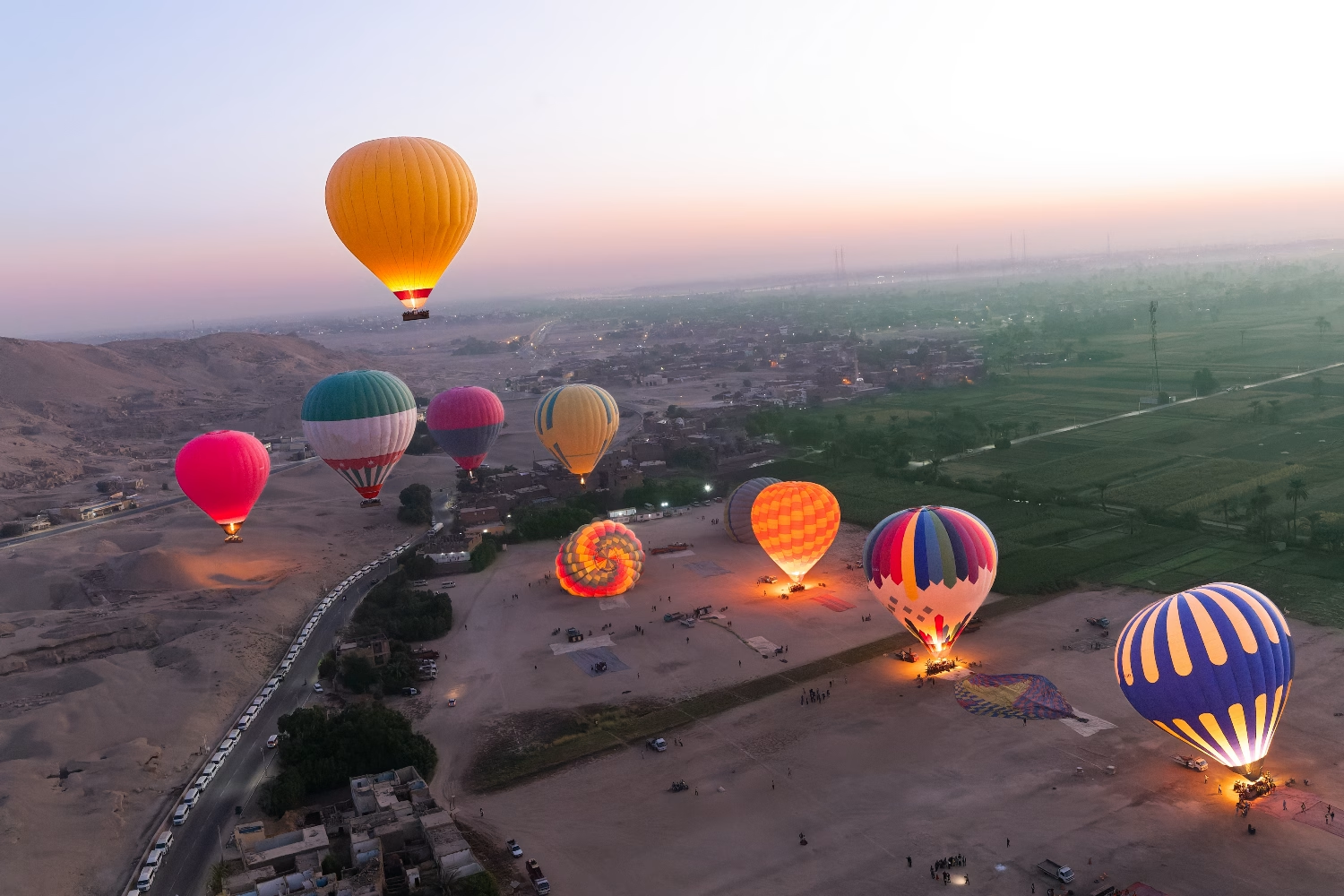
Photo credit: hemro/Shutterstock.com
For any questions you might have which are not answered on this page, local businessman Steve of Steven’s Taxis is available to help. You can reach him at steven@marsaalam.com or via WhatsApp at +201284332337 for personalized assistance.
Where do the balloons take off from?
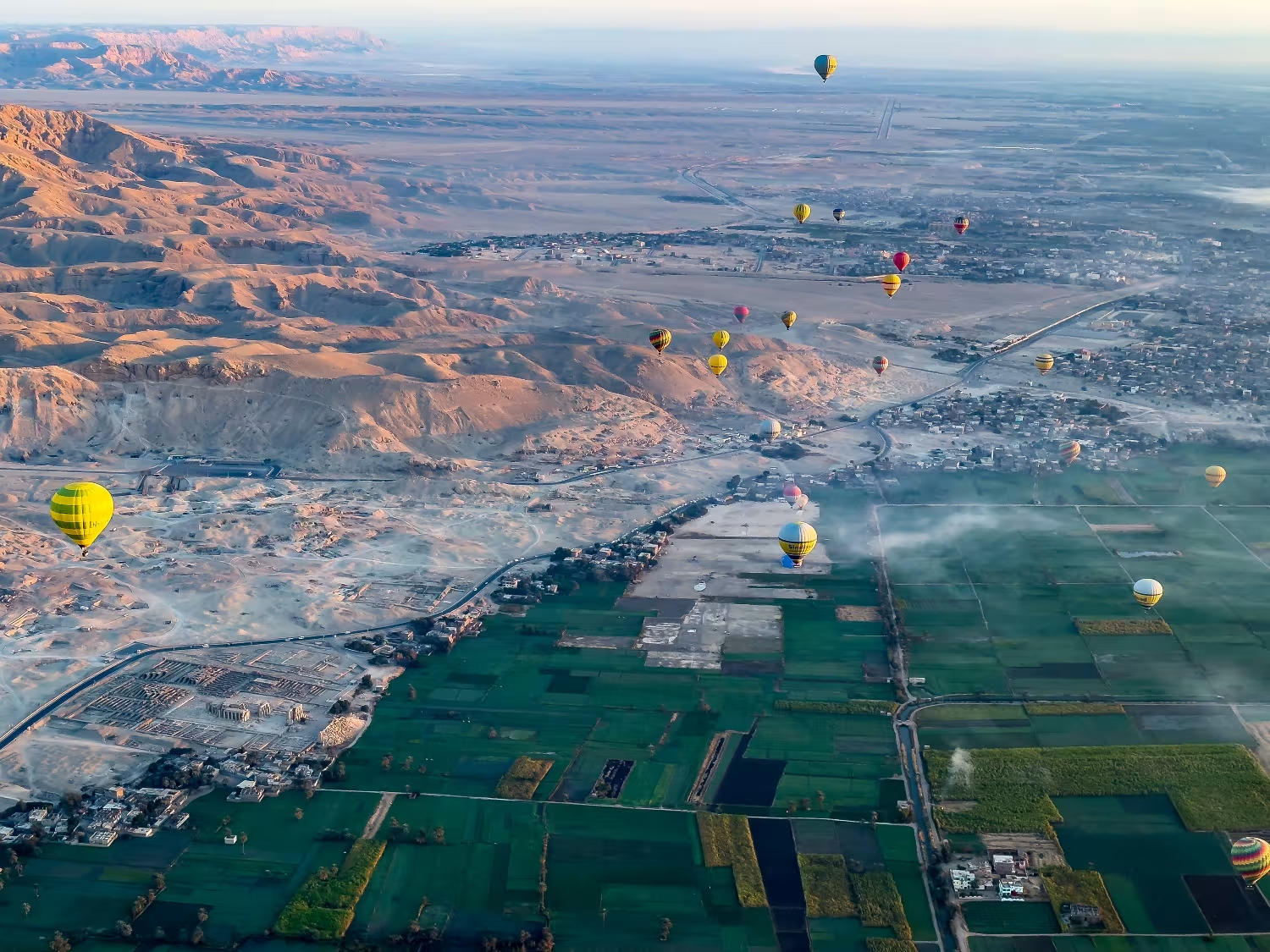
Most ballooning operators use the ‘Ballooning Airport’ on Luxor’s West Bank near the Temple of Hatshepsut and the Valley of the Kings, shown in the photograph above. This makes for a truly breathtaking hot air balloon launch, offering passengers the best chance to enjoy stunning aerial views of these ancient sites.
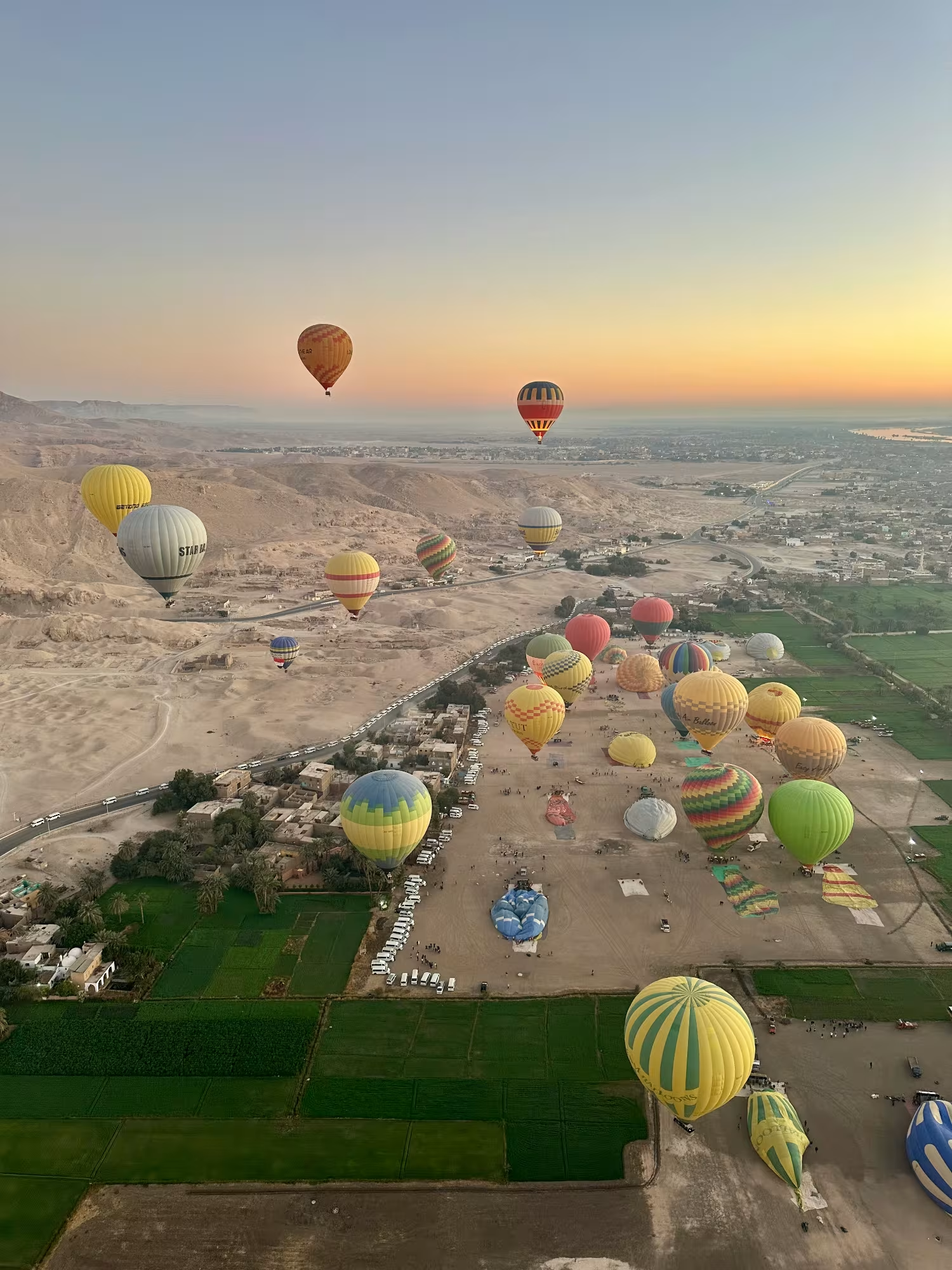
However, occasionally some operators might use a different location. The main site can sometimes be very busy. Note how there at least thirty five minivans parked along the road on the left, and in the photo below as many as one hundred parked both on the field and on the road.
What is the best time of day to take a hot air balloon ride in Luxor?
Ballooning adventures typically begin bright and early at around 3.30 am to 5.00 am, tending to be earlier in the summer and later in the winter. You’ll normally be picked up from your Luxor hotel lobby. Check if your company is one of those which offers a delicious breakfast or snacks either before you are whisked away to the launch site or once you arrive there.
Once there you’ll meet your pilot and ground crew and be briefed and prepared for the flight. By around 5.00 to 6.30 am, depending on sunrise time, the weather conditions, balloon inflation time and the need for careful coordination with other launches, you’ll be soaring high above the ancient landscape. It’s usually perfectly timed so you can experience the magical glow of the sunrise illuminating the horizon.
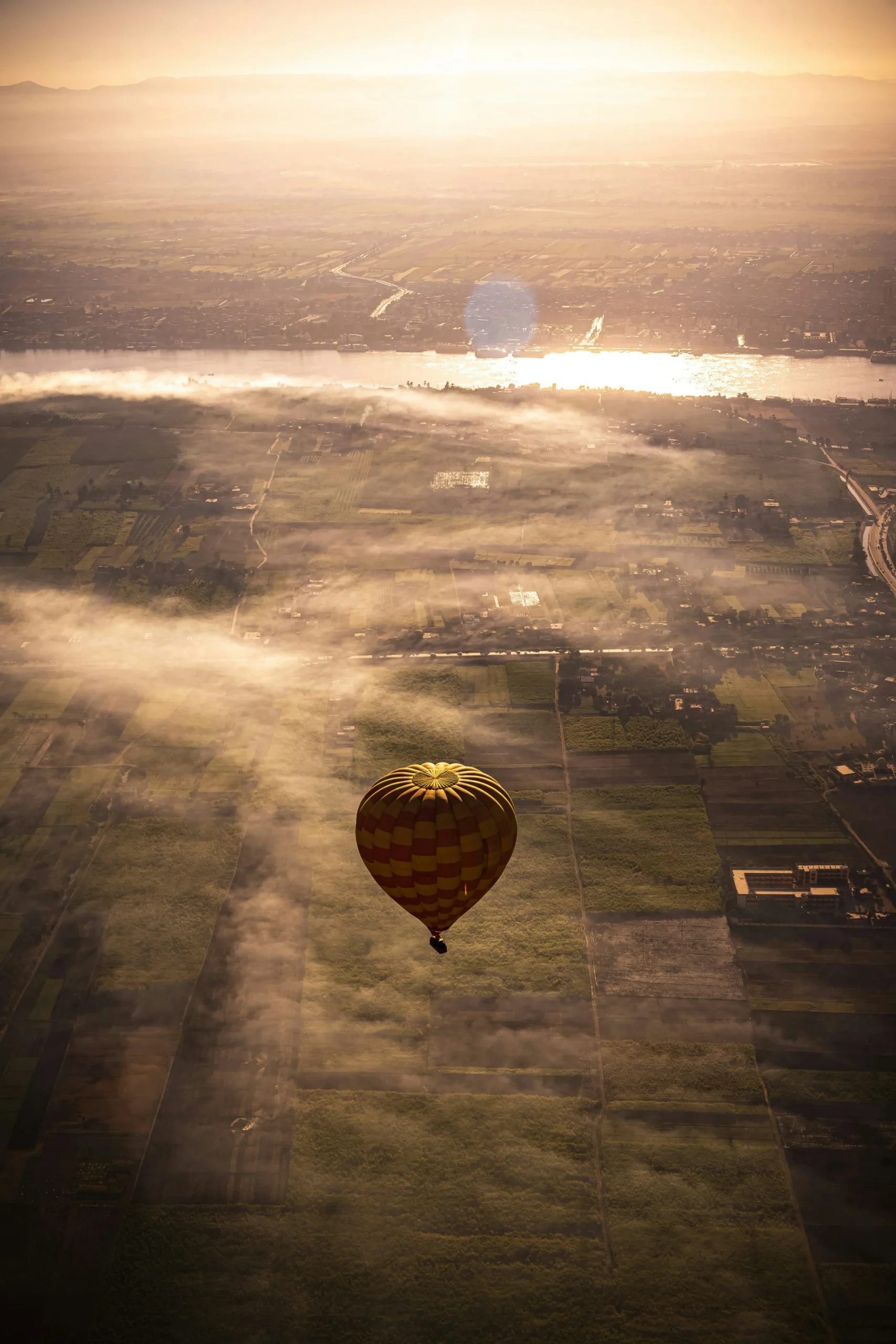
Starting your flight at dawn allows you to experience the stunning beauty of Luxor as the first light of day casts a warm glow over the ancient temples and the Nile River. The soft, golden sunrise lighting adds a magical quality to the landscape.
The morning also usually offers clearer skies and better visibility, ensuring you get the best views of Luxor’s historical landmarks, such as the Colossi of Memnon, the Valley of the Kings, Karnak Temple, and the Temple of Hatshepsut. However, first thing in the morning, as the balloon takes off, it is sometimes still hazy or misty, especially during the cooler months. This mist typically forms due to the temperature difference between the cooler night air and the warmer ground. However, it usually clears fairly quickly as the sun rises and warms the air.

offers breathtaking dawn views
Photo credit: Mustang Joe CC0 1.0 via Flickr
Weather conditions are also usually at their most suitable with lighter and more predictable winds that make for a safer and smoother flight and cooler temperatures, which help the balloon maintain better lift. Hot air balloons rely on the difference between the inside and outside temperatures to rise, so cooler air helps with buoyancy.
Do flights sometimes take off at later times?
Yes, and it can work out cheaper and might also allow you to delay slightly the extremely early wake up time. As of April 2025, Skyscape Balloon were offering shared after-sunrise balloon rides for just $40 per person.
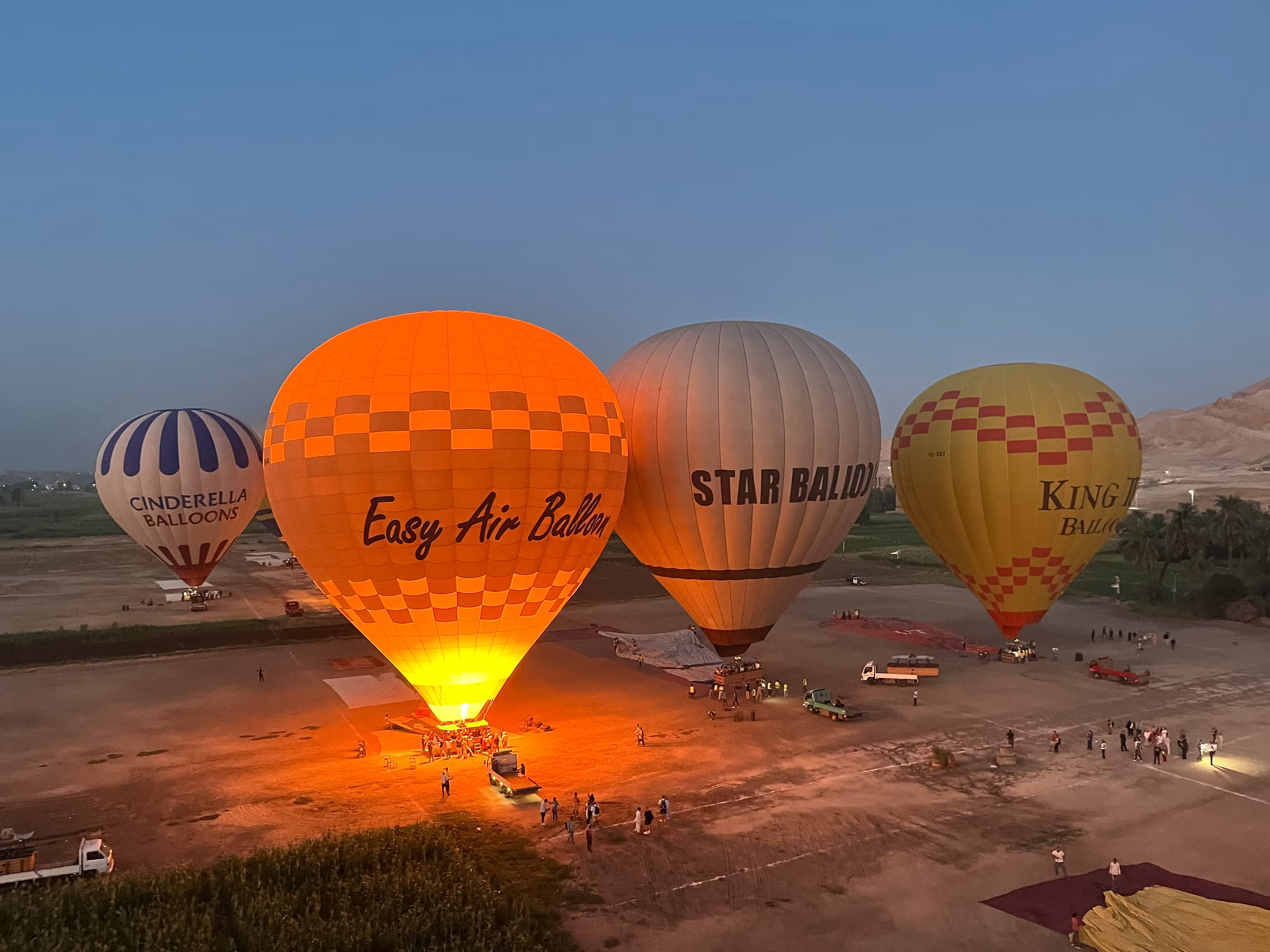
Photo Credit: Mustang Joe CC0 1.0 via Flickr
What happens if the weather is bad on the day of my scheduled balloon ride?
In the event of poor weather—like high winds, a sandstorm, poor visibility or very unusually a rain storm —your flight is likely to be canceled or rescheduled. It’s not something that’s taken lightly, and the companies involved are typically highly experienced at assessing whether the conditions are suitable for flying. If your ride is canceled, most companies will try to reschedule it for another day, depending on your travel schedule. They’ll usually give you a heads-up well in advance, sometimes the night before or early in the morning before your flight time, if conditions aren’t looking ideal. You’ll usually be updated via phone call, text, or email, so you’re not left wondering.
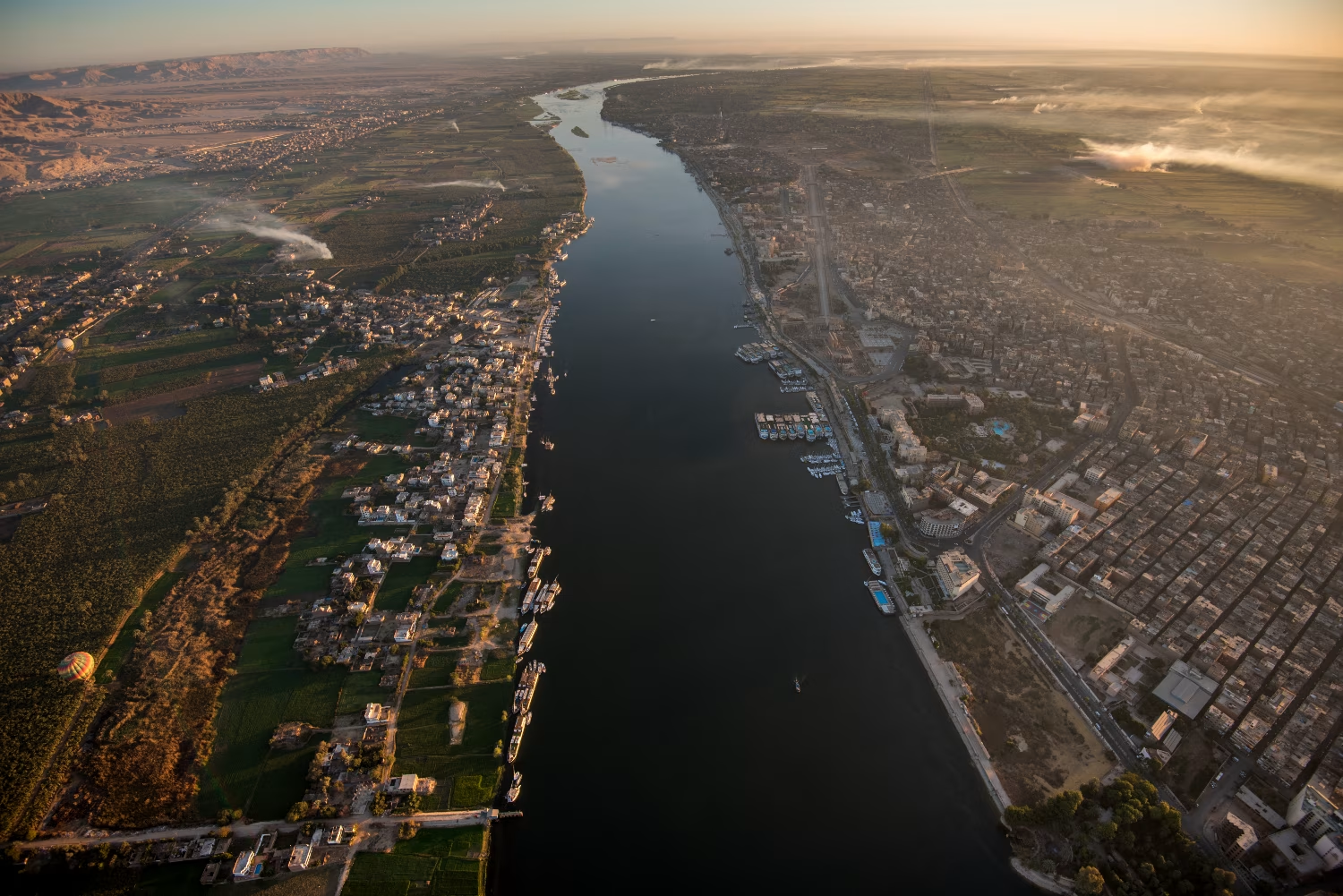
Note Luxor Temple (centre right) and the Avenue
of the sphinxes which connects it to Karnak Temple.
Photo credit: Keem Ahmed/Shutterstock.com
If rescheduling isn’t possible, they may offer a full refund, though this can depend on the specific company’s policy. It’s always best to check the terms before booking, just to be clear on their cancellation and refund practices. On the other hand if your balloon flight is cancelled and you wish to rebook for another day and your tour company might not realise that, try to arrange that as soon as possible as availability might sometimes be limited.
While it’s frustrating not to be able to fly, think of it as a blessing in disguise! You’ll have more time to explore the incredible sights of Luxor—temples, tombs, and monuments—and you’ll be able to rest assured that the next chance you get to soar above the Colossi of Memnon (image above) or the Valley of the Kings will be in perfect weather, ensuring you can fully enjoy the experience.
Lower left the Ramesseum: Ramses II’s mortuary temple.
Photo credit: Domingo Saez/Shutterstock.com
Are there any age or health restrictions for passengers on a balloon ride?
For safety reasons, most ballooning companies have a policy that children under the age of six are not permitted to fly. Additionally, all children must usually be tall enough to see over the side of the basket and able to follow the preflight briefing. If you’re planning to fly with young ones, keep in mind that while the flight may feel like it’s over in the blink of an eye for you, it could feel much longer to them, and they may get restless. We recommend keeping this in mind when booking.
There’s no upper age limit or minimum required fitness level for ballooning, but passengers must be in reasonably good health and able to safely climb in and out of the basket. Unfortunately, ballooning is not suitable for those with mobility issues, heart conditions, or back and neck problems. Expectant mothers are also not usually permitted to fly due to the potential serious risks posed by a possible bumpy landing, though you can ask if there are any exceptions if for instance you are very early in your pregnancy and have the written consent of a doctor. Please also be sure to check with your balloon company for any additional health conditions or restrictions that may apply.
The good news, however, is that even if you’re pregnant, have mobility or medical issues, young children, or simply prefer not to fly, you will still usually be welcome to join the adventure by watching the launch and greeting your loved ones at the landing site afterward. Please however check regarding possible suitable arrangements with your company first.

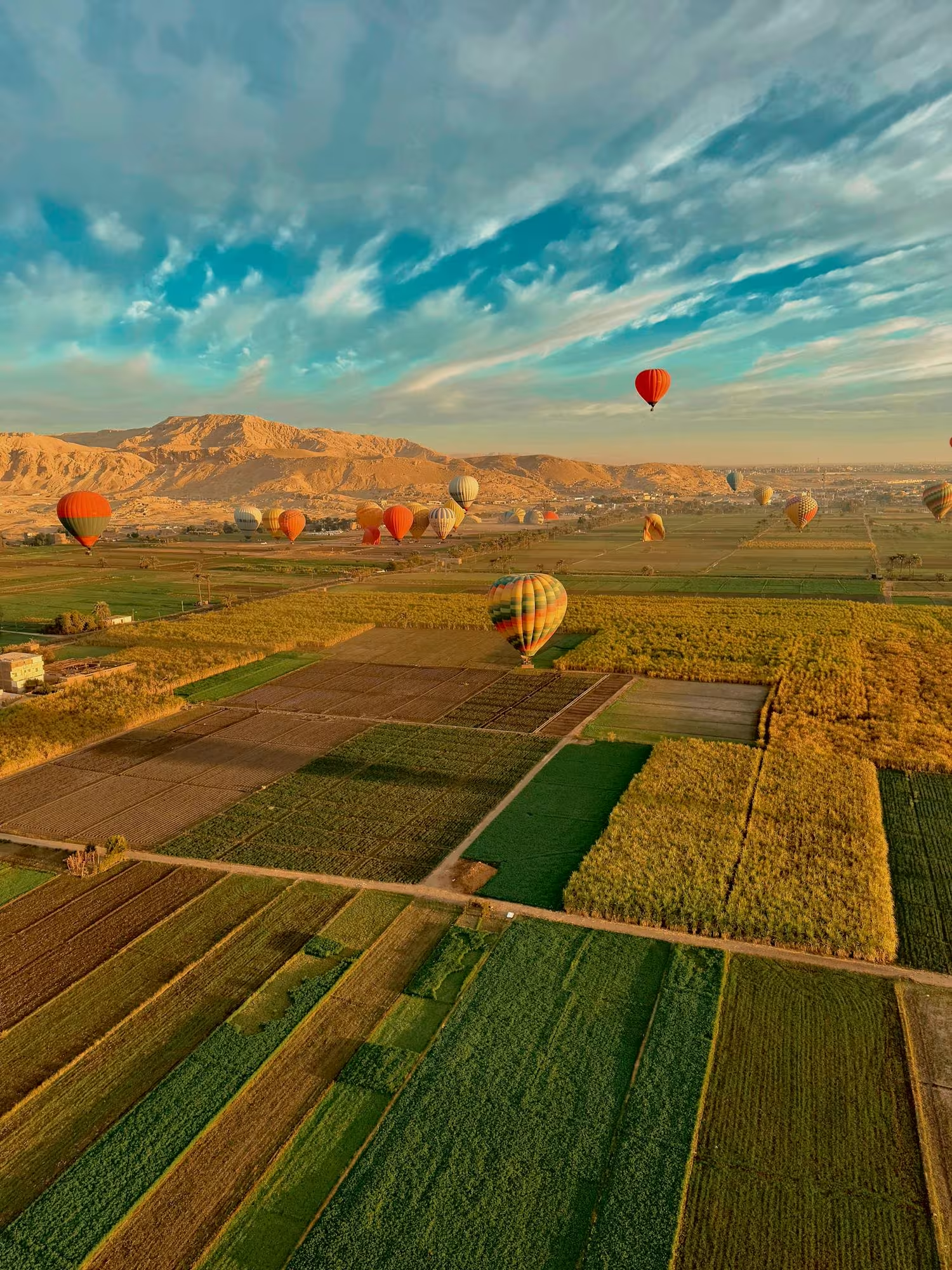
Photo credit: GirlvsGlobe86 via Pexels.com
What should you wear?
When preparing for a hot air balloon ride over Luxor, it’s crucial to choose clothing that ensures both comfort and safety, while also being mindful of local cultural norms, especially as the balloon may land in rural areas. Start with a hat or head covering, which can also help deflect any heat from the burner, and flat, sturdy shoes for safe and easy movement in and out of the basket.
Temperatures can fluctuate significantly. Early mornings can be surprisingly nippy, but the warmth of the sun will quickly heat things up. Layering is key—bring along a jacket and/or sweater that you can easily remove as the day heats up. Your exact choice may depend on both the season and the weather forecast for the day.
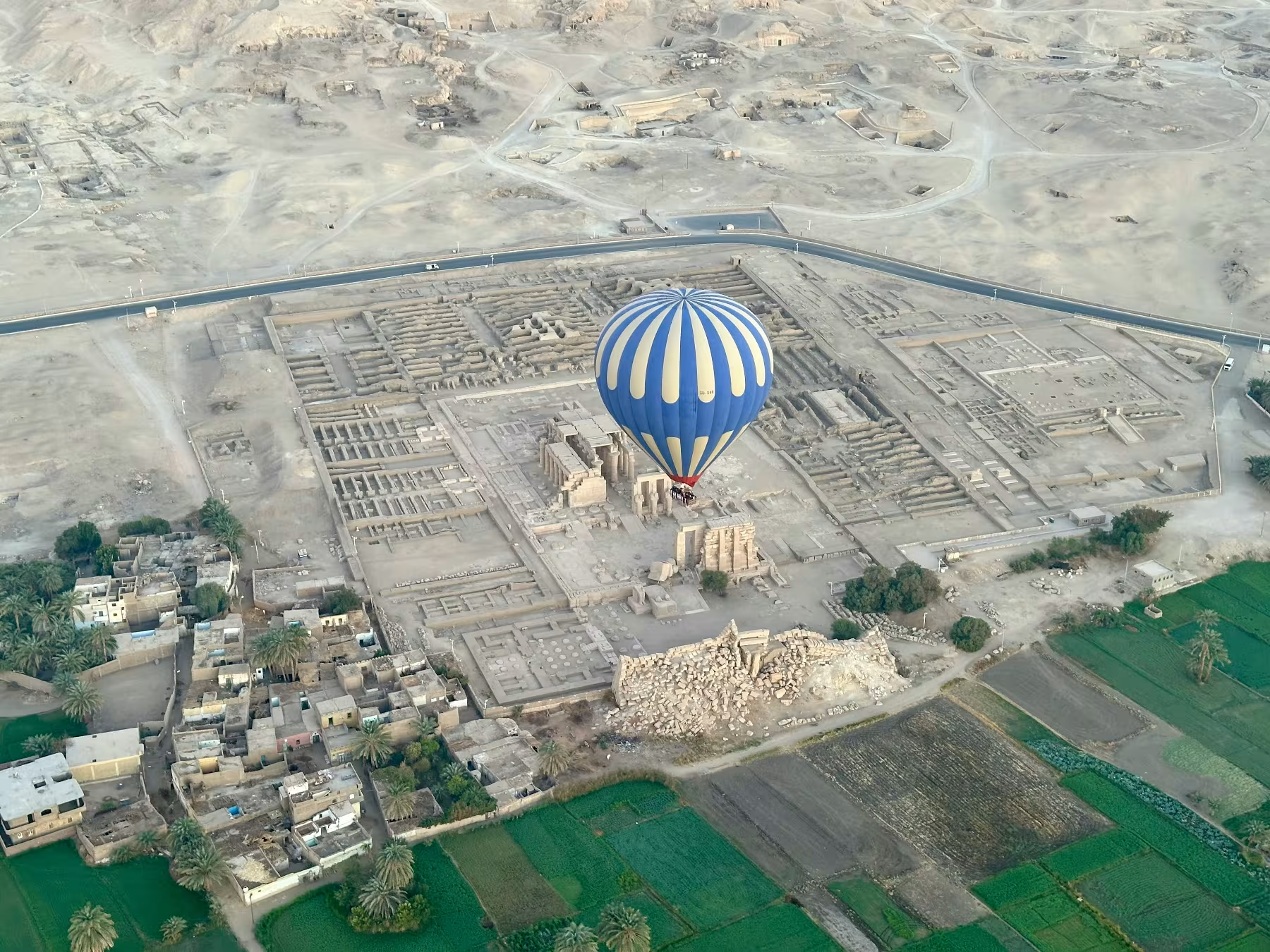
Photo by John Cameron on Unsplash
Choose comfortable, non-slip shoes with a good grip to maintain balance during takeoff and landing, as the ground can be uneven. Avoid tight skirts or high heels, as they can restrict your movement and make getting in and out of the basket more difficult. Opt for long sleeves and pants made from natural fabrics to protect yourself from the sun, and don’t forget to apply sunscreen generously. Insect repellent is also highly recommended to protect against any bugs.
It’s also important to respect the local culture, so modest clothing is advised. Long trousers are a must, and a scarf or bandana can be a practical addition for both warmth and cultural sensitivity. A small backpack is also a smart choice for carrying essentials like sunscreen, a camera, water, and any personal items you might need.
By following these recommendations, you’ll be well-prepared to enjoy a safe, comfortable and culturally respectful hot air balloon adventure.
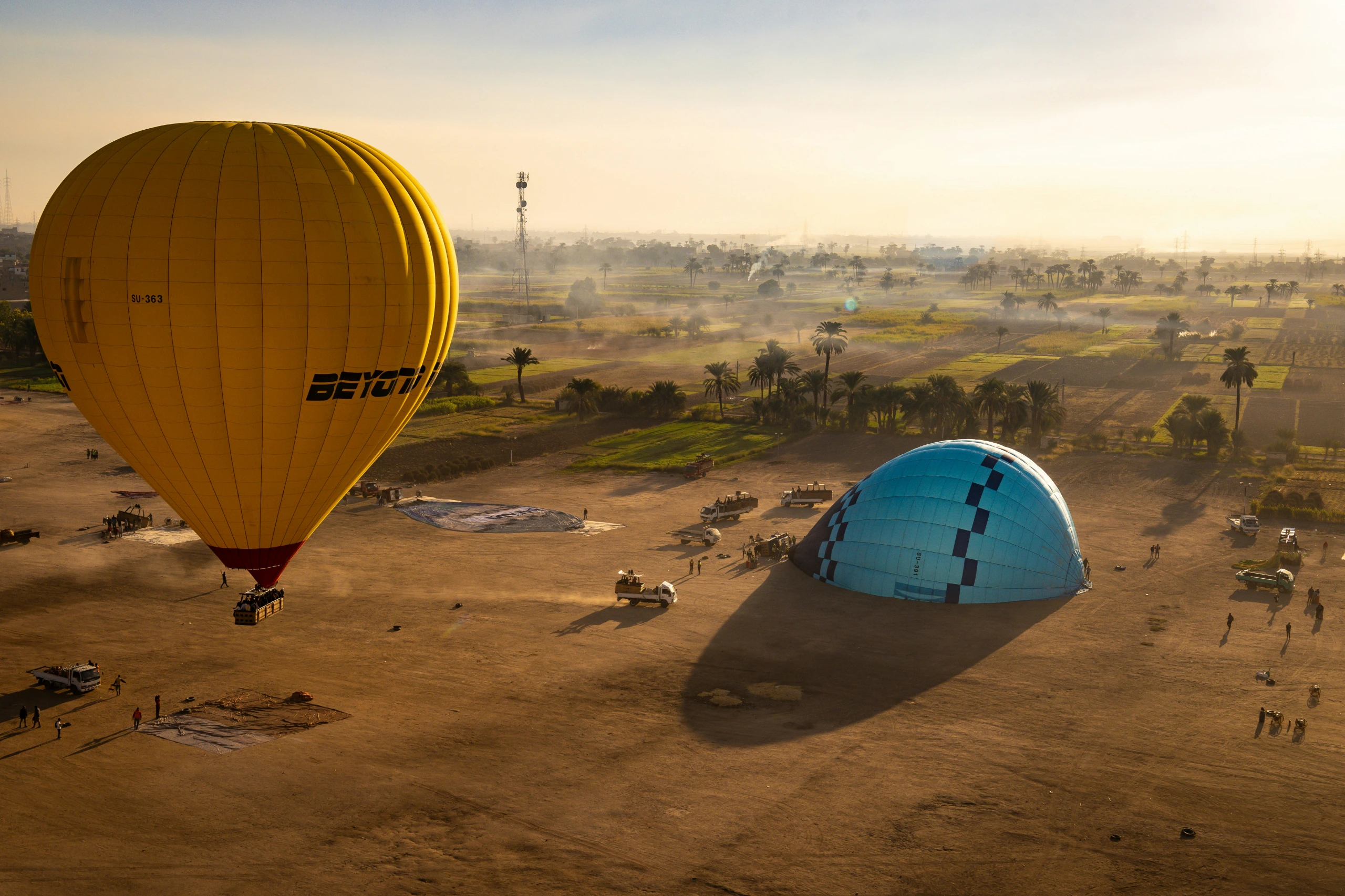
Photo credit: Martijn Vonk via Unsplash.
How big are the hot air balloons and how many passengers can they carry?
There’s a considerable size difference between the smallest balloons, which are typically around 2,500 cubic metres (or 2.5 million litres) in size and the largest which are around 7,000 cubic metres (or 7 million litres) in size. However, even the smallest look enormous, with an air capacity when fully inflated equivalent to the volume of a typical swimming pool, while the largest are approximately equivalent to the internal volume of two full size Boeing 747s without their wings! Ultimately the number of passengers each balloon can carry depends on the weather, wind conditions, and the weight it can safely lift.
The smaller hot air balloons in Luxor usually accommodate between 4 and 12 passengers, while the larger balloons can carry anywhere from 20 to 30 passengers, with some even holding more. However, the most common size you’ll find in Luxor typically holds around 20 people divided between four compartments, while the largest balloons usually fit up to 28 passengers divided between eight compartments. When choosing a balloon and tour company, you’ll want to consider whether you’re after the cozy, intimate feel of a smaller ride with just 8 passengers, or if you’d prefer a more social, lively journey with 20 others, all taking in the breathtaking views below.
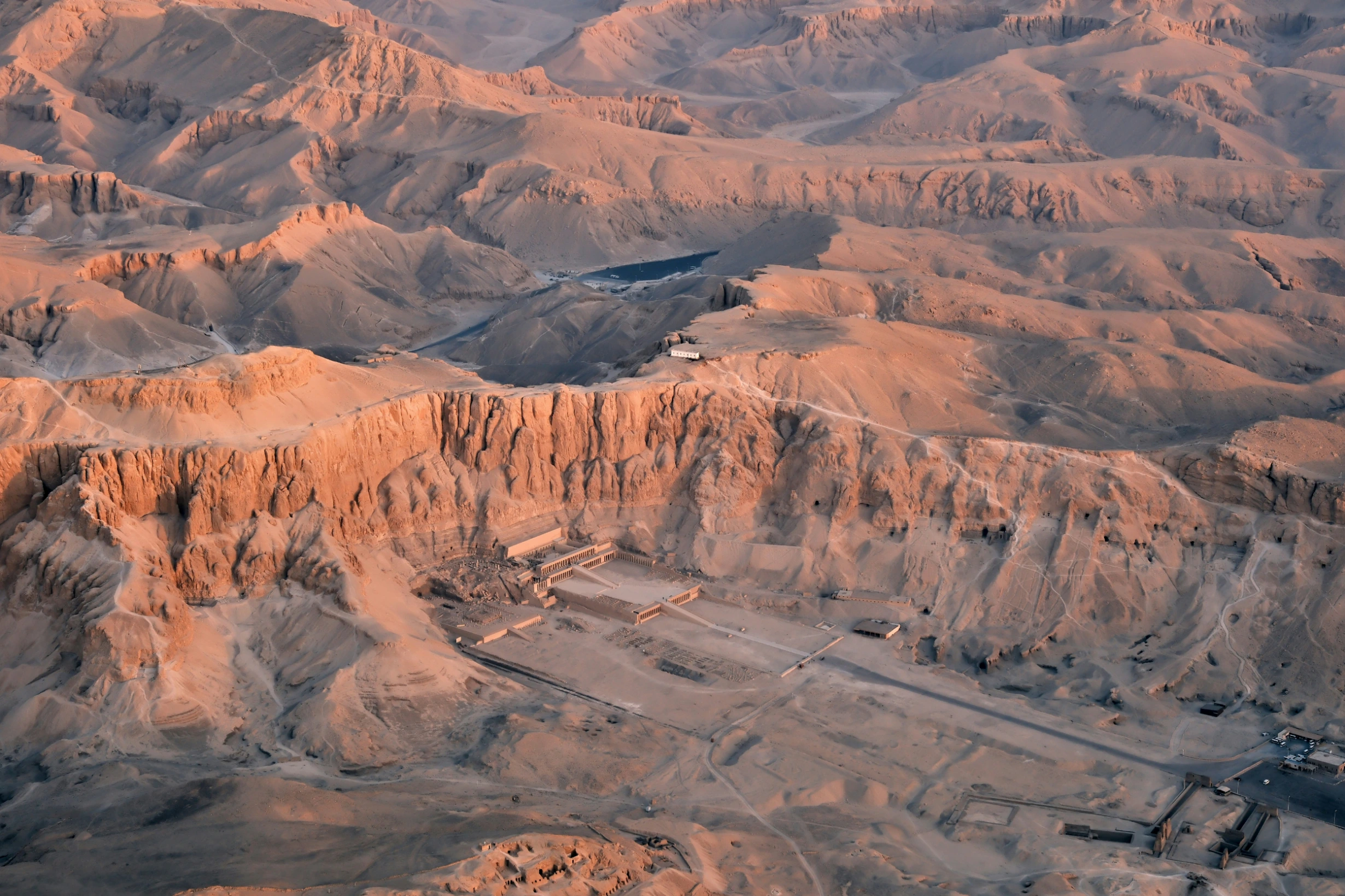
Photo credit: Zhenyuan Zhang via Unsplash
What are the views like from a Luxor balloon flight?
Absolutely breathtaking. Floating high above Luxor at sunrise, you’ll be treated to sweeping panoramic views of the Nile, lush green farmland, the vast desert, and some of the most iconic archaeological treasures on Earth. It’s a surreal and unforgettable way to see Egypt’s ancient wonders from a whole new perspective. To make the most of the experience, bring binoculars or a small camera with a modest zoom (if permitted)—they’ll bring the details of history even closer.
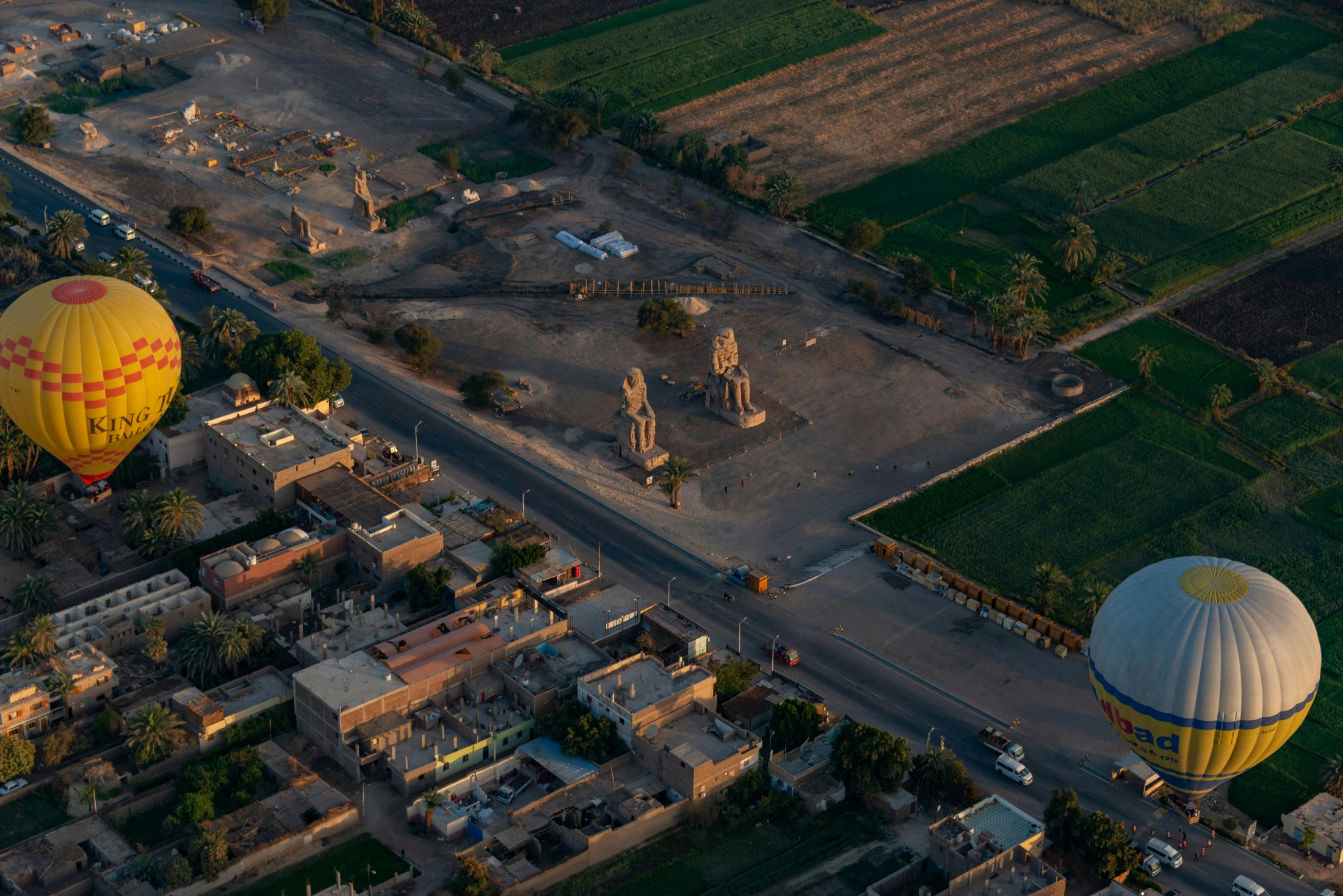
Photo credit: Diego F Parra at Pexels.com
Because the balloon launch site is located on Luxor’s West Bank, you’re likely to enjoy incredible and relatively close-up aerial views of these legendary sites
- The Mortuary Temple of Queen Hatshepsut – A stunning terraced temple built into cliffs, honoring Egypt’s most powerful female pharaoh.
- The Tombs of the Nobles – A hillside honeycomb of ancient tombs where high officials, priests, and artisans were laid to rest overlooking the Nile.
- The Valley of the Kings – A rugged desert valley hiding the richly decorated tombs of pharaohs, including Tutankhamun.
- The Ramesseum – The ruined mortuary temple of Ramses II, once filled with colossal statues and epic inscriptions.
- Medinet Habu (Habu Temple) – A massive and well-preserved temple complex known for vivid battle scenes and detailed carvings.
- The Colossi of Memnon – Two towering stone statues of Amenhotep III that have stood watch over the Theban plain for over 3,000 years.
As the balloon rises you are also likely to catch more distant yet dramatic views of
- Luxor Temple – A majestic riverside temple glowing golden in the morning sun and linked to Karnak by an avenue of sphinxes, standing proud in the heart of the modern city.
- Karnak Temple – A sprawling complex of pylons, obelisks, and giant columns—the largest religious site ever built.
- and last but not least, the city of Luxor itself – A vibrant mix of ancient and modern, steadily stretching its reach from the timeless Nile to the edge of the desert.
How distant these various views are will depend both on your altitude and the wind direction, but whether you’re an archaeology enthusiast or simply seeking a magical experience, a balloon flight over Luxor is an unforgettable adventure through history and landscape.
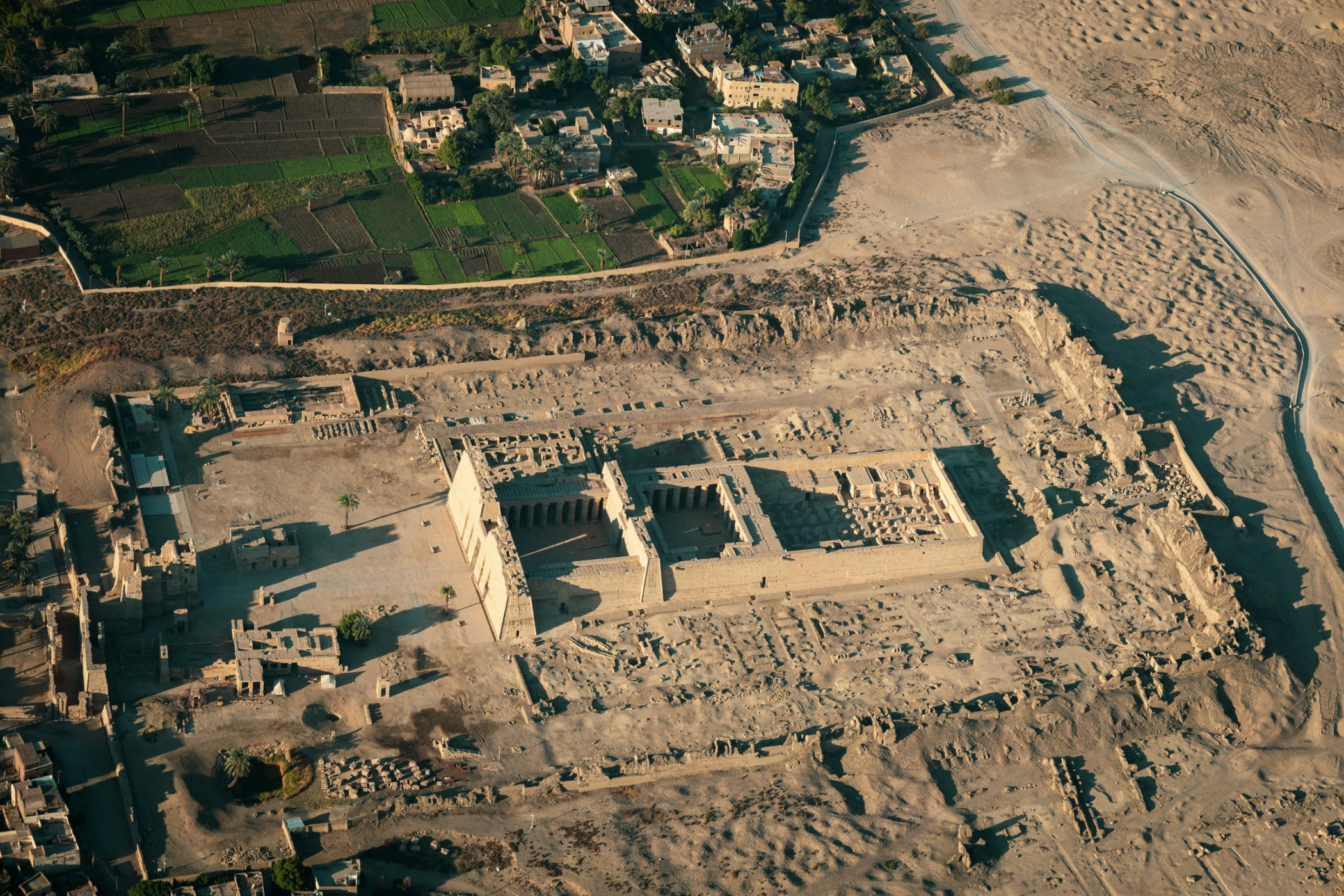
Photo credit: Martjin Vonk via Unsplash.
Is Hot Air Ballooning in Luxor Safe?
Hot air ballooning over Luxor’s ancient wonders is an unforgettable experience—but it’s fair to ask: is it safe?
The short answer is: relatively, but not without risks. Luxor has one of the most active ballooning scenes in the world, with flights happening almost daily. The industry is now heavily regulated by the Egyptian Civil Aviation Authority, which enforces strict safety protocols, pilot licensing, and equipment maintenance. Companies proudly advertise strong safety records, well-trained crews, and thorough pre-flight briefings. Most balloon rides operate only in ideal early morning conditions, when the wind is calm and visibility is clear.
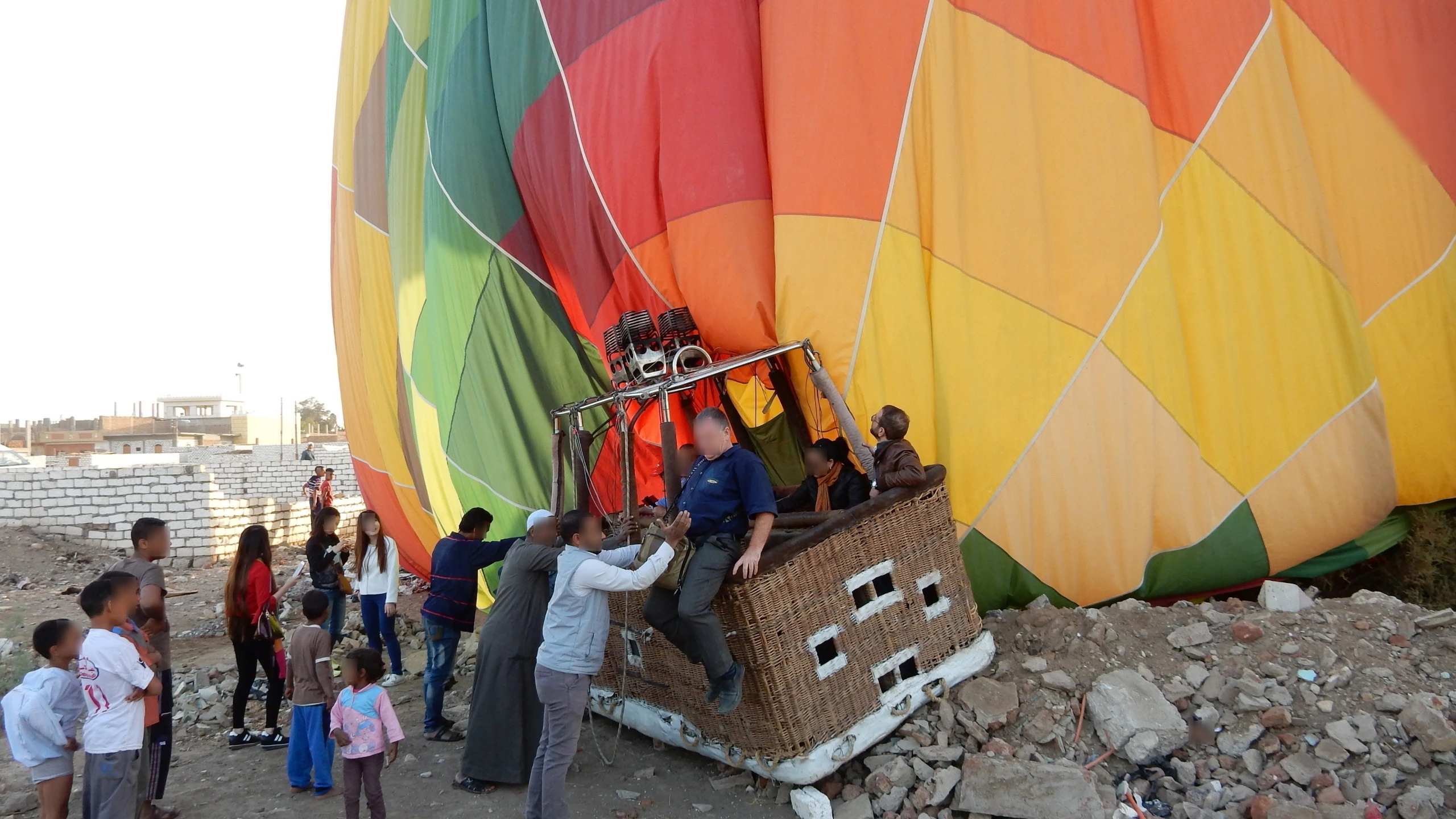
Unfortunately, it’s not clear what happened but
safety standards are being continually improved.
Photo credit: Dennis Sylvester Hurd CC0 1.0 via Flickr.
However, it’s important not to overlook history. Luxor’s ballooning past includes serious incidents. The most tragic occurred on 26 February 2013, when a balloon caught fire and crashed near Luxor, killing 19 of the 21 people onboard—one of the deadliest ballooning accidents in history. Other smaller accidents over the years have involved hard landings, unexpected wind gusts, and injuries, though they’ve become rarer in the past decade.
The risk is low—but it’s not zero. Ballooning, by nature, involves exposure to weather and wind, and while companies take precautions, things can go wrong quickly. It’s not a rollercoaster ride—there’s no track or brakes—but a giant, floating canvas suspended by the heat from a burner. That said, thousands of people safely enjoy this experience each year, and even injuries, let alone fatalities, are extremely rare relative to the number of flights.
So, if you’re in good health, can follow instructions, and fly with a reputable company, ballooning in Luxor is likely to be one of the safest forms of adventure travel you can take. But it’s still adventure—and with adventure comes an element of risk.
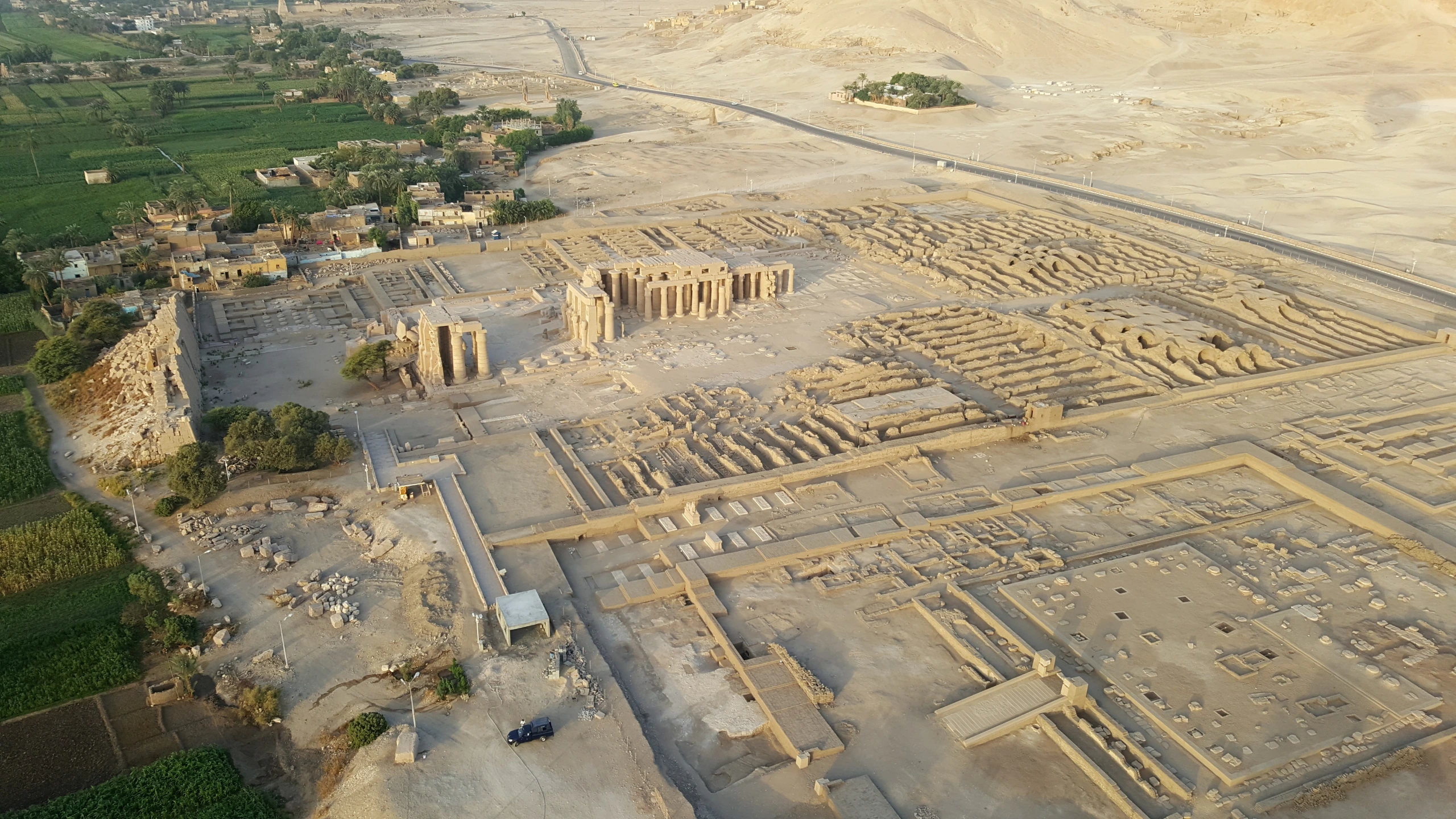
The ruined mortuary temple of Ramses II,
once filled with colossal statues and epic inscriptions.
Photo credit: Ovedc CC BY-SA 4.0 via Wikimedia
How high do the hot air balloons fly?
Hot air balloon flights in Luxor typically reach altitudes of around 1,000 to 2,000 feet (305 to 610 metres), with many flights cruising near 1,500 feet (457 metres) to offer stunning panoramic views of the Nile Valley, ancient temples, and the desert horizon. Depending on the weather, wind patterns, and airspace conditions, balloons may occasionally ascend higher—sometimes up to 3,000 feet (914 metres)—for an even broader perspective of the surrounding landscape. However, this is still only a fraction of the potential, with a record set in India in 2005 by a balloon modified for extremely high altitude of 69,850 feet (21290 metres).
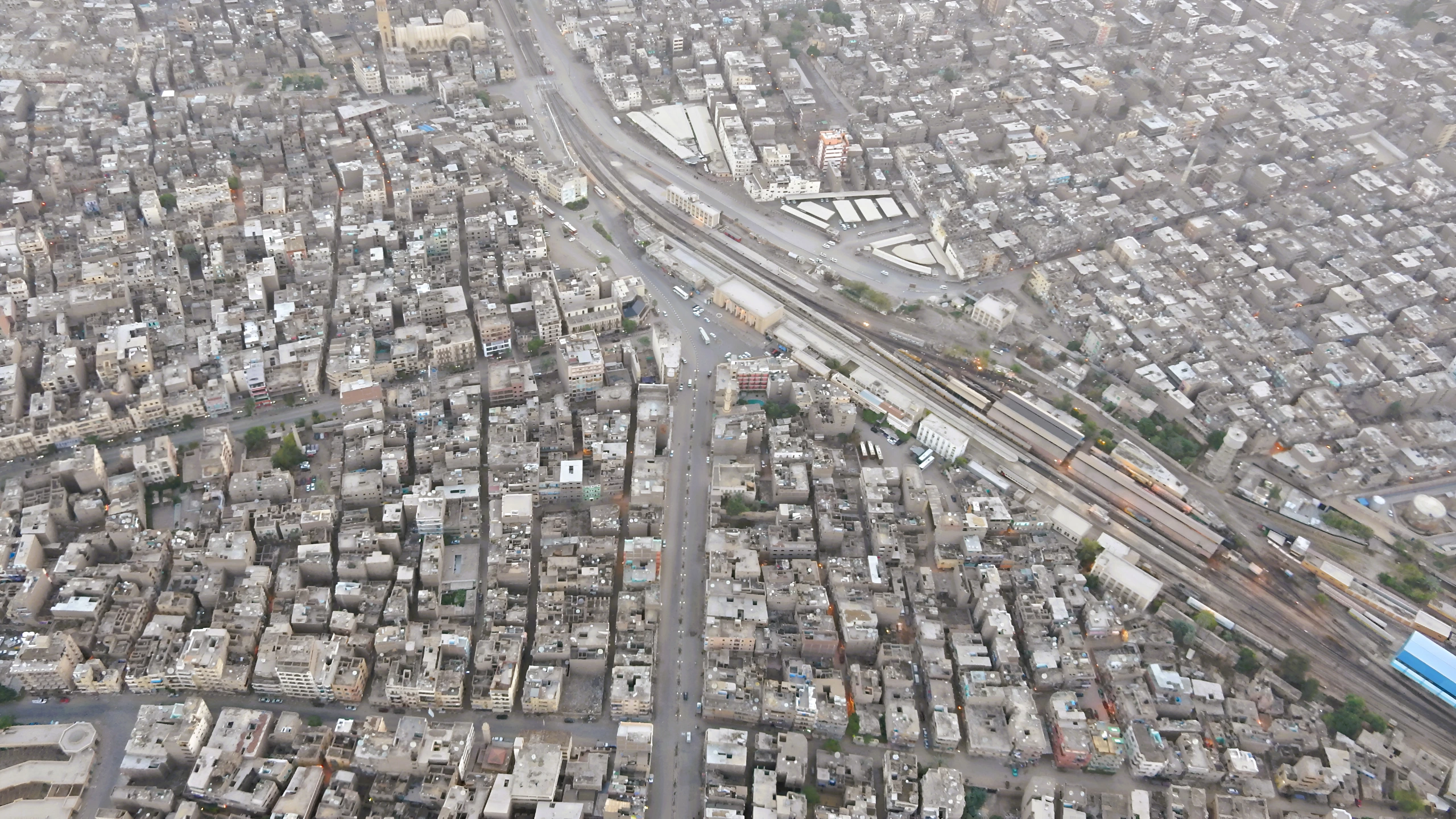
Photo credit: Dennis Sylvester CC0 1.0 Flickr
The altitude of the balloon plays a big role in shaping the experience. Flying at lower levels, though usually well above treetop level, gives passengers the chance to observe daily life on the ground—lush fields, quiet villages, people, animals and archaeological features all come into focus. Gaining altitude, however, opens up a much wider perspective, revealing the landscape in a way that feels expansive and awe-inspiring.
Pilots adjust height throughout the flight, skillfully navigating through layers of wind to shape the route. This flexibility adds to the uniqueness of each journey and also enhances the visual experience, combining intimacy with grandeur in one breathtaking ride.
How Green is Hot Air Ballooning?
Floating above Luxor in a hot air balloon is one of the most breathtaking experiences Egypt has to offer. From this peaceful height, ancient temples glow golden in the sunrise, and the patchwork of green fields stretches into the desert. It feels serene — even timeless. But while the ride itself is like a dream, the environmental impact of ballooning is something we should take seriously. Let’s talk openly about that.
One of the most important questions you might be asking is what’s the carbon cost of your balloon flight? How much climate impact does it really have per person — and how does that compare to other excursions or modes of travel? The truth is, it’s not a simple calculation. The emissions from a single flight can vary widely, depending on a whole range of factors, including:
- the size of the balloon,
- how many passengers are aboard,
- the design and materials of the balloon itself,
- how long you’re in the air and how high you go,
- the air temperature at the time of flight,
- the vehicle that takes you to and from the launch site,
- the chase vehicle that follows the balloon to assist with landing, and
- a number of other details — even down to how the balloon’s propane fuel is produced and what kind of breakfast you’re served.
So, as you can probably tell by now, calculating the emissions from a balloon flight isn’t as straightforward as plugging numbers into a single, neat formula. It’s not just about how much propane is burned — there are many moving parts. Still, a good place to begin is with the most obvious and direct source of emissions: the propane used to heat the air and keep the balloon aloft.
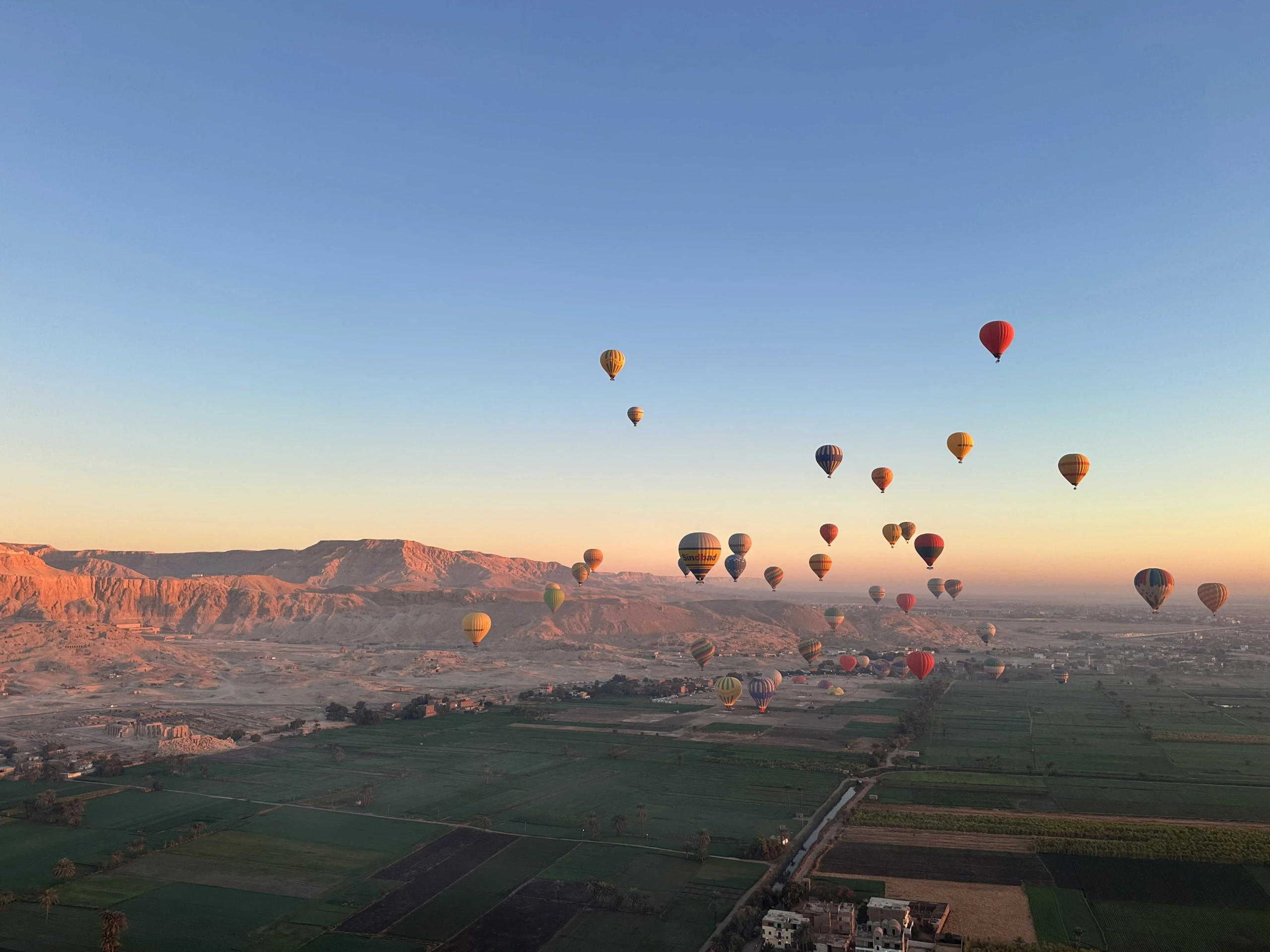
with the sun over Luxor’s West Bank.
Photo credit: John Cameron via Unsplash
For a typical one-hour balloon flight — which might even be slightly longer than your own — estimates for liquid propane usage that I found ranged from 75.7 litres (20 US gallons) to 126 litres (32 US gallons) or possibly even as much as 227 litres (60 US gallons) for a large balloon with two burners. Assuming however a typical sized balloon with 20 passengers and depending on the emissions conversion factor used, that might translate to anywhere between 120 and 227 kilograms of carbon dioxide (CO₂) emitted. If this average sized balloon carries around 20 passengers, as many do, that breaks down to a range of roughly 6 to a little over 11 kg of CO₂ per person.[1]
To put that into perspective, the Aerocene Pacha solar balloon flight project claims that a single hour-long balloon flight could generate as much total carbon dioxide equivalent (CO₂e) as driving a car for 1,000 miles or more. A similar claim has also been made by journalist Tarek Bazley writing in Al Jazeera. That might seem like a lot of carbon for one dreamy hour in the sky.[2]
While cutting-edge balloon designs and materials are starting to seriously reduce emissions, let’s imagine you’re taking to the skies for your scenic ride in a more traditional, no-frills (but safe!) hot air balloon. So, how do the emissions from your flight stack up against other adventurous escapes?
Well, they’d likely be significantly higher than splitting an average hour-long taxi ride between three people — which comes in around 2 to 4 kg of CO₂ per person. But your balloon trip would be in the same ballpark, even if probably slightly more impactful, than going on a half-day safari in a jeep with five other people — typically about 5 to 7 kg per person. And compared to the footprint of a short-haul commercial flight, you’re floating way ahead — a one-hour hop in a passenger jet racks up a hefty 20 to 27 kg of CO₂ per person. So while your balloon ride is far from being carbon-free, it’s relatively light-footed compared to more conventional flights.
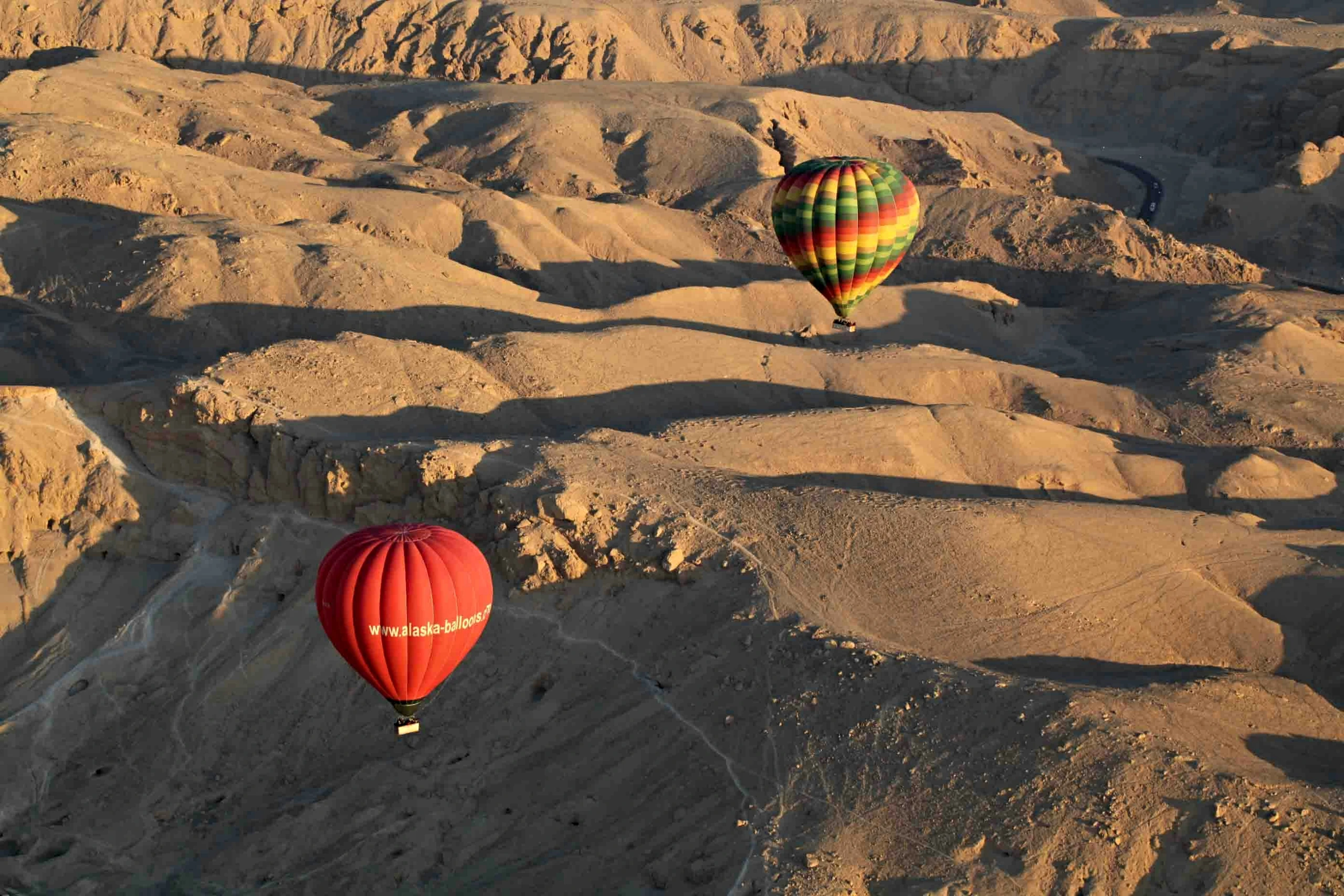
Photo credit: Hasan Luxor Hot Air Balloon via Unpslash.
At A Glance Comparisons Per Person CO₂ Emissions.*
- ⛵ Felucca ride 60 min- 0.0-0.1 kg – boat construction factored in
- 🚐 6 in minibus 60 min- 1.3-2.5 kg – depends on vehicle & traffic
- 🚕 3 in a taxi 60 min- 2.0-4.0 kg – depends on vehicle & traffic
- 🚙 6 in jeep safari 3-4 hrs- 5.0-7.0 kg – includes off-road driving
- 🌄 Ballooning 60 min- 6.0-11.0 kg – end use propane CO₂ emissions
- 🌄 Ballooning 60 min- 10.0-15.0 kg – with all additional emissions
- ✈️ A jet flight 60 min- 20.0-27.0 kg – jet fuel is high impact
* These figures are based on numerous assumptions – see text. Your actual ride might have an even higher or a significantly lower level of emissions.
But are there any additional Emissions?
The figure of 6.0 to 11.0 kg might be a little too optimistic as it’s also important to consider the additional emissions connected to the overall ballooning experience, beyond just the flight itself. These include emissions from the vehicles that transport you to and from Luxor’s Ballooning Airport, as well as the chase vehicle that follows the balloon to assist with landing. They also include pre-end use emissions in the production of the liquid propane that heats the air which lifts the balloons. While it is a fuel that burns relatively cleanly and more efficiently than many other fossil fuels, the process of extracting and producing propane often produces further emissions.
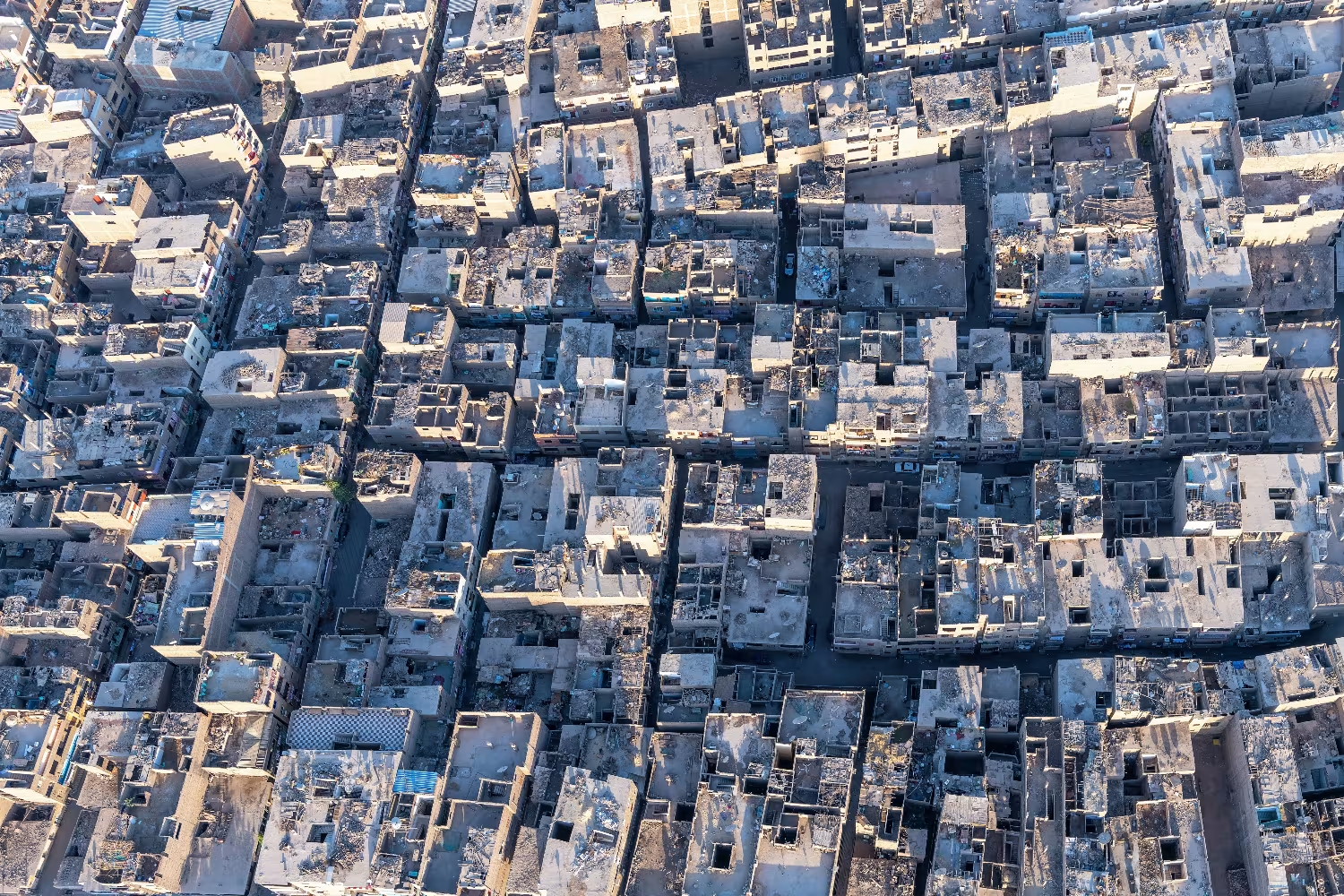
Photo credit: Nick Brundle Photography/Shutterstock.com
Propane – What are its potential pre-end Use Emissions?
Propane is separated from natural gas or petroleum during processing, and this stage can release methane and other greenhouse gases into the atmosphere. Methane is particularly potent, with a global warming potential (GWP) about 84 times greater than carbon dioxide over a 20-year timeframe (or 28 times greater over a 100-year period), making it a major contributor to short-term climate change.[3] As short term temperature rises could take the planet over crucial tipping points, it is vital to give this serious consideration.
The scale of these methane emissions depends on several variables, such as whether the propane is sourced from natural gas or oil refining, how it’s processed (with flaring, venting, or reinjection), what technology is used, and the stringency of local environmental regulations. According to a study by S&P Global that focused on Canadian production, the emissions generated during propane’s production and processing—including methane and other gases—could account for about 11% of its total carbon dioxide equivalent emissions over a 100-year period.
That figure could rise to 18% over a 20-year span, depending on how much of the emissions are methane. When other emission-driving factors like land use, drilling, and transport are included, the numbers increase further— by an additional 16.7% over a 100 year GWP time frame or potentially by an additional 27.5% over a 20 year GWP time frame for which any methane component will have a more powerful impact.
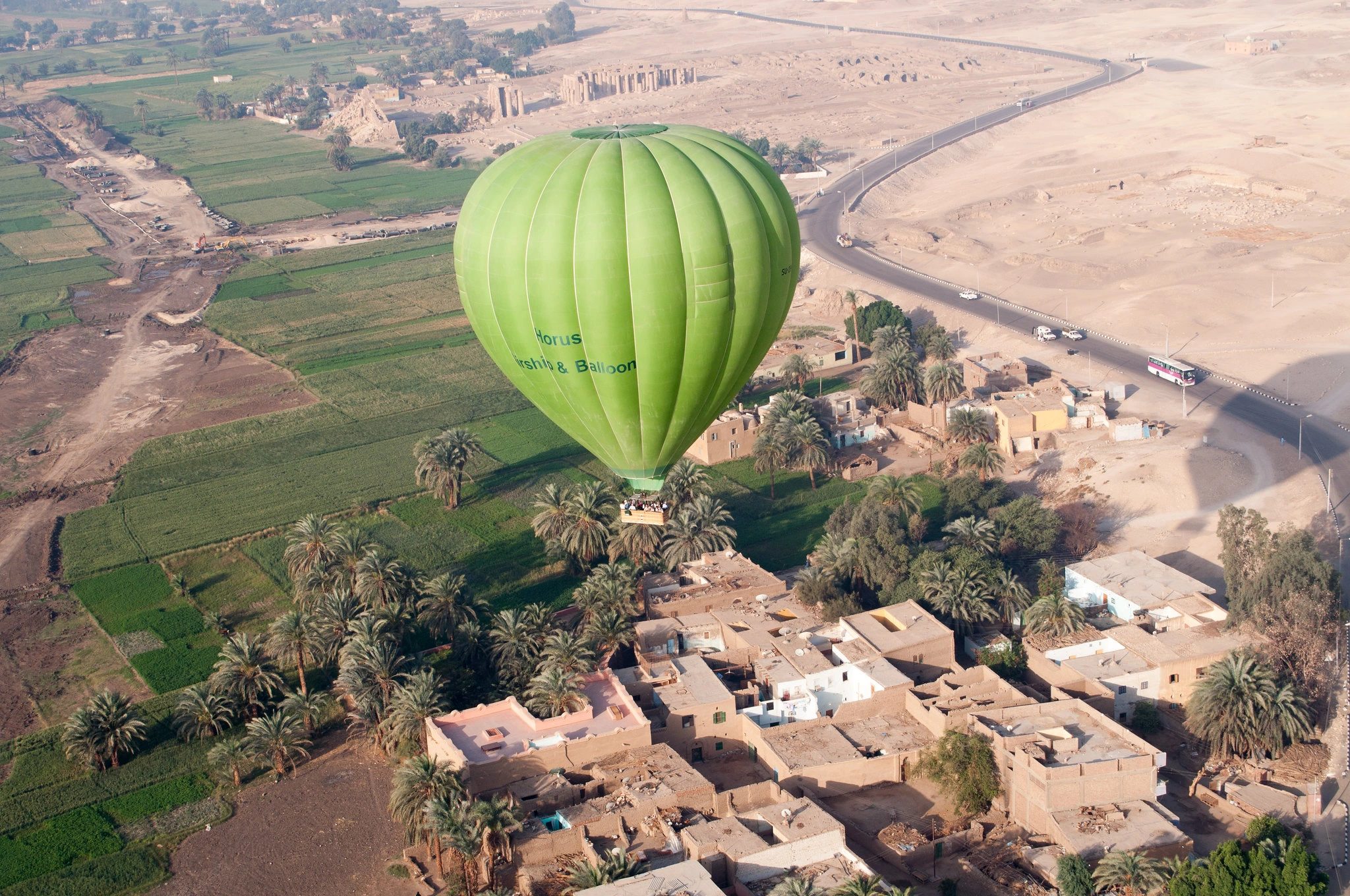
towards the mortuary temple of Ramses II
Photo credit: Naka Kei CC0 1.0 via Flickr.
The same S&P Global report estimates that when all contributing factors are included, the average carbon dioxide equivalent emissions of propane are around 1.85 kg per litre over a 100-year GWP timeframe, which could be as much as 2.13 kg per litre over a 20-year GWP timeframe, depending on the percentage of methane in the pre-end use emissions.[4] If we use that higher figure of 2.13 kg to estimate emissions from a one-hour balloon ride using 126 litres of propane (bearing in mind this is a rough assumption), the total emissions would be about 268 kg.
That’s significantly higher than the earlier high-end estimate of 227 kg, and for a balloon carrying 20 passengers, it works out to just over 13 kg of CO₂ equivalent per person. Including emissions from transport vehicles, that number could climb beyond 15 kg per person, depending on how far and by what means you’re traveling.
Photo credit: Allan Harris – CC BY-ND 2.0 – via Flickr.
All things considered, while the estimate based on 126 litres of propane gives us a useful higher end benchmark, the actual emissions from your balloon ride could vary quite a bit. They might be even higher if more fuel is used—but they could also be considerably lower, depending on a range of factors. It should also be considered that the propane used in Egypt might have a much lower level of pre-end use CO₂ equivalent emissions compared to Canadian produced propane. The only people who can provide an accurate, flight-specific figure are the balloon operators themselves—assuming they have all the necessary data.
Still, this analysis should at least give you a clearer sense of just how many variables are at play. If you’re curious about your own balloon ride’s overall environmental impact, it’s well worth asking whether your operator’s calculations include the emissions from any support and transport vehicles as well.
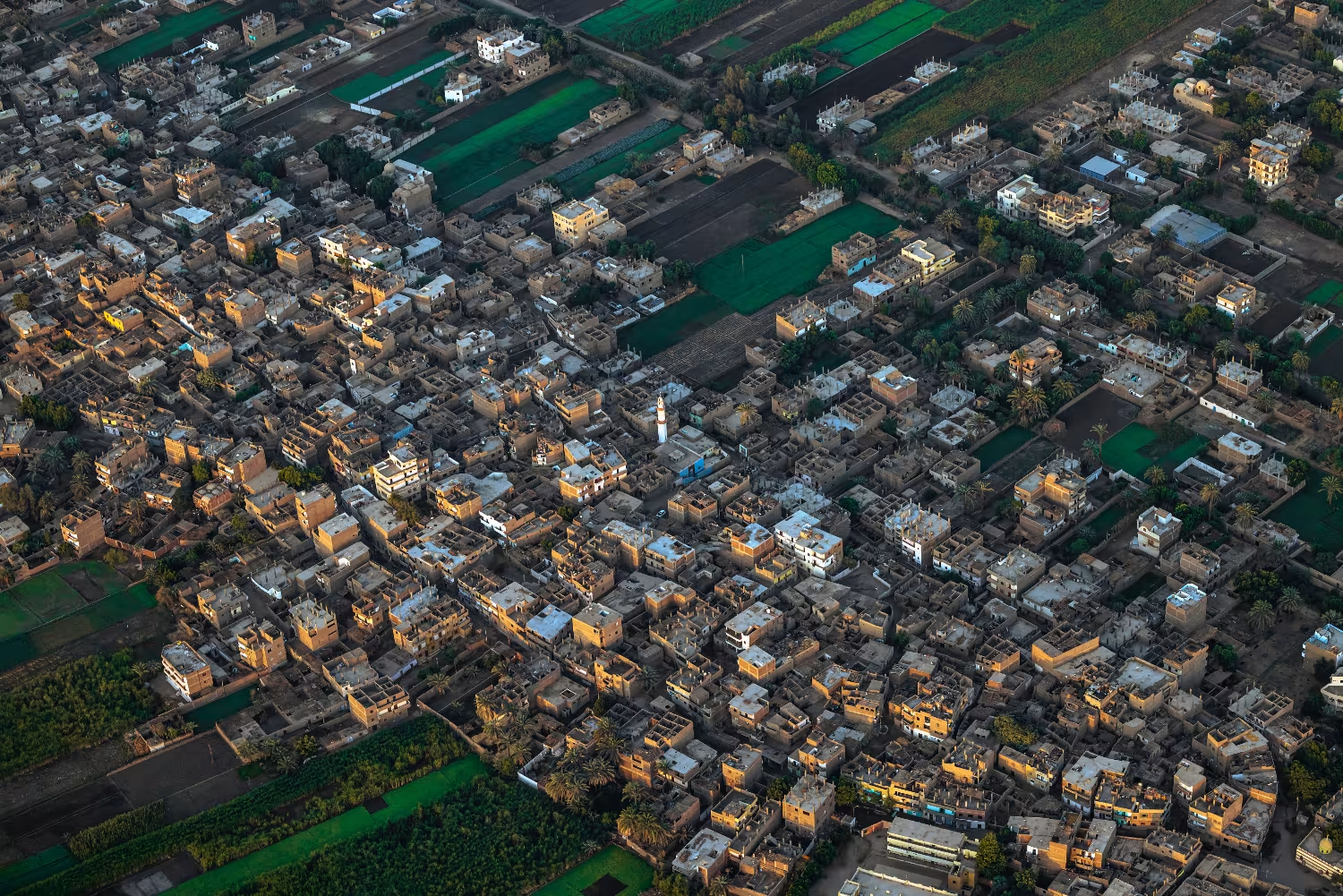
Photo credit: RPBaiao/Shutterstock.com
Do Hot Air Balloons Need More Fuel in Hot Weather?
Hot air balloons rise because the air inside the balloon is heated to be warmer than the cooler air outside. The bigger the temperature difference, the easier it is to lift the balloon — and the less propane (a fossil fuel) the burners need to use.
So, here’s the catch:
- In winter, early morning temperatures in Luxor can be around 10°C — perfect for ballooning.
- But in summer, sunrise temperatures can reach 25°C or more, reducing that temperature difference.
In hotter weather, the balloon needs to burn more fuel just to stay afloat. Studies show that summer flights at higher temperatures can use around 15–20% more propane than flights at cooler temperatures. That means higher carbon emissions per flight, even though everything may otherwise seem to look the same. However, on a more positive note, when you enjoy those magnificent early morning views of the sunrise from a hot air balloon, one of the unseen benefits of taking a flight that early, is that it will use less fuel and consequently produce a lower level of emissions than a flight later in the day.
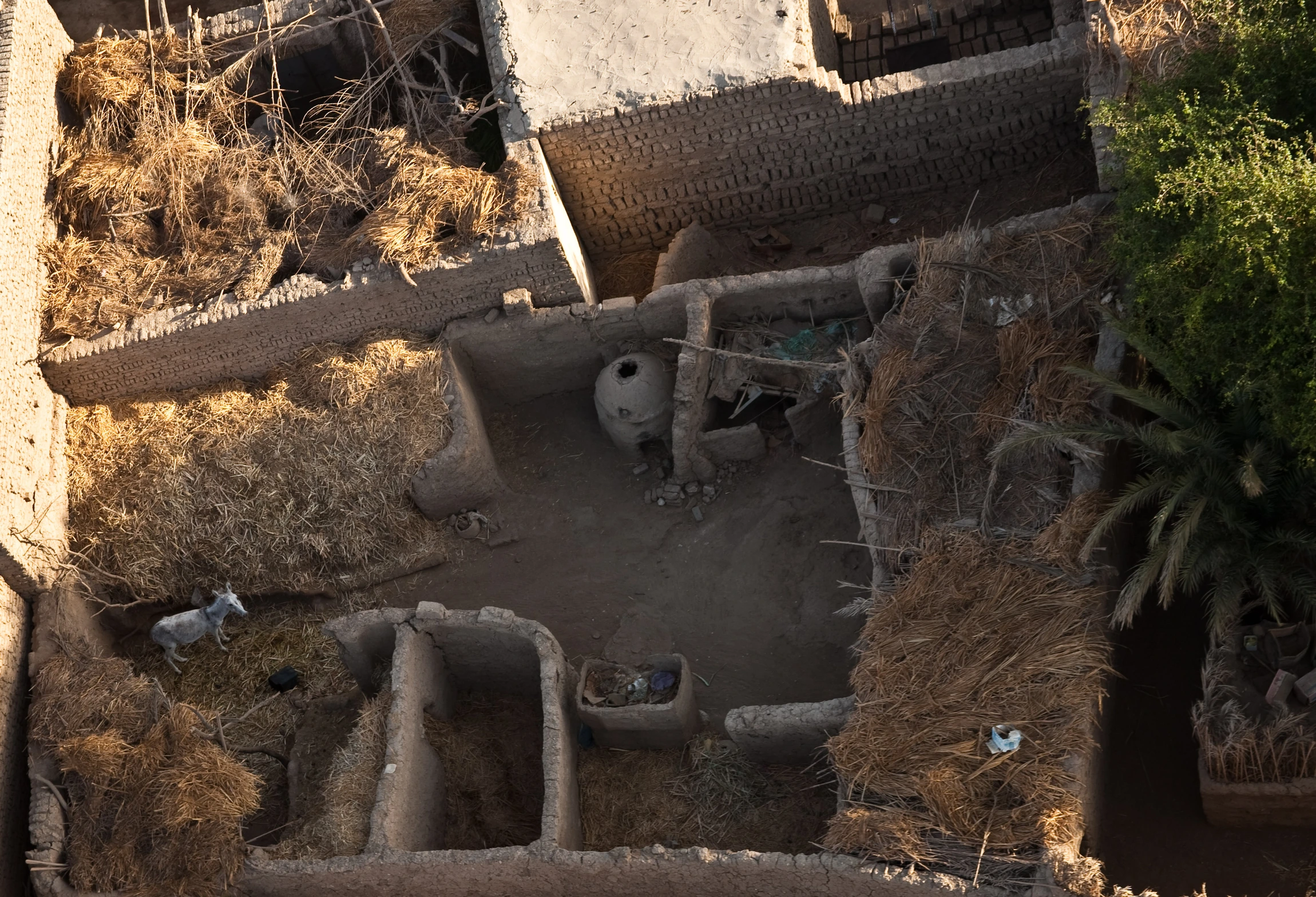
Photo credit: Allan Harris – CC BY-ND 2.0 – via Flickr.
How can I minimize my impact on climate change?
- Try to share a balloon with the maximum permitted number of passengers.
- Choose shared transport to the balloon airport when possible.
- Choose a hotel as close as possible in terms of road distance to Luxor’s Balloon Airport. Ask the operator for their suggestions.
- Support operators using efficient, low-impact practices.
- Offset your emissions with a small donation to a reforestation project.
- Offset your emissions and possibly more by going vegan for three days.
- Take an early morning flight when the air temperature is cooler to reduce the balloon’s fuel needs. You’ll also usually benefit from the best views

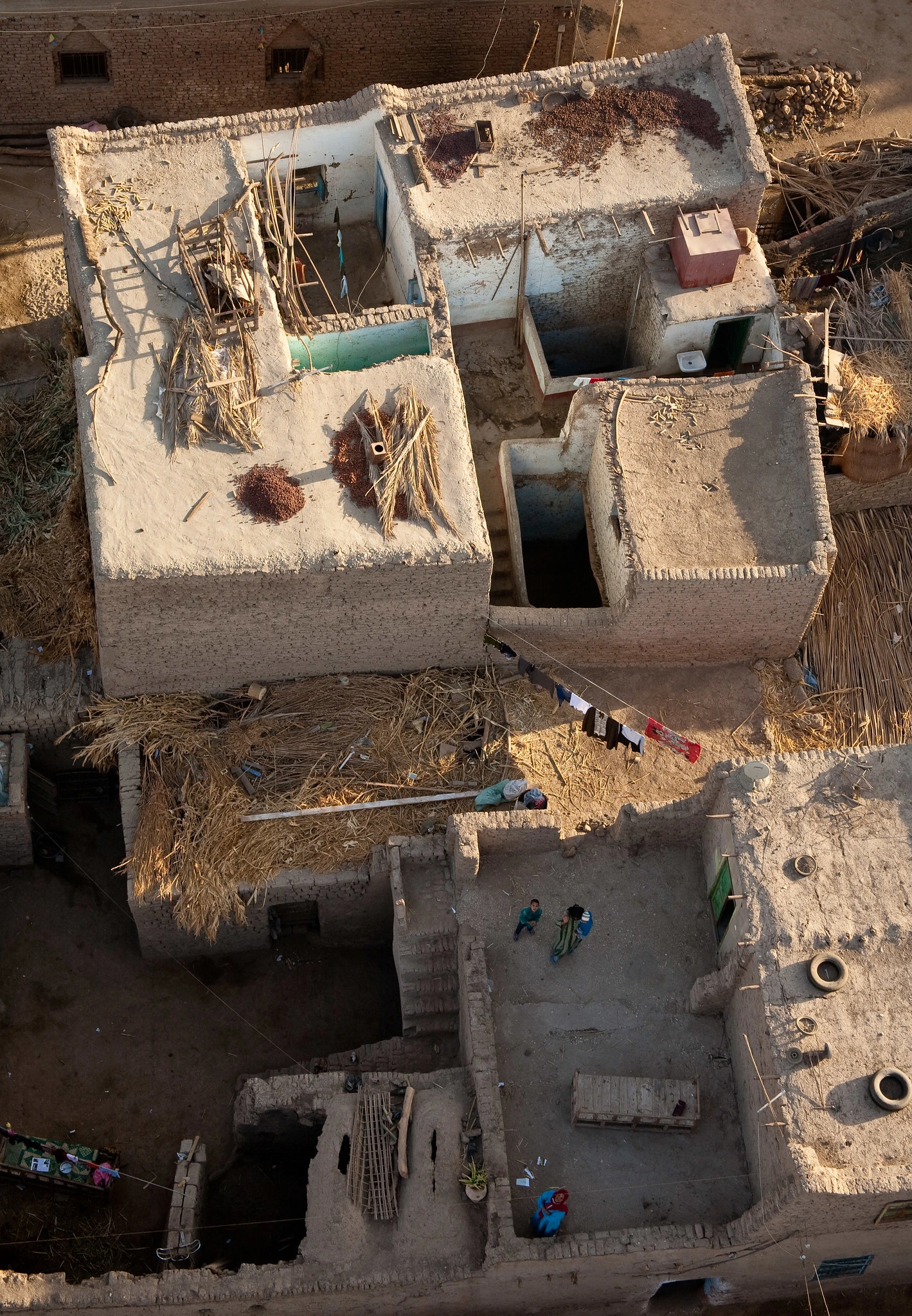
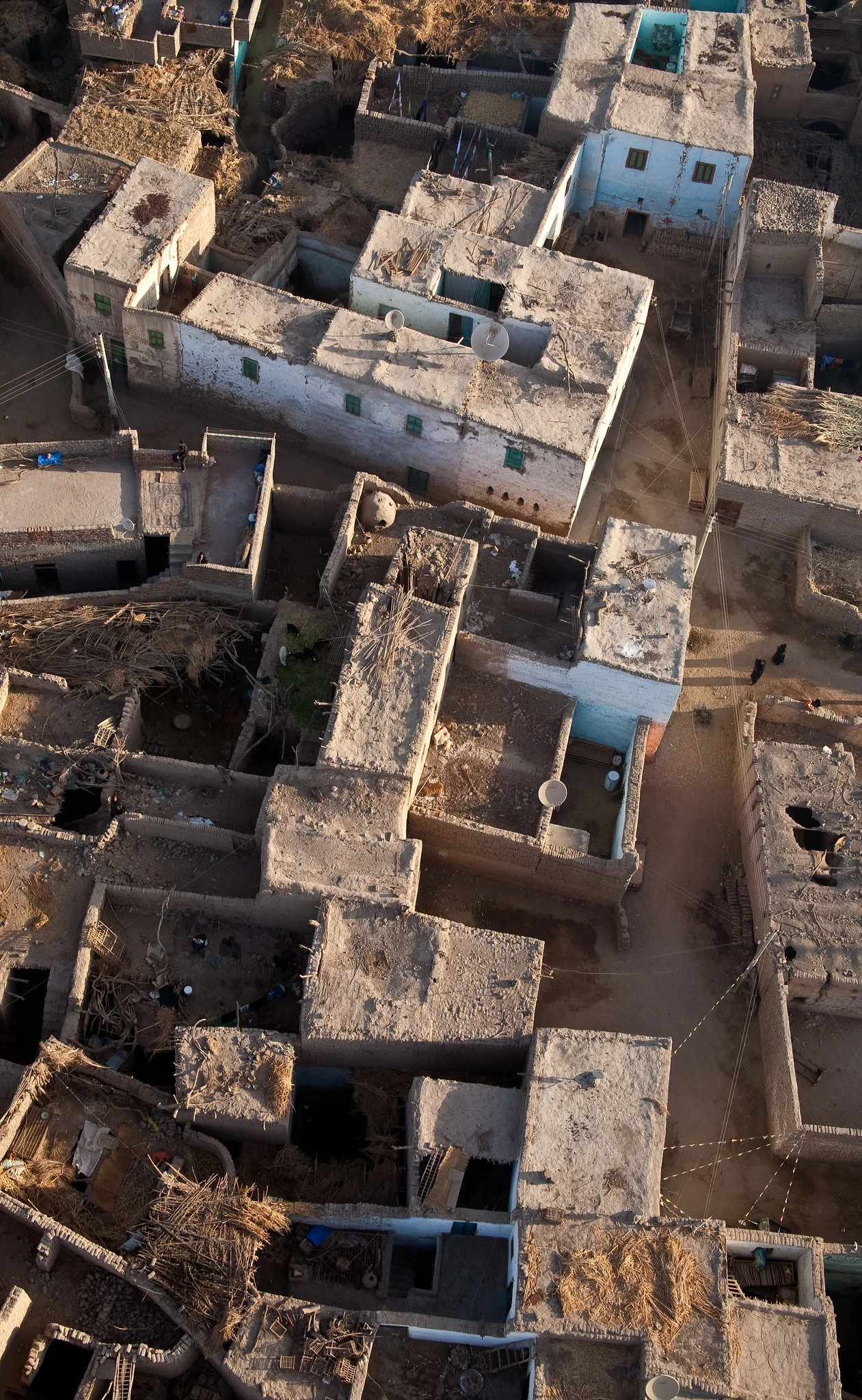
where every rooftop tells a story.
Photo credit: ebonyeg/Shutterstock.com
What are the environmental, social and economic benefits from Hot Air Ballooning?
Finally, it’s important to note that hot air ballooning isn’t inherently irresponsible—especially when steps are taken to minimise its environmental impact. In fact, it can offer meaningful advantages and benefits, particularly when compared to other types of excursions or modes of transport.
- Low noise pollution: Propane burners are only fired intermittently, and the flight itself is relatively silent — far quieter than aircraft or motor vehicles.
- No road erosion or dust: Balloons leave no tracks or trails, unlike 4×4 vehicles.
- No lasting land impact: Unlike roads or trails, ballooning doesn’t require infrastructure that cuts through ecosystems. Luxor’s Ballooning Airport occupies a relatively small area of land.
- Raises awareness: The view from above can spark reflection. Seeing the fragile green strip of the Nile bordered by desert can deepen appreciation of the environment and ancient landscapes.
- Respectful of cultural heritage: Balloons don’t touch or harm ancient sites. They allow admiration from a respectful distance.
- Provides a helping hand to local people: With the number of pilots, ground crew, administrative staff and drivers needed, it provides many locals with much needed employment. Compared to less labour intensive businesses, not only will your money help to support the local economy, but it is likely to benefit a relatively large number of employees and their families.
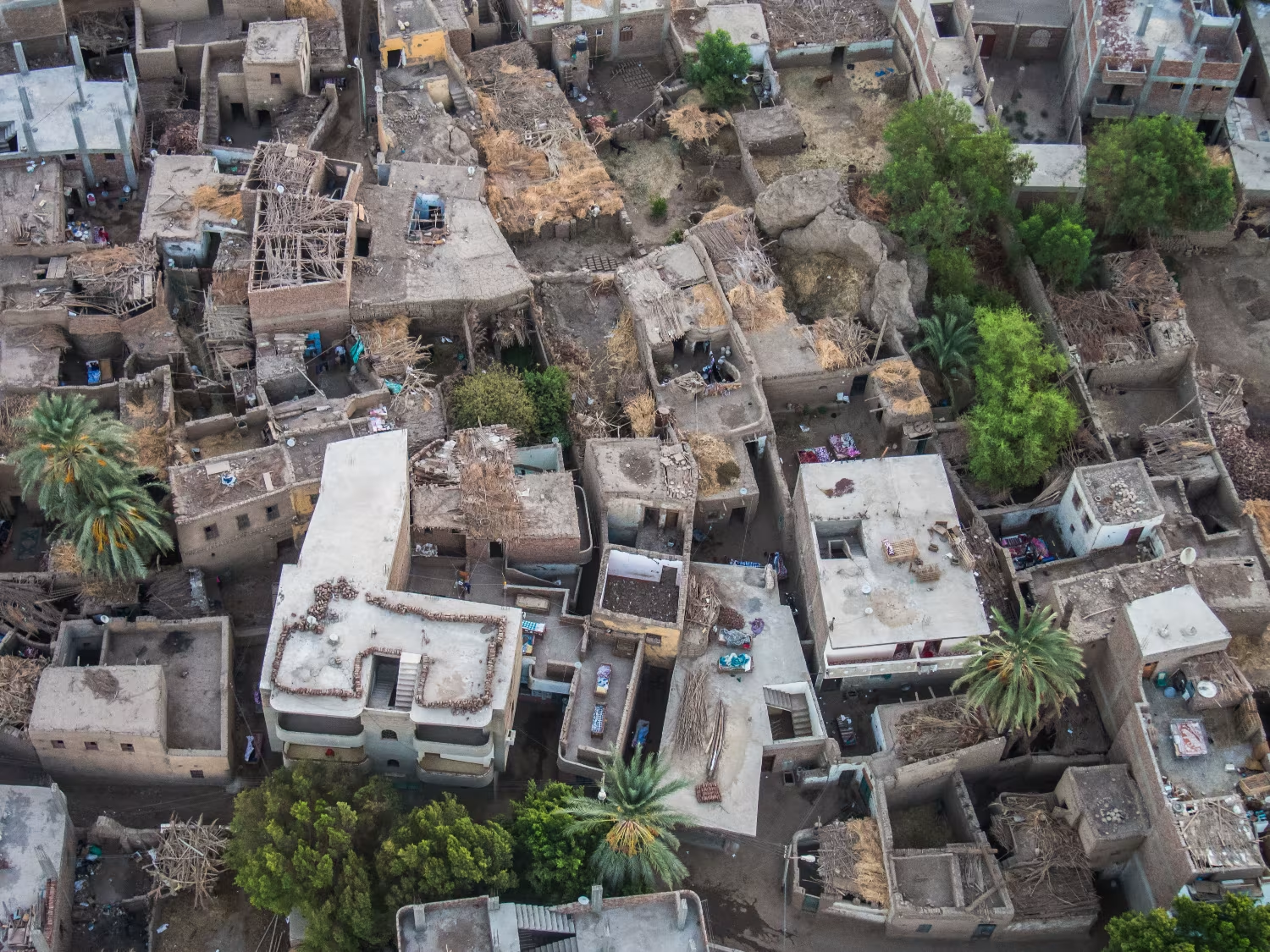
Luxor’s quiet rhythms from a bird’s-eye view..
Photo Credit: ebonyeg/Shutterstock.com
Which Luxor balloon company should I choose?
If you’re happy to share the sky with fellow adventurers, hot air balloon rides in Luxor can be surprisingly affordable. As of early 2025, prices typically range between €70–€80 or £60–£70 per person. That said, incredible deals do pop up—some flights have been advertised as low as £26 (€30), and I’ve even occasionally seen second-ride discounts for less than that!
But remember: not all balloon companies are created equal. When comparing options, be sure to ask what’s included in the price. Does it cover round-trip transport to the launch site? Is there a guide—and if so, what languages do they speak? Will there be breakfast or a snack? And how long is the actual flight (usually 40–60 minutes)? Before booking, I suggest you also:
- Explore each company’s website thoroughly
- Double-check what kind of insurance is included and whether they are fully licensed.
- Confirm whether you’re allowed to bring a camera, and when it’s okay to take photos (there may be some restrictions if for example you are likely to fly near any military zone).
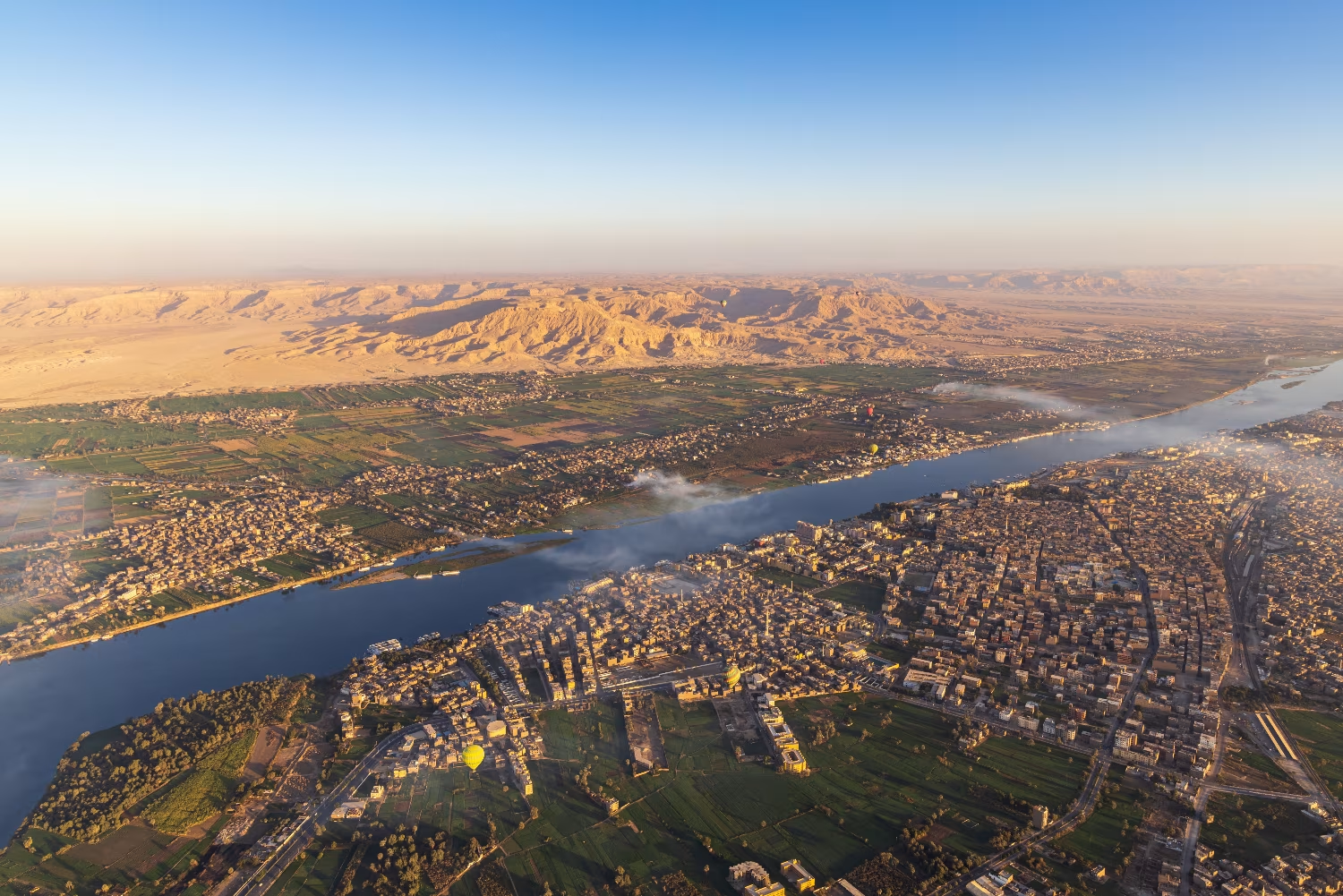
Photo credit: Emily Marie Wilson/Shutterstock.com
Here’s a list of some of the larger companies offering balloon rides in Luxor. These details are for information only—not personal recommendations. All figures and details were last checked on 11 April 2025. While the companies listed below appear to have a solid track record and a significant number of reviews (which I’ve included wherever possible), it’s important to do your own research. Choosing an operator is a challenging responsibility and an important personal decision, so please take time to research their safety record, policies, relevant licencing documentation, reputation and service before booking.
Hod Hod Soliman Balloons
- Hod Hod Soliman website.
- Tripadvisor rated 4.9/5 – 4,606 reviews
- Google rating 4.7/5 – 312 reviews.
- Email: info@hodhodsolimanballoons.com
- Phone: +20 122 222 2811
- Address: Omar Ali St just off Television Street
- Facebook 10K+ followers
- Instagram 54.6K+ followers
Sindbad Balloons
- Sindbad Balloons website.
- Tripadvisor rated 4.8/5 – 1,680 reviews
- Google rating 4.2/5 – 24 reviews
- Email: info@sindbadballoons.com
- Phone: +20 100 538 5533
- Address: 37 Abdel Hamed El-Omda st, off T.V st
- Facebook 6.8K+ followers
- Instagram 1.7K+ followers
Alaska Balloons
- Tripadvisor rated 4.9/5 – 1,345 reviews
- Phone: +20 100 568 8439
- Address: Salah El Din Street off Television Street
- Facebook 2.2K+ followers
- Instagram 116 posts
King Tut Balloons
- King Tut Balloons website.
- Tripadvisor rated 4.8/5 – 178 reviews
- Google rating 4.9/5 – 1,283 reviews
- Email: info@kingtutballoons.com
- Phone: +20 128 182 4995
- Address: 37 Joli Ville Street
- Facebook 1.1K+ followers
- Instagram 545+ followers
Magic Horizon Balloons
- Magic Horizon website.
- Tripadvisor rating 4.7/5 – 376 reviews
- Email: booking@magichorizon.com
Need some general or specialist advice on Luxor?
If you’re planning a trip to Luxor and want the latest, personalized tips on excursions—whether it’s soaring above the Valley of the Kings in a hot air balloon or exploring ancient temples—get in touch with Steven. Not only can he give you up-to-date, insider info on the best experiences, but he can also help arrange fully licensed, great-value transport from Marsa Alam to Luxor by taxi or minivan.
- Email Steven@marsaalam.com
- WhatsApp +20 128 433 2337
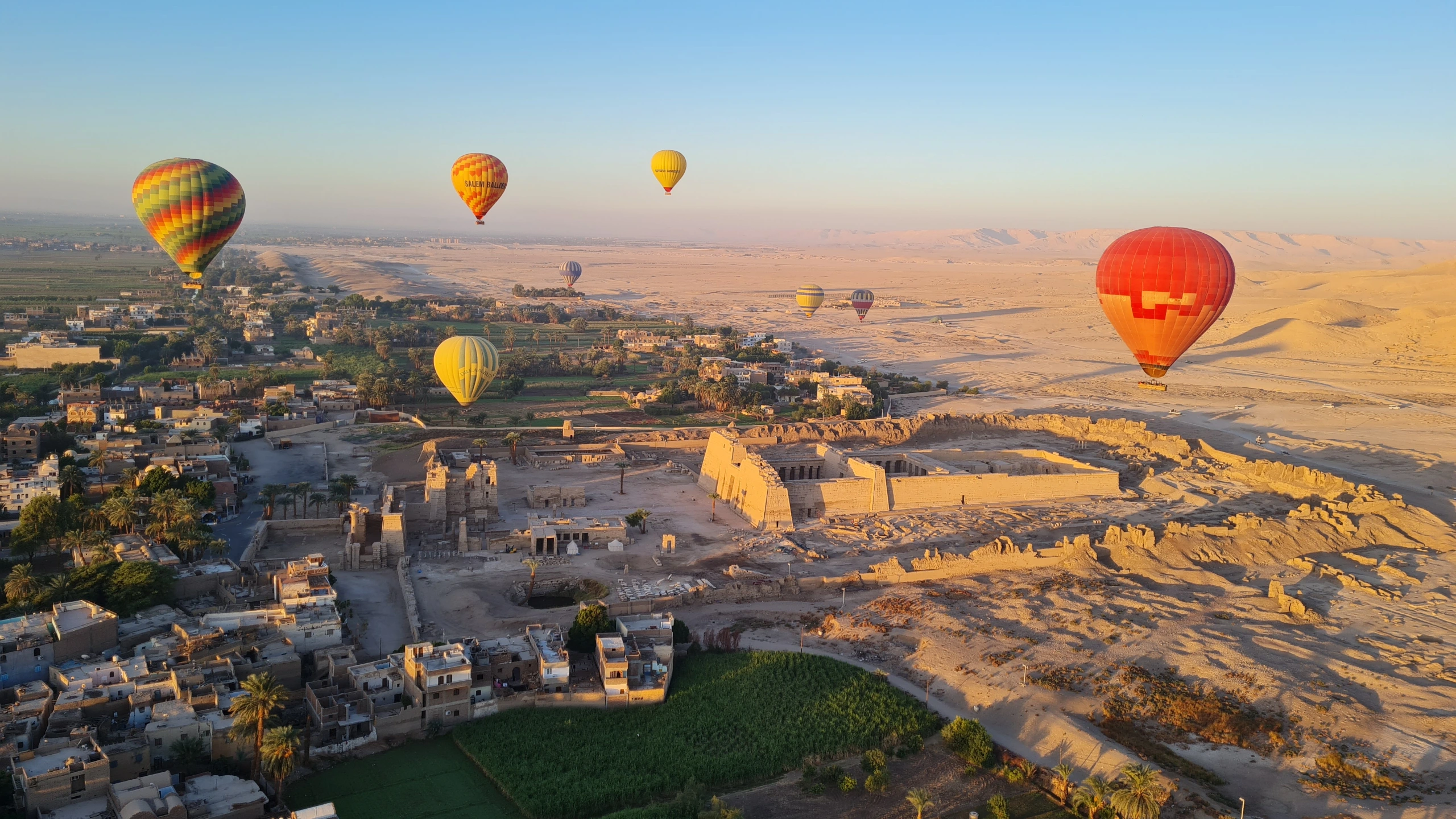
Photo credit: Arun Katiyar CC BY-SA 2.0 via Flickr.com
Footnotes
- The amount of propane used and resulting carbon dioxide emissions are based on the following sources. Adriana, Understanding Convection in Hot Air Balloons, 26 July 2023, flynewleaf.ca., which states that ‘a small hot air balloon, suitable for accommodating a pilot and a few passengers, might consume around 20 (US) gallons (75.7 litres) of propane per hour, while a large balloon with two burners might consume as much as 60 (US) gallons (227 litres). Annie Baldwin, Are Hot Air Balloons Environmentally Friendly? greenchicafe.com, 3 June 2024, claims that ‘usually, between 50 to 100 gallons of propane fuel are required for a typical passenger ride,’ though we haven’t used these figures as she didn’t state the precise amount of time the balloon was in the air or the type of balloon. However, she adds later that ‘estimates suggest a typical one-hour recreational hot air balloon flight can generate over 500 pounds (227 kg) of carbon dioxide per passenger. Meanwhile Baileys Balloons, based in the United Kingdom, states that ‘an average flight of one hour in a 105,000 cubic foot balloon (3000 cubic metres – a fairly typical tourist sized balloon) use(s) approximately 40 kg (about 81 litres) of propane, producing 120 kg of carbon dioxide.’ I also referenced the sources used in footnote 2 below.
- According to the Fly with Aerocene Pacha solar balloon flight project, pachaaerocene.org, ‘An average-sized hot air balloon (2,200 m3) uses about 136 litres of liquid propane gas in a one hour flight. This is equivalent to 207 kgCO2e (at 1.522 kgCO2/l) or the equivalent carbon emissions of driving an average car 1,250 km.’ Meanwhile, an article in Al Jazeera, Tarek Bazley, ‘New generation eco-balloons promise a greener future,’ claims that ‘a typical hour-long flight can consume up to 100 litres – that’s enough to drive a car for more than 1,000 kilometers.’
- Energy Transitions Commission Report 30 September 2021 The Energy Transitions Commission Calls for 40% Methane Emissions cuts by 2030. See also UN Environment Programme, ‘What’s the Deal with Methane?’ 18 October 2022.
- My own calculations were corroborated with separate calculations undertaken by ChatGPT, from statistics presented in an S&P Global/IHS Markit Study entitled ‘GHG emissions intensity of propane produced in Canada,” 82 April 2022. You should note that the G&P Global study was based on ‘analysis supported by the Canadian Propane Association.’ The study states in an appendix that it assumed a methane GWP of 28 relative to carbon dioxide at 1, so it seems almost certain the study’s results were based on a 100 (rather than 20 year) GWP time frame. End usage carbon dioxide emissions were given as 1.54 kg per litre. However, if additional pre end use carbon equivalent emissions were 16.7% of the total, then the adjusted total would be 20% higher at 1.849 kg per litre and if 27.5% of the total, the adjusted total would 38% higher than end use only at a total life-cycle usage of 2.126 kg per litre. The second 20 year GWP time frame estimate is based on an assumption of methane comprising approximately 40 to 50% of pre end use emissions.
Absolutely insightful read! The detailed breakdown of what to wear, balloon sizes, and the stunning views promised from Luxor made me eager for the experience. The honest discussion about safety and environmental impact was also very thoughtful. Definitely planning my trip here after reading this!