THE INCREDIBLE STORY OF
THE SS NUMDIA WRECK
AND BIG BROTHER ISLAND
The diving section of this article offers general advice, but it is no substitute to seeking guidance from a professional local dive guide before your dive.
On mobile: use fingers to zoom any image.
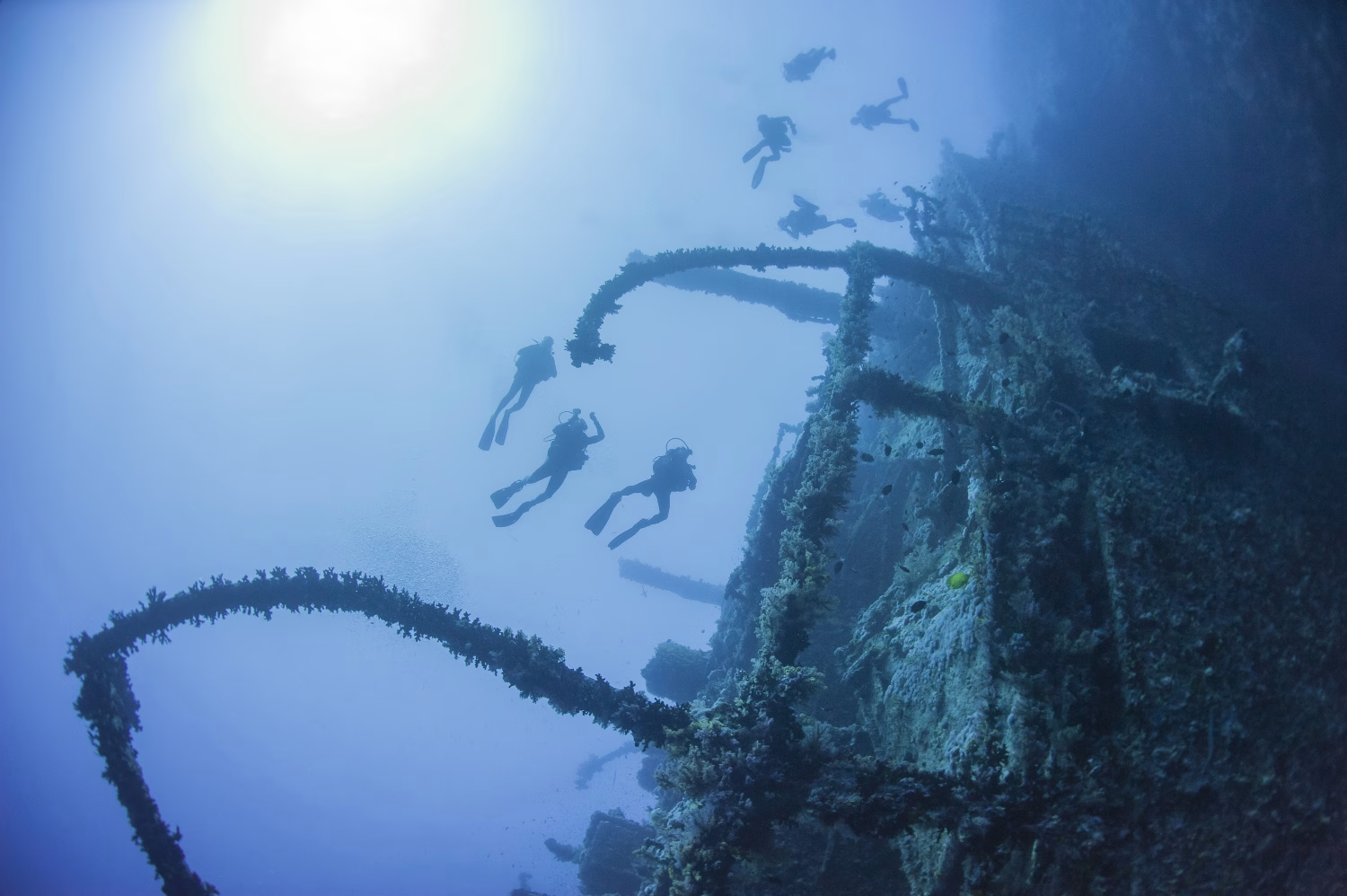
Photo credit: Paul Vineten/Shutterstock.com
The SS Numidia is one of the most spectacular and captivating wrecks to dive anywhere in the world. It lies at a dramatically steep angle, its stern at the deeper end, perched on the northern reef of Egypt’s Big Brother Island, somehow defying gravity by not sliding further into the deep blue abyss.
Over 110 years after its tragic sinking, most of its iron hull still remains remarkably intact, even including its tall mizzen mast, although now encrusted with layers of vibrant coral; while the wooden decks have rotted away allowing more light in and illuminating the rich variety of marine life that flourishes within the wreck.
Still not sure that it’s a must-see for any experienced diver ? Here are just a few of the exuberant comments shared by those who have already fallen for the otherworldly allure of the wreck and the island –
Six Quotes about the Wreck & the Island
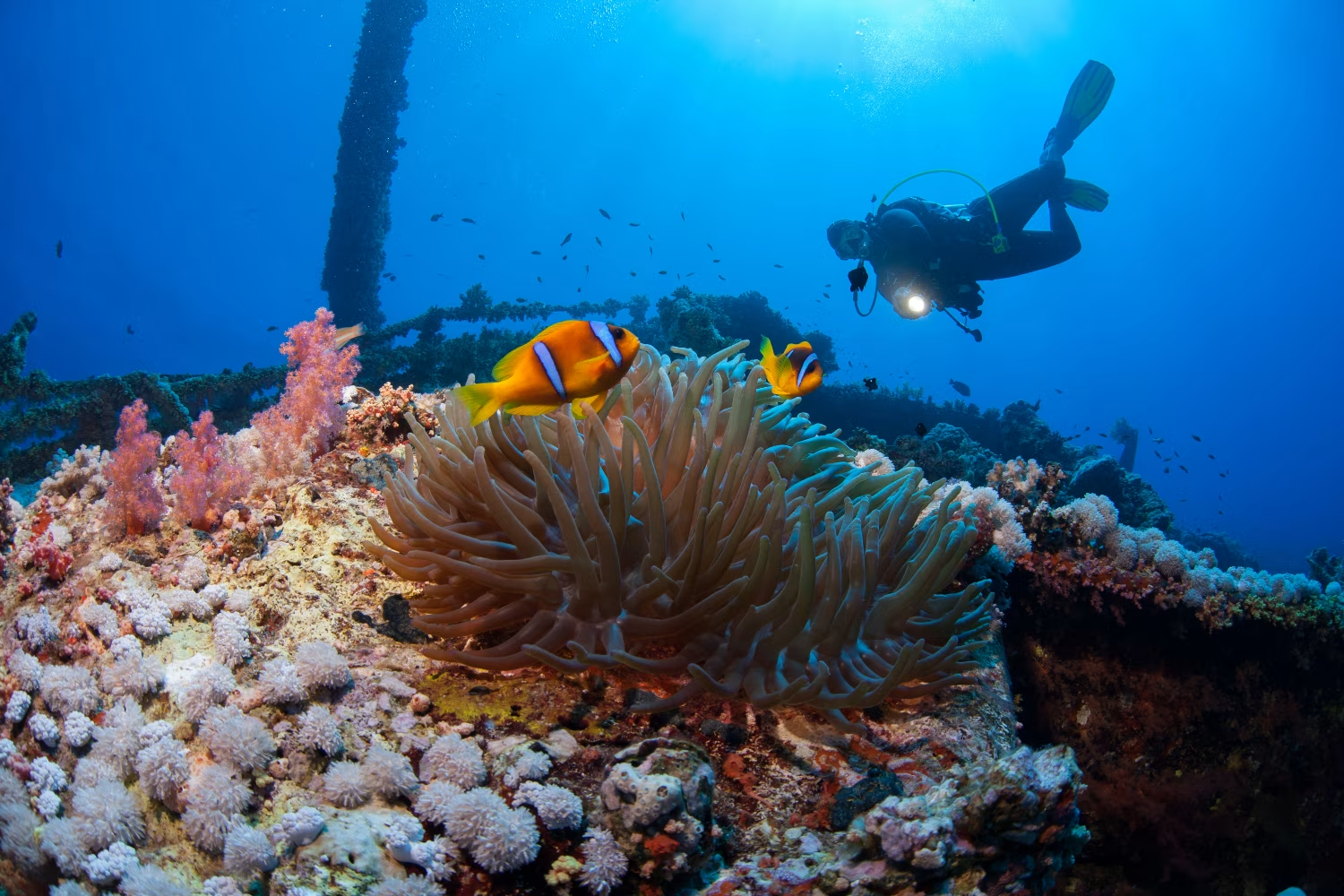
Photo credit: Marcus Bay/Shutterstock
Where is the wreck located ?
The Numidia wreck rests just off the northern shore of Big Brother Island, a tiny strip of Egyptian land measuring just 200 metres (656 feet) long, roughly the length of a TGV high speed train or a small container ship, and just 20 metres (66 feet) wide, about the same length as a standard articulated city bus. It’s topped by a striking cemented stone lighthouse built in 1883, adding another touch of history to its otherwise rugged and bleak appearance. On a map, you’ll find it approximately 67 kilometres (42 miles) east north east of the Egyptian coastal town of El Quseir.
The island lies just one kilometre (0.6 miles) north of its even smaller neighbour, Little Brother Island. From space both islands appear like tiny specs so far off the Egyptian shore that they are about a third of the way across the Red Sea. The approximate geographic coordinates of the wreck are 26° 19′ 00″ N / 34° 50′ 30″E, though in case of any error, please don’t rely on these for navigation.
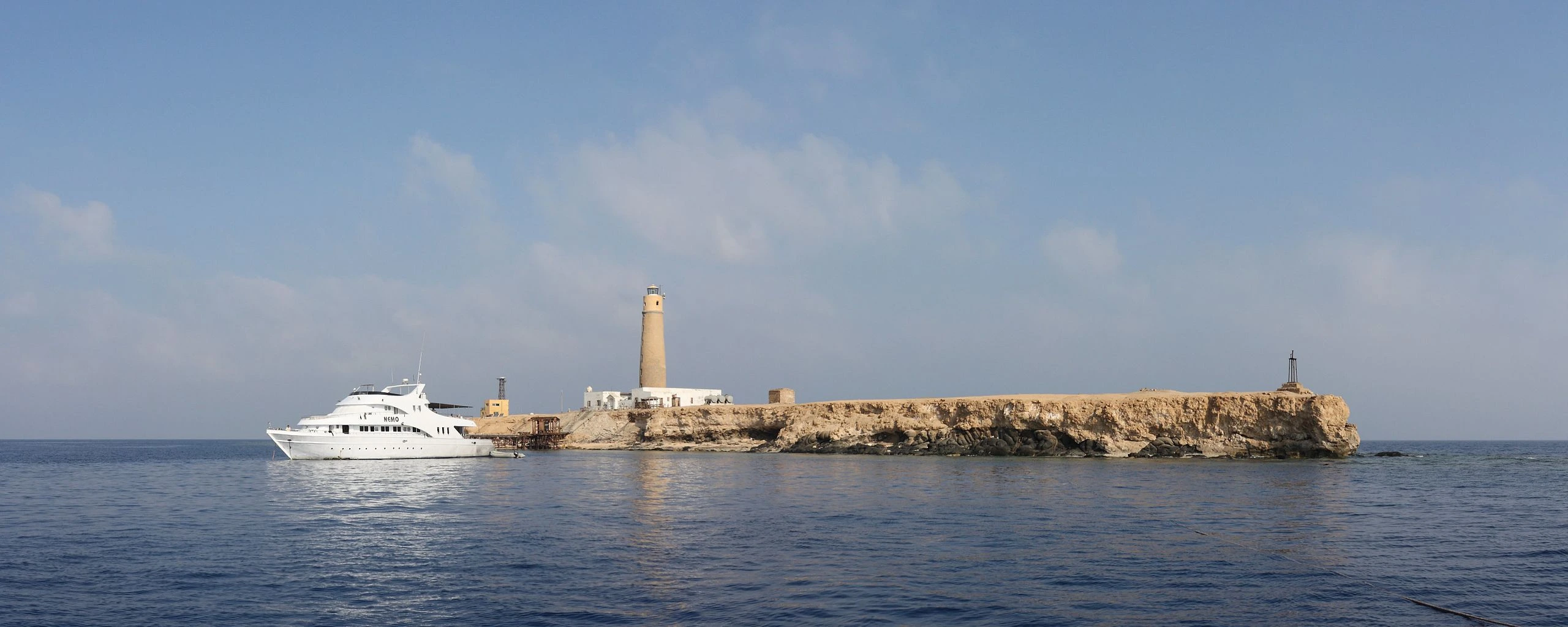
Photo credit: Alexander Vasenin via
Wikipedia Commons CC BY-SA 3.0
What about the SS Numidia’s history?
The Numidia was, for its time, an impressively sized British cargo steamship of about 137 metres (449 feet) in length, roughly the combined length of two Boeing 747s, 16.7 metres (55 feet) in width or about the span of two London double decker buses; and with a weight of 6399 gross tons, it was the equivalent of 450 London buses !
She was constructed during the final months of Queen Victoria’s reign by D&W Henderson of Glasgow for the Anchor line and was finally launched on 4 February 1901, less than two weeks after the queen’s passing. Yet, despite the rather ominous timing, there was nothing to suggest the tragic fate that would soon befall the ship.
D&W Henderson (the D&W standing for David and William) had a stellar global reputation for building all types of ocean going vessel. Founded in 1869, the same year Egypt’s Suez canal opened, the company was a pioneer in the use of iron hulls, which provided much needed strength and durability, enabling its ships, including the SS Numidia, to withstand the toughest ocean conditions. They were also innovators in developing more powerful and efficient steam engines for propulsion. Nevertheless, the SS Numidia retained two masts to utilize additional wind power and conserve fuel.

How did the Numidia sink?
After she was launched, Numidia made a safe return journey from Liverpool to Calcutta, passing through the Suez canal and Red Sea, without any noticeable incident. On 6 July 1901, she set off on her second voyage. In a strange twist of fate, much like her launch, the date coincided with the death of a European monarch, this time the assassination of King Umberto 1 of Italy by an anarchist on the very same day, but Captain John Craig, an experienced seaman in his mid-50s, and the ship’s crew of 78 were likely unaware of the news as the ship left Liverpool, once again bound for Calcutta.
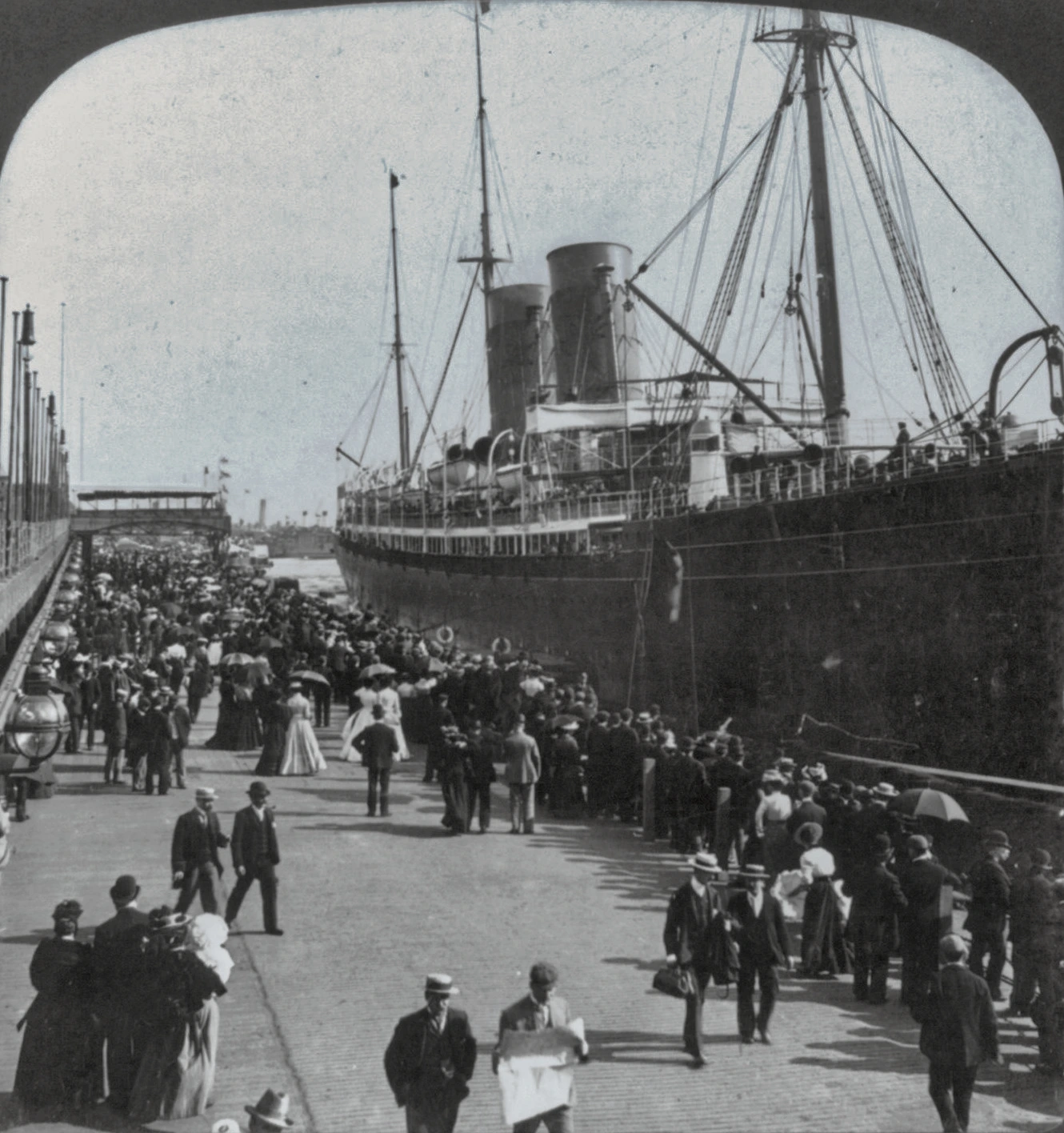
Liverpool 1902: Photo: Library of Congress
via Wikimedia Commons.
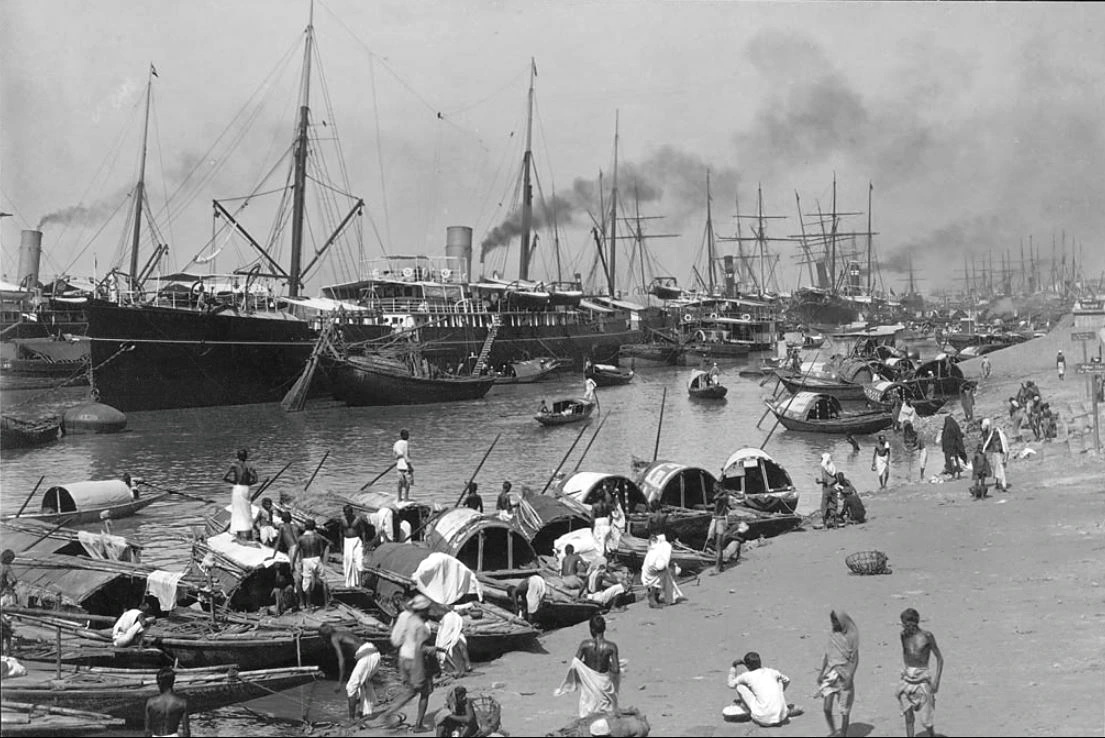
c. 1900 – Source Wikimedia Commons.
By the morning of Friday the 19 July, the Numidia had passed through the Suez Canal and was heading south into the Red Sea; and by sunset, the ship was close to Shadwan Island, located just to the north east of where El Gouna stands today, at the mouth of the Gulf of Suez.
At about 0100 on Saturday the 20th, Captain Craig spotted the distant light from the Big Brother lighthouse. Though weary from a long shift, he charted a course that would take the vessel about a mile west of the island and then retired to get some sleep, leaving the ship’s navigation and operation in the charge of Second Mate James Tulloch, the Officer of the Watch (OWW).
Unfortunately, it appears that sometime after 1:30 AM, when Tulloch last altered the ship’s course, he may have dozed off. Worse, the course change was insufficient to avoid the island. Just after 2 am, everyone aboard, including Captain Craig, was suddenly jolted awake by the defeaning crunch of metal as the Numidia struck the rocky shore. Craig immediately rushed to the bridge, shouting orders to reverse the engines to free the ship from the reef, but by 4 am the ship’s bow was not only still lodged fast on the reef but was also breached, with water pouring in to the forward number one hold.
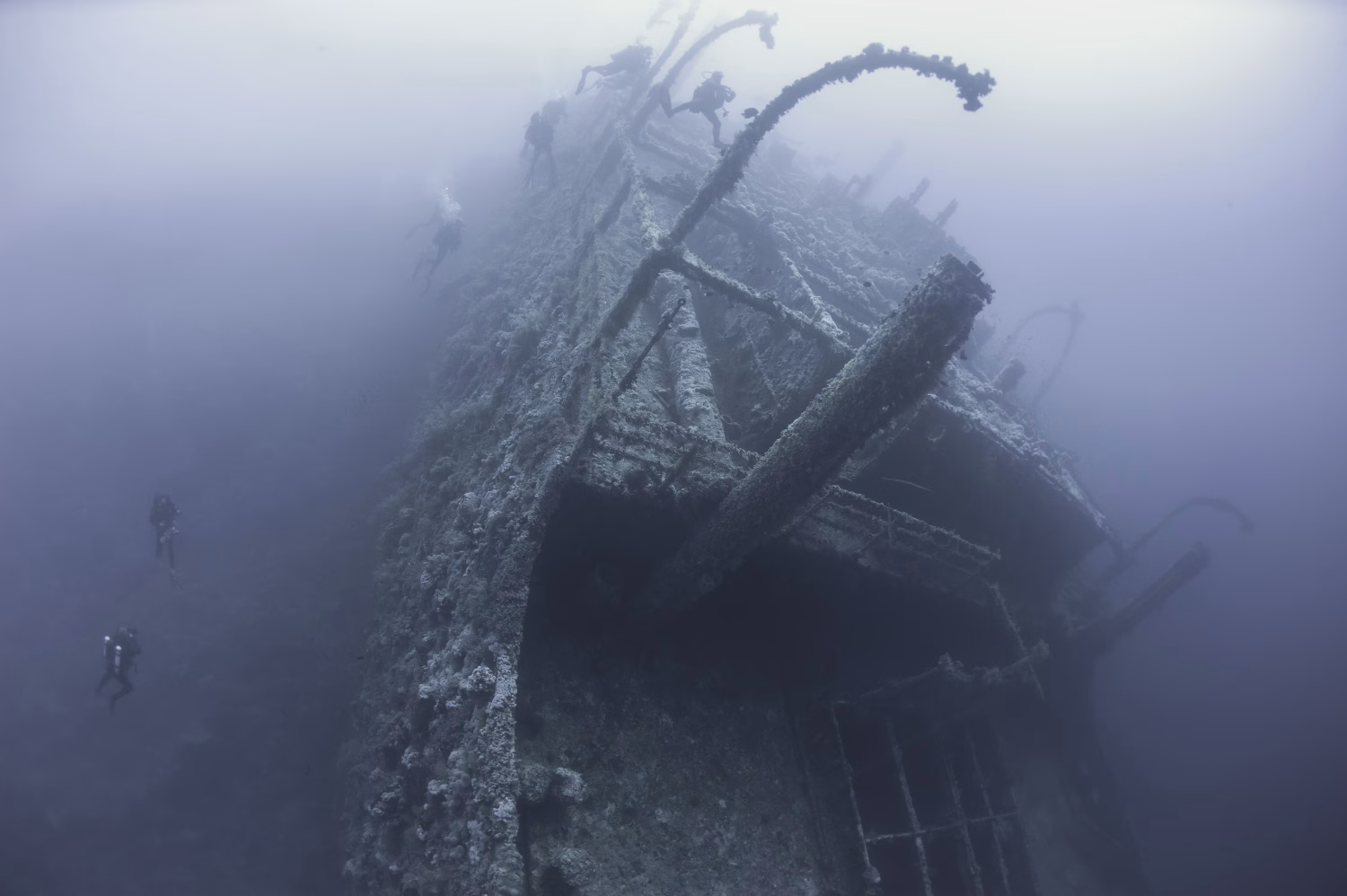
Photo credit: Paul Vinten/Shutterstock
Other vessels quickly arrived at the scene, and some of the crew were able to disembark onto the island. Meanwhile, another attempt was made to refloat the Numidia, but with water flooding in faster than it could be pumped out, Captain Craig soon realized that further salvage efforts would be futile. He then gave the order for the crew to begin preparations for rescuing the ship’s cargo — a task that would take an additional seven weeks to complete.
Day by day, as the crew continued unloading the cargo, the ship’s condition deteriorated and at some time after the cargo had been offloaded, the relentless tides, repeatedly forcing the aft of the Numidia up and down, combined with occasional storms, eventually caused the ship to break in two, roughly in the middle. The bow remained lodged on the shallow reefs, while the aft section began to sink stern-first, sliding down the steep coral wall. Fortunately, the stern came to rest on a small stretch of relatively flat seabed about 80 metres below sea level.
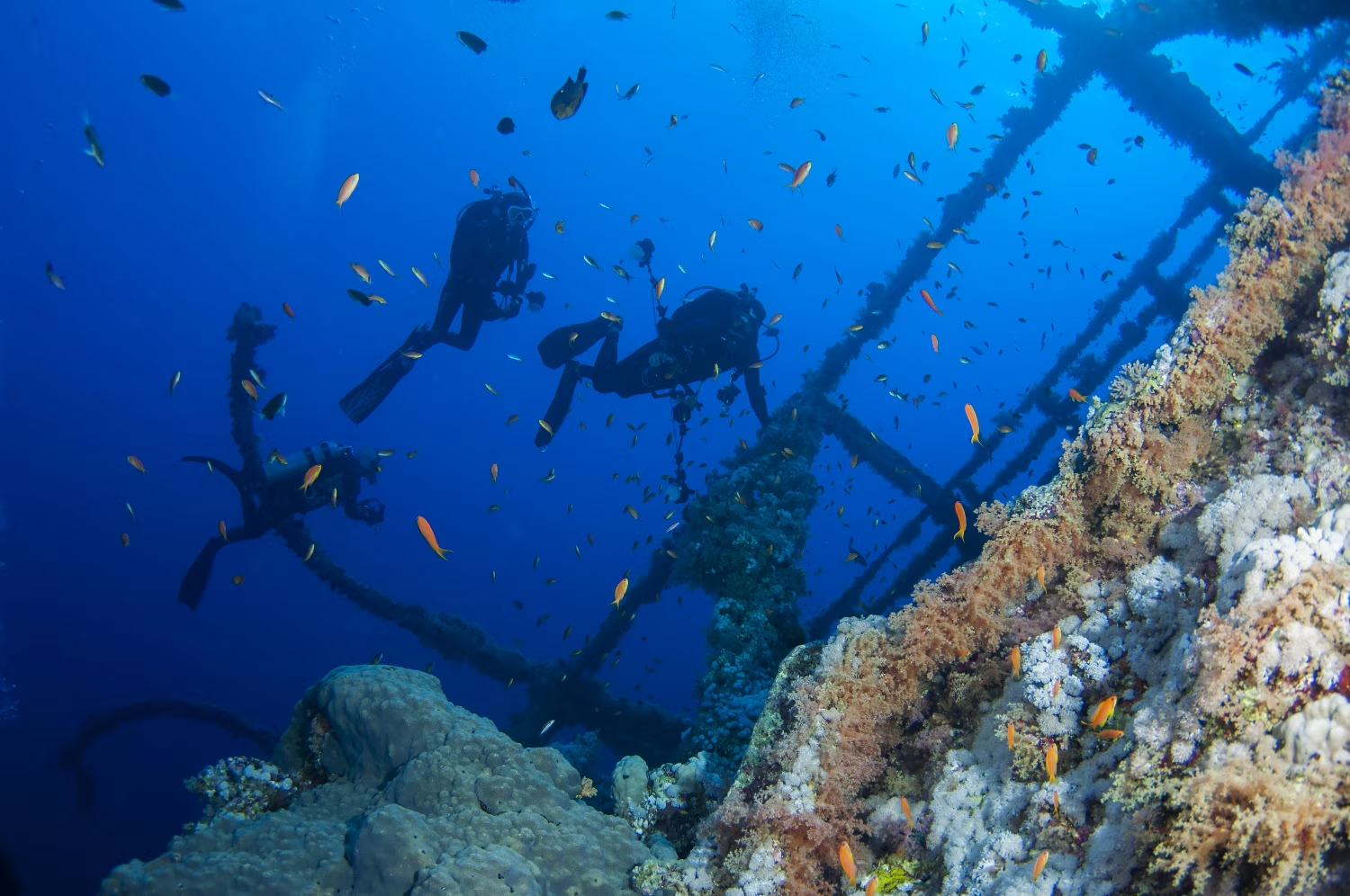
Photo: Jung Hsuan/Shutterstock
What is the Numidia wreck like today?
Unlike many of the reefs off Sharm El Sheikh, which have been negatively affected by commercial tourism, the reefs around Big Brother Island, including the reef wall where much of the Numidia wreck lies, remain remarkably pristine. The water visibility here is generally excellent, with an average of around 20 metres (65 feet). The wreck lies in shade during the morning, so the colours at shallower depths are more vibrant in the afternoon.
Despite the slow rise in sea temperatures, increased acidity, and the growing number of diving excursions to the island, the area’s coral reefs have shown impressive resilience. Divers can enjoy spectacular gorgonian sea fans, beautiful yet endangered bush-like black coral trees, and a rich variety of soft corals, with a diving torch illuminating them in vivid colours.
Over the course of the 11+ decades since the Numidia sank, its bow section has become almost entirely enveloped and submerged within the coral. However, the intact aft section still stands proud over the seabed, although it is also gradually becoming increasingly overgrown with corals of every type and colour, so much so that the ship’s portholes are barely distinguishable. However, certain areas, such as the holds, starboard gangway, engine room, bridge, and some cabins, might still be accessible (always check with your dive guide to confirm). These areas may offer the chance to dive through them with caution.
Alternatively, if you prefer to view the wreck from the outside, it’s generally advisable to stay to the starboard side (right side when facing the bow/front of the ship) due to strong north-to-south currents. The currents, however, can vary, so as always when diving, please consult your dive guide first and heed their professional advice.
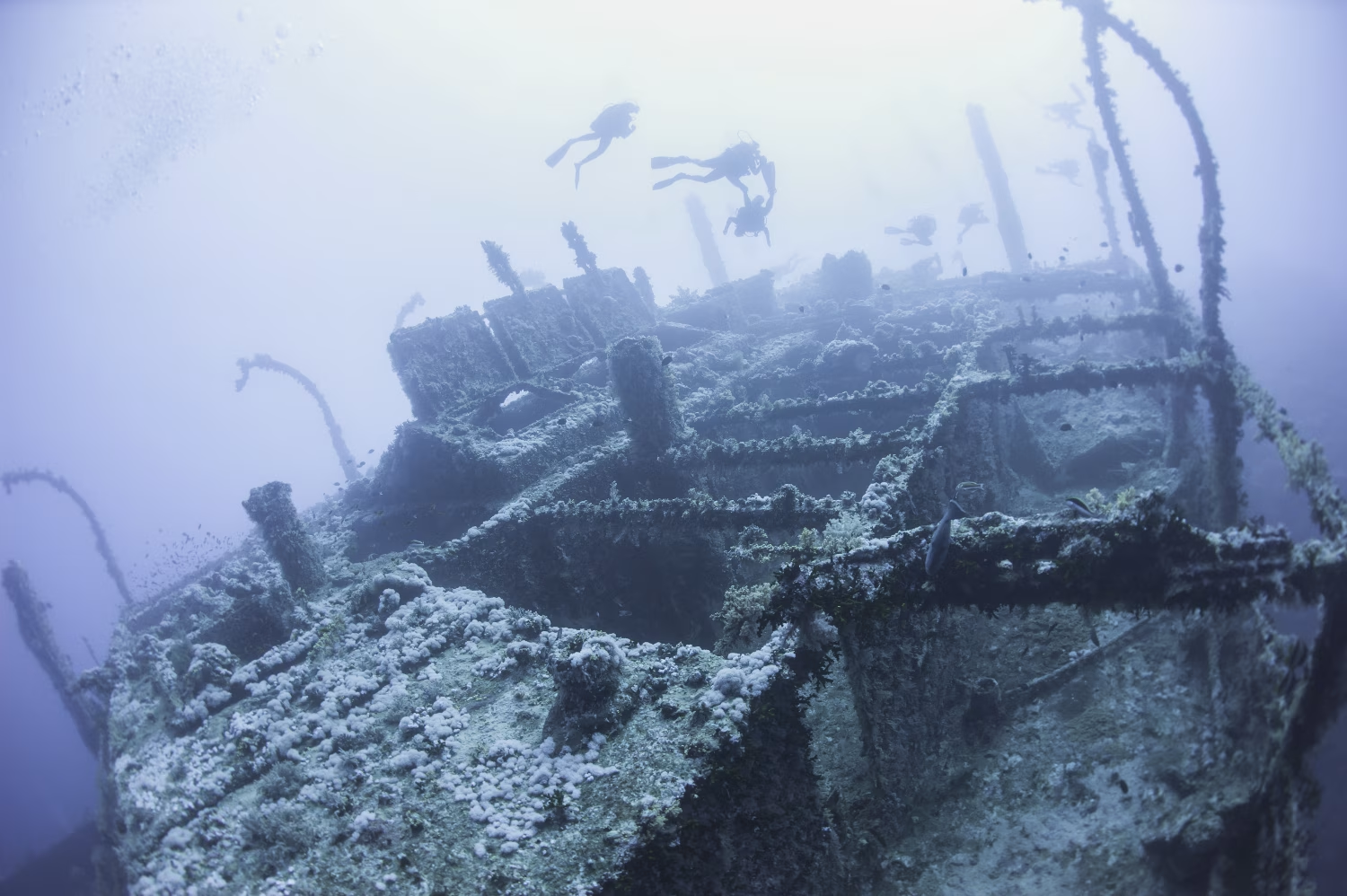
Photo credit: Paul Vinten/Shutterstock.com
What is it Like to Dive ?
Only scattered remnants of the Numidia’s higher bow structure remain in relatively shallow waters, just 8 meters (26 feet) below the surface. Over the years, it has been broken up by storms and strong currents, but the aft section of the ship remains remarkably intact. Assuming you have the necessary experience and equipment, here’s what you can expect to see as you descend (note that these depths are rough estimates and may vary):
- 8 metres (26 feet): You’ll encounter the first pair of coral encrusted train wheels, originally intended for use on the Indian Imperial Railways. These had been tied to the deck during the voyage and were presumably either too difficult or not sufficiently profitable to salvage. You might also notice other wreck fragments lying around at this and also shallower depths, though many now fully covered by the coral.
- 12 metres (39 feet): Another pair of train wheels comes into view.
- 20 metres (66 feet): At this depth you’ll find the remains of the cabins, the bridge and the funnel. Two of Numidia’s lifeboat davits remain in a swung out position as if frozen in time.
- 40 metres (131 feet): Here, you’ll be over the engine room. If you can safely dive down, you’ll be able to see the original triple expansion steam engine with its three cylinders and pressure gauges still visible.
- 46 metres (151 feet): The entrance to hold number 3, the first of the two aft cargo holds.
- 50 metres (164 feet): You’ll reach the base of Numidia’s mizzen mast, still standing at a proud 90 degrees from the steeply inclined ship to a height of about 45 metres below sea level. The large deck winches for the cargo booms are also visible, although sadly the booms themselves have disappeared.
- 80 metres (262 feet): Finally, you’ll reach Numidia’s rounded aft, including its rudder and propeller. Amazingly, there is still some coral here but much less than at 50 metres and shallower depths.
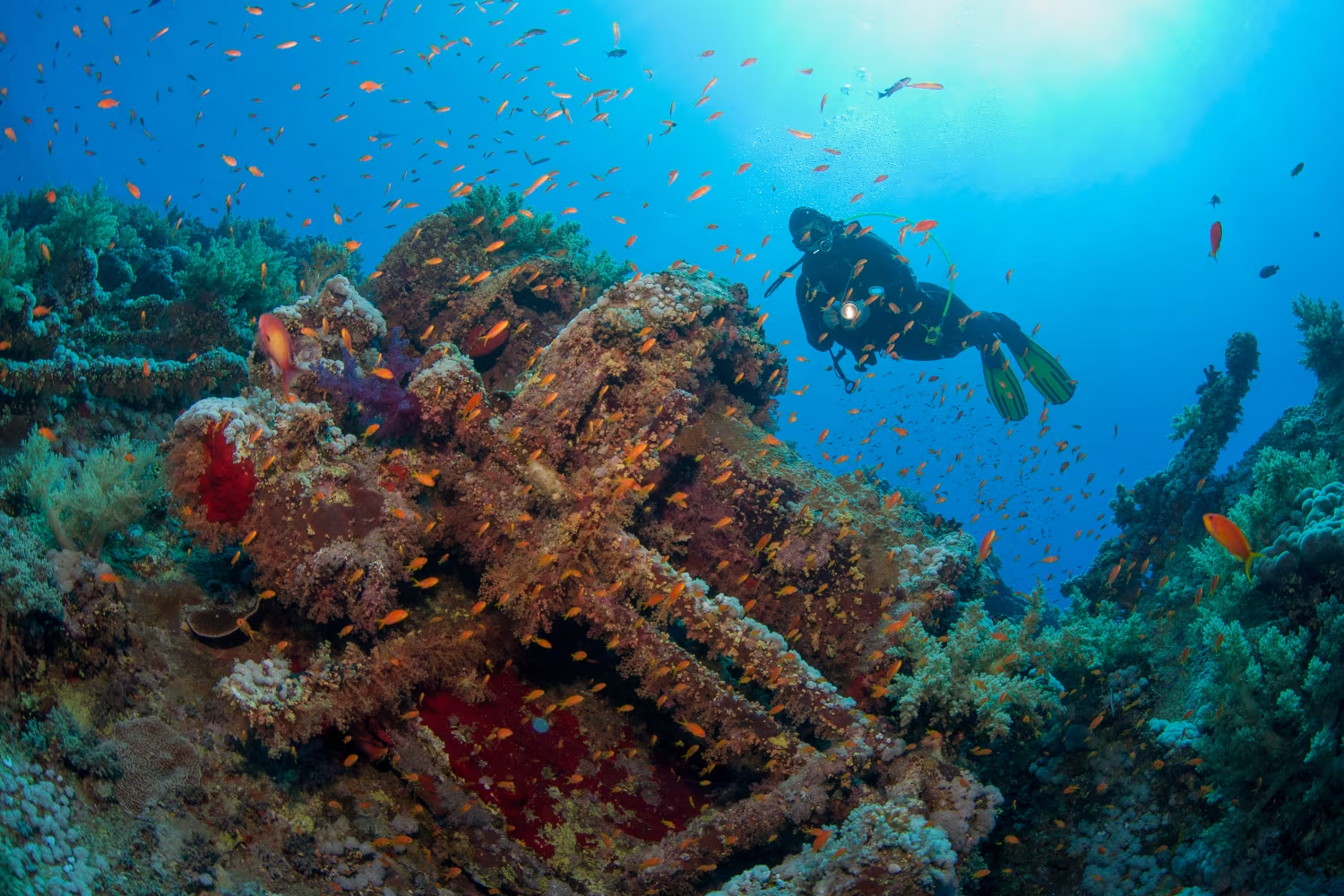
completely engulfed in coral.
Photo credit: Marcus Bay/Shutterstock.com
What fish might I see?
The presence of such a large wreck and Big Brother Island’s vibrant intact reef system, with steep drop-offs into the deep blue on all sides, guarantees that you’ll encounter one of the most life-rich environments on the planet. You have an excellent chance of coming across many of the Red Sea’s most fascinating marine species, including:
- Majestic and graceful manta rays (Manta birostris) gliding through the waters.
- Great barracudas (Sphyraena barracuda), with their sharp teeth, often seen being cleaned of parasites by surprisingly brave cleaner wrasse.
- Brightly coloured clownfish (Amphiprioninae), darting around their sea anemone homes, made famous by the film Finding Nemo.
- Titan triggerfish (Balistoides viridescens) flaunting their striking colours.
- Shoals of small brightly coloured anthea (Pseudanthias), sometimes ambushed by predatory giant trevallies (Caranx ignobilis).
- Parrotfish (Scaridae) nibbling away at the coral with their beak shaped mouths.
- Shy yellow edged moray eels (Gymnothorax flavimarginatus) peeking from rocky crevices, their toothy grins seeming intimidating but usually hiding a more reserved nature.
- Napoleon wrasses (Cheilinus undulatus), their high-domed foreheads and vivid markings making them stand out.
- Grey reef sharks (Carcharhinus amblyrhynchos), with their black tipped fins, often seen circling the Numidia hunting for prey.
- Thresher sharks (Alopias vulpinus) with their distinctive long tails that whip through the water with precision.
- Self confident oceanic whitetip sharks (Carcharhinus longimanus) often near the surface, particularly in the cooler months from late October through until April.
- Scalloped hammerhead sharks (Sphyrna lewini) with their strange mallet-like heads and slow methodical movements, again particularly in the cooler months from late autumn to spring.
- Yellow banded pipefish (Corythoichthys flavofasciatus) – a tiny, elongated fish that looks like a thin stick swaying in the current
- Packs of coral groupers (Plectropomus), known for their bold colours, hunting for prey near ocean drop offs.
- Lionfish (Pterois) with their striking venomous spines and red and white colours.
- Endangered hawksbill sea turtles (Eretmochelys imbricata) with their beautiful patterned shells, feeding in the shallower areas or taking advantage of the currents in deeper waters.
How much diving experience do you need?
Diving at the Numidia wreck is best suited for advanced divers. However, less experienced divers with some prior experience may also enjoy it if they focus on the shallower sections of the wreck and carefully follow their dive guide’s advice, as the currents can be quite strong. The deeper parts of the wreck, which plunge to depths of 80 meters, require specialized training, proper equipment, and substantial diving experience. Additionally, be aware that rough seas and powerful currents can sometimes make diving here difficult or even dangerous.
Is there anything else worth exploring nearby?
Absolutely! In addition to the island’s stunning reef, there’s also the impressive wreck of the Aida, lying just 100 meters away. This medium-sized supply vessel, weighing 1,428 tons, sank after striking the rocky shore during rough seas on 15 September 1957, while transporting lighthouse staff to the island. For more details on the Aida wreck, visit the shipwrecks page of this website.
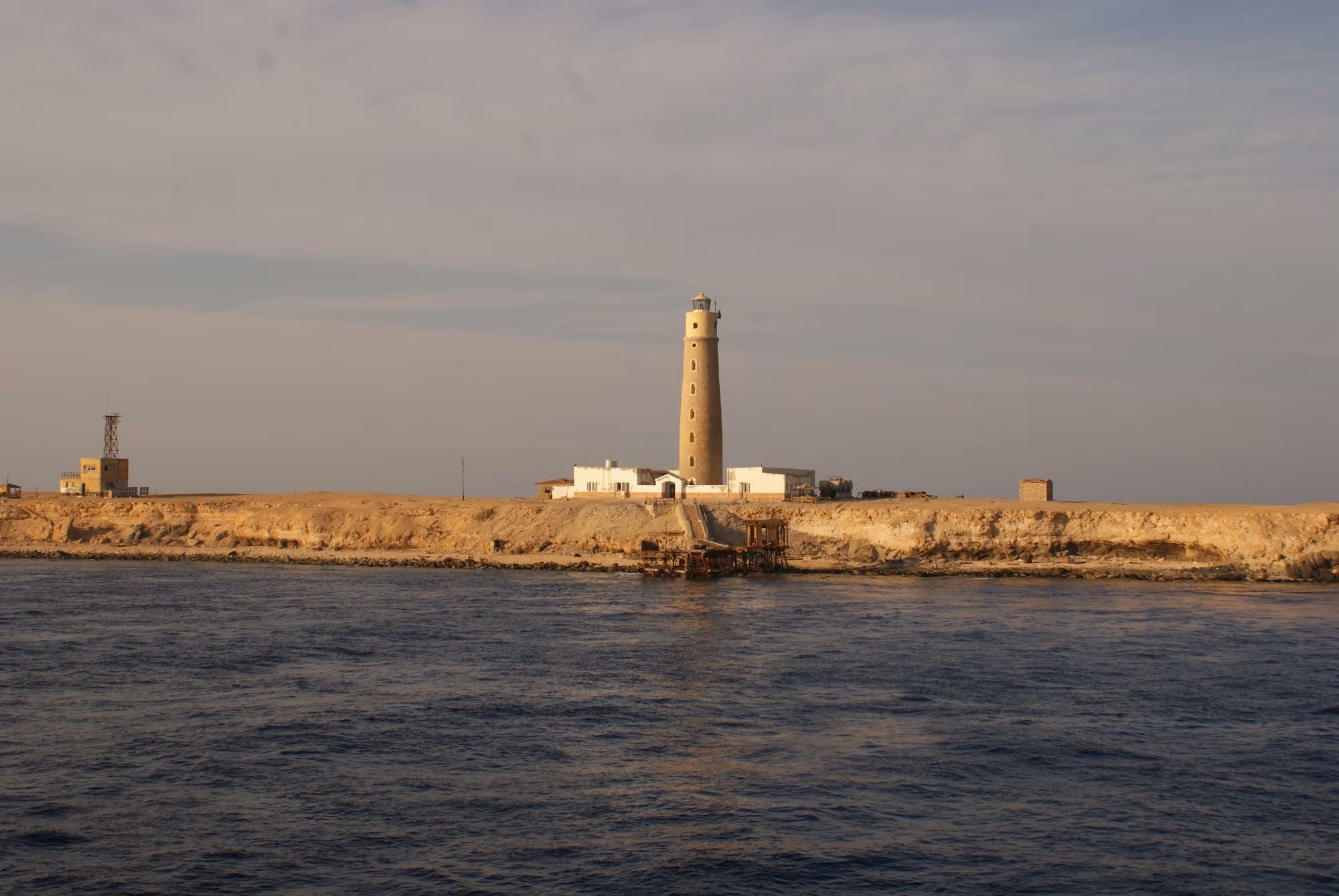
Photo credit: Thomei08 – GNU
Free Documentation License via
Wikimedia Commons. Changes applied cropping,
colour toning & Luminar Neo twilight enhancement.
Big Brother Lighthouse
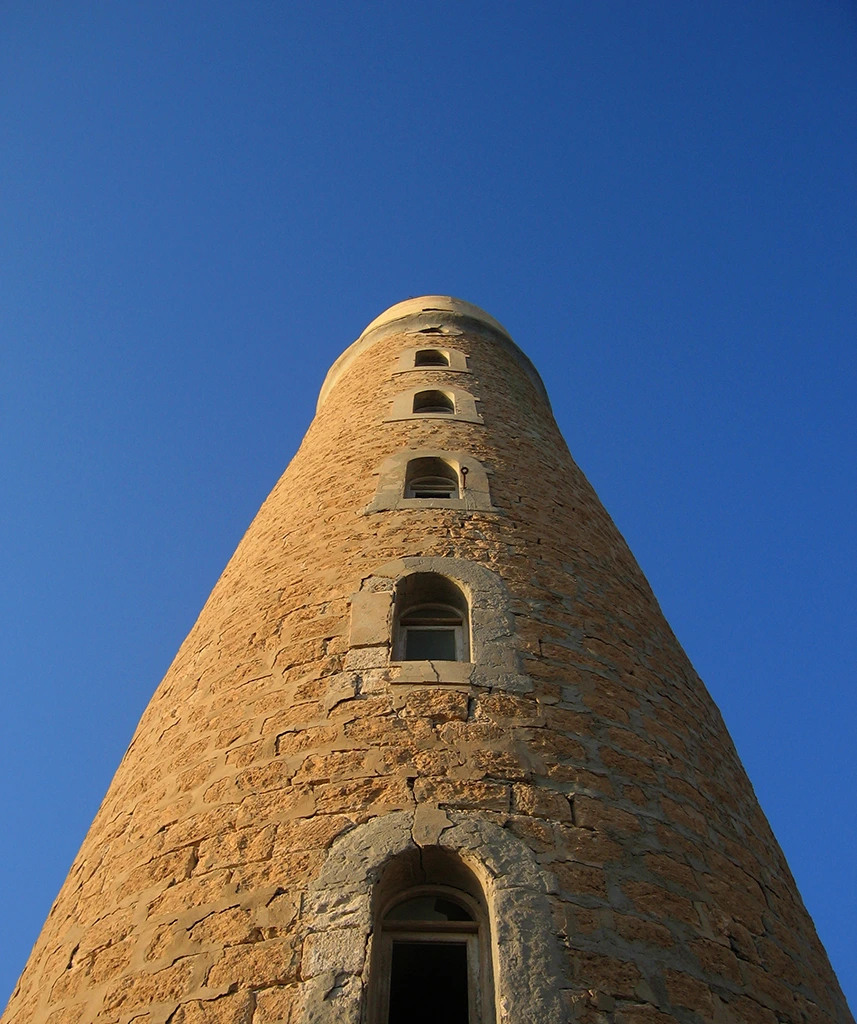
After your exploration of the Numidia, you might want to visit the island’s towering 32 metre lighthouse, constructed from cemented stone way back in 1883. It makes a stunning backdrop for any photograph, especially at sunrise or sunset. This lighthouse is not only highly photogenic, but also a remarkable feat of nineteenth-century engineering, standing on such an isolated, uninhabited island far from the Egyptian mainland.
The construction must have posed a significant challenge. The walls at ground level are an impressive four feet thick, tapering to just two feet at the top, and a spiral iron staircase provides access to the lantern room, which, with the proper permissions, offers breathtaking views over the small island. Until 1984, the lighthouse operated with its original mechanism manufactured by Chance Brothers of Birmingham, with the pressurised gas lamp powered by white gas pumped from a tank stored at the base of the lighthouse.
The original light remained in operation for just over a hundred years and could be seen from over 20 miles away, guiding approaching ships which would see a bright flash of light every five seconds. In 1984, an electrical generator was finally brought to the island and the light replaced by an even more powerful one, currently operated by the Egyptian navy.
In the early 1960s, the lighthouse crew had the honour of hosting President Gamal Abdel Nasser on Big Brother Island, where he stopped long enough to enjoy a cup of tea brewed up by one of the keepers. The celebrated French oceanographer, author and film maker Jacques Cousteau also visited the island, describing his encounters with ‘nervous sharks’ in his book The Silent World.
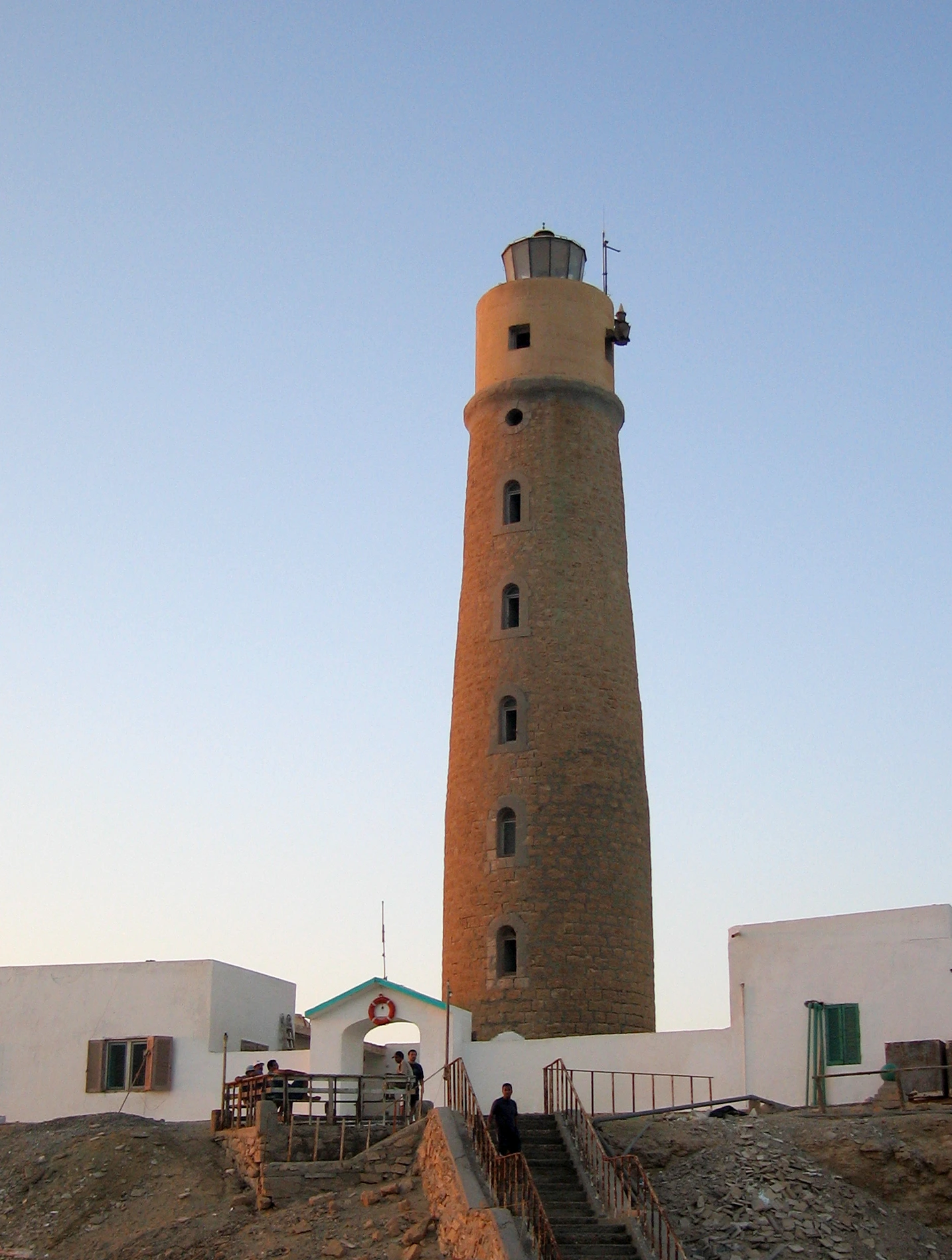
Photo credit: Jon Hanson CC BY-SA 2.0
via Wikimedia Commons
century engineering. Photo credit:
Jon Hanson CC BY-SA 2.0
via Wikimedia Commons
Is there anything else to see on Big Brother island ?
Aside from the lighthouse, the spectacular fringing reefs, the two main shipwrecks – the Numidia and the Aida – and bird spotting (especially seabirds such as the brown booby, sooty tern and lesser crested tern) – not really, although you might notice a small military garrison there, with an estimated 12 soldiers, according to one diver.
What happened to the Captain and the Second Mate after the sinking?
An official inquiry into the sinking of the Numidia was held by the Board of Trade in Glasgow in October 1901. The inquiry concluded that Captain John Craig had failed to make a sufficient course adjustment before retiring for the night to ensure the ship’s safe passage around the island and that he should have stayed on the bridge until the ship had safely passed Big Brother.
However, the inquiry ultimately placed the blame on Second Mate James Tulloch, who was found responsible for the failure to navigate around the island. It determined that he failed to inform the Captain when he altered the ship’s course at 1:30 AM and had likely fallen asleep soon afterwards. As a result, Tulloch’s license was suspended for nine months.
Numidia Wreck Videos
TikTok 10.02.2024, 70+ likes.
07.11.2021, 4m 42s, 13+ likes, 1K+ views,
Lighthouse at 7s, Numidia wreck at 30s,
titan triggerfish at 1m 20s, silky shark at 2m 37s,
giant gorgonian at 3m, thresher shark at 4m 28s.
the train wheels at 1m 10s.
10.05.2024 – 3m 19s – 55+ likes – 1K+ views
Who organizes dives at the wreck?
There are a number of diving operators offering excursions to Big Brother and the Numidia wreck. It’s definitely worth requesting the current schedule details and prices from any of the following –
- Redsea-diving.com: Check their contact us page.
- Seawolf-Safari.de: Check their schedule & their contact us page.
- Egypt-liveaboard.com: Check their contact us page.
- Greenforce.be: Check their prices & contact us page.
If you still can’t find what you’re looking for, contact Steven, a top local expert with an in depth knowledge of all the major Red Sea diving sites – email steven@marsaalam.com or contact him via WhatsApp on +20 102 999 9978 or via phone on +20 128 433 2337.
What else do I need to know?
Since the Numidia wreck has been part of a protected marine park since 1983, please ensure you have the necessary permissions before diving. Dive boats, including liveaboards, usually depart from Port Ghalib to take divers to Big Brother and the Numidia wreck. However, you should check with your dive operator for the latest details.