Camel Safaris and the Shalateen Camel Market
To book a safari or a trip to Shalateen please email Steven@marsaalam.com or via WhatsApp on +20 102 999 9978
CAMEL SAFARIS
If you wish to go on a camel safari please contact Steven by email at steven@marsaalam.com or via WhatsApp on +20 102 999 9978 or via phone on +20 128 433 2337. He will let you know what trips are currently available and the prices.
Camel safaris are a surprisingly peaceful, interesting and efficient way to explore the desert hinterland with its mountainous scenery, beautiful sunsets, starlit nights and unique wildlife as well as to discover more about the culture of the local indigenous Ababda people [learn more about them here], often described as “Bedouin” in tourist literature.
For those of you who are a little nervous, many resorts offer camel rides along the beach and you might want to try a brief ride first to gain confidence.

27.02.2025 11m 25s 63K+ likes 888K+ views
Another alternative for the more nervous available on some camel safaris such as some of those in the Wadi El Gemal National Park is the option of a camel-pulled wagon, which will take you safely through the wadis and sand dunes stopping off so you can see the wildlife or so that you can taste the local food such as bread baked on a fire in the sand or camel cheese.
WADI EL GEMAL NATIONAL PARK
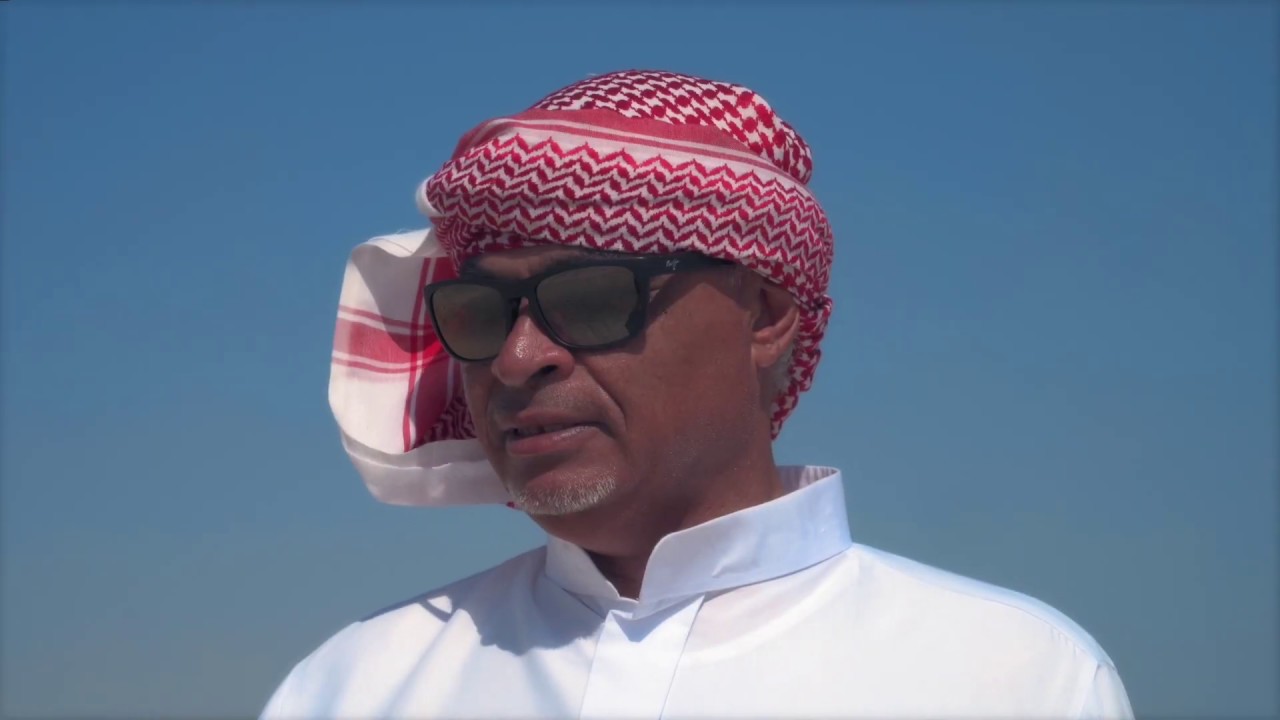
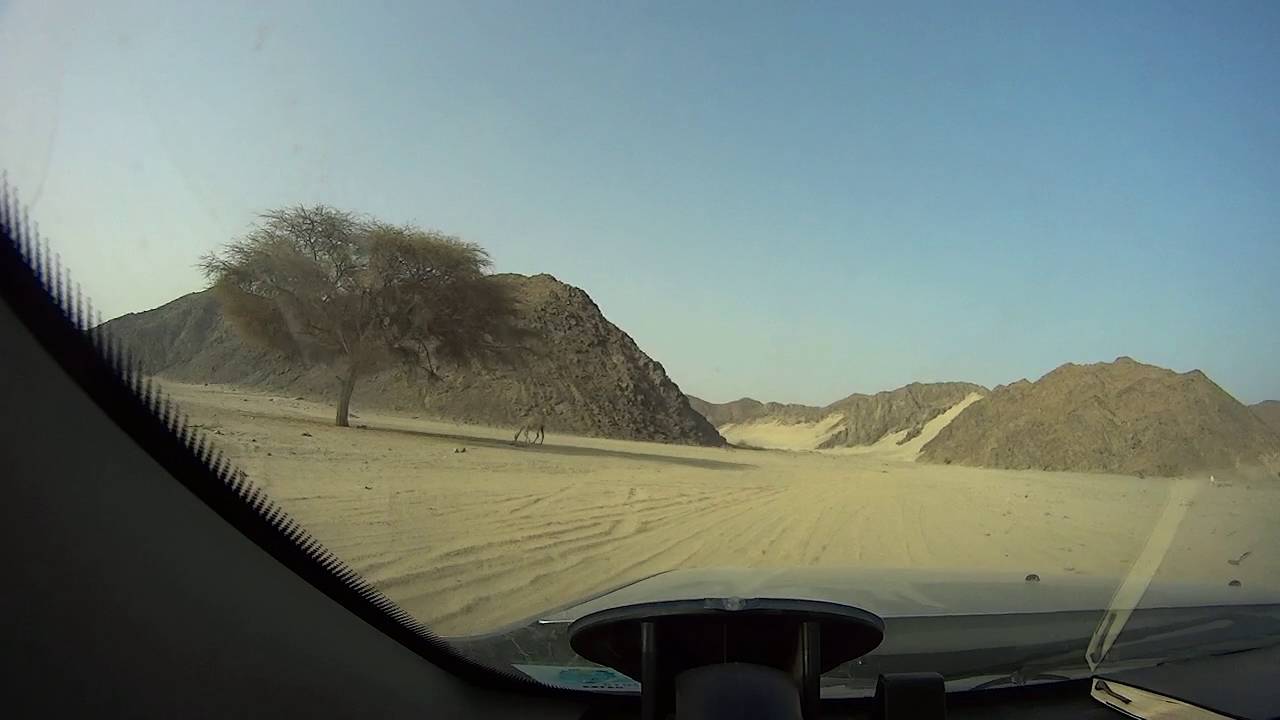
Wadi El Gemal, the entrance to which is located approximately 50 km to the south of the town of Marsa Alam, means “Valley of the Camels.” It is a vast area covering about 7,450 square kilometres and is an excellent safari destination for those who prefer to mount their own specially trained and tourist-friendly camel, under the observation of a skilled camel herder (the gamaal in Arabic) who will keep the animal on a lead for safety.
The park [read more about it here] is surprisingly rich in wildlife and vegetation and also has some legendary ancient emerald mining settlements dating back to at least the Roman era. One of them even includes two rock-cut temples [read more here].
Steven (of Steven’s Taxis) can arrange for you to be picked up at your hotel and taken by taxi to the national park from where the Ababda employees of the park will meet you, show you a documentary about the unique characteristics of the local population and wildlife and then escort you on your camel safari. At the end of the day you will be picked up by taxi to take you back to your hotel.

Feb 2012 – 2.09 mins – 63+ likes – 32K+ views
Dec 2019 – 26m 9s – 7+ likes – 133+ views.
CAMEL RIDING LESSONS
If you wish to learn to ride a camel unaided – this takes some time – and you will need a helmet and an experienced patient teacher – contact Steven at steven@marsaalam.com or by WhatsApp on +20 102 999 9978 or via phone on +20 128 433 2337 who may be able to arrange this for you. It’s a great way to learn about the Ababda (Bedouin) way of life !
WADI EL GEMAL OR SHEIK MALIK DESERT SAFARI
Prices start from just 50 euros per person including all transfers, dinner, amusements, jeep and the quad or camel ride. To book or for more information email steven@marsaalam.com or contact Steven via WhatsApp on +20 102 999 9978 or by phone on +20 128 433 2337.
*The main entrance to Wadi El Gemal is situated 50 km south of Marsa Alam town while Sheikh Malik is located around 75 km north and is therefore more suited to hotels in the El Quseir region. Please let Steven know if you have a preference.

22.09.14 – 11m 17s – 25+ likes – 4K+ views.
May 2016 – 9.47 mins – 6+ likes – 320+ views.
EXCURSION TO SHALATEEN CAMEL MARKET
Paul Vinten/Shutterstock.com

Occasional Italian dialogue.
05.06.2010 – 10m 6s -160+ likes – 62K+ views.
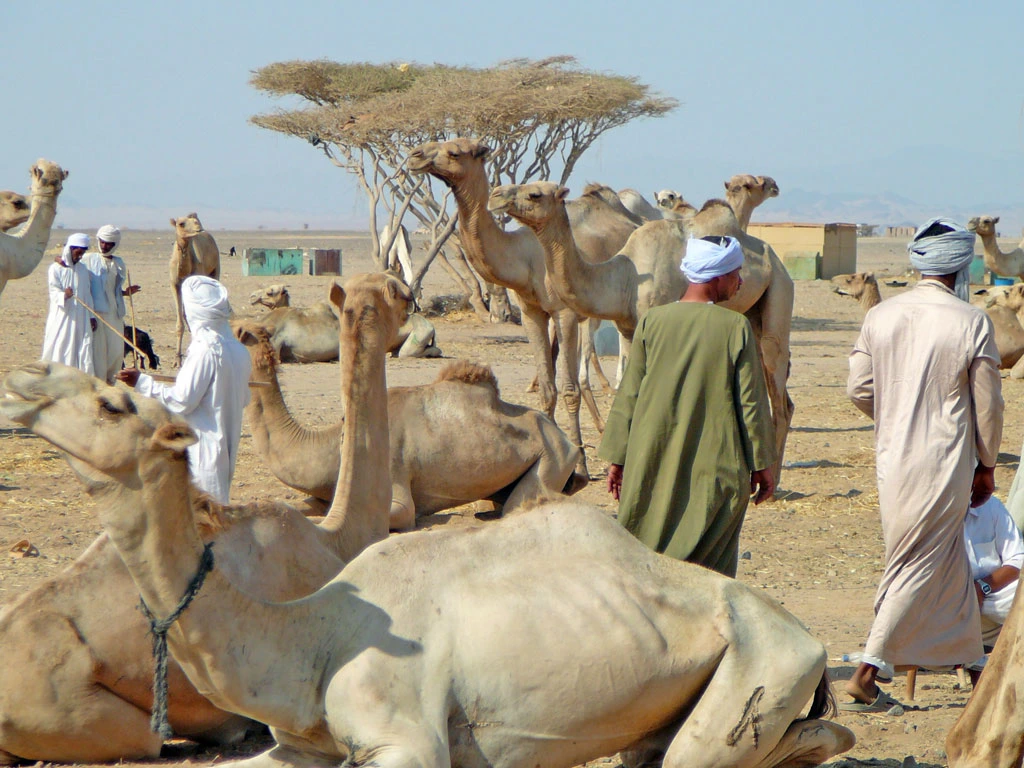
If you want to do something few tourists do, take a trip by taxi down to the town of Shalateen ( population estimated at about 6,000 for the core city and 23,554 for the wider administrative district ) to see the camel market. It lies some 249 km or 155 miles south of Marsa Alam near the border with Sudan. Steven’s Taxis can arrange this with a modern vehicle, knowledgeable driver and surprisingly affordable prices. Email steven@marsaalam.com or contact Steven via WhattsApp on +201284332337. It’s best to book early as usually permits need to be arranged which, depending on the situation, can sometimes takes several days.
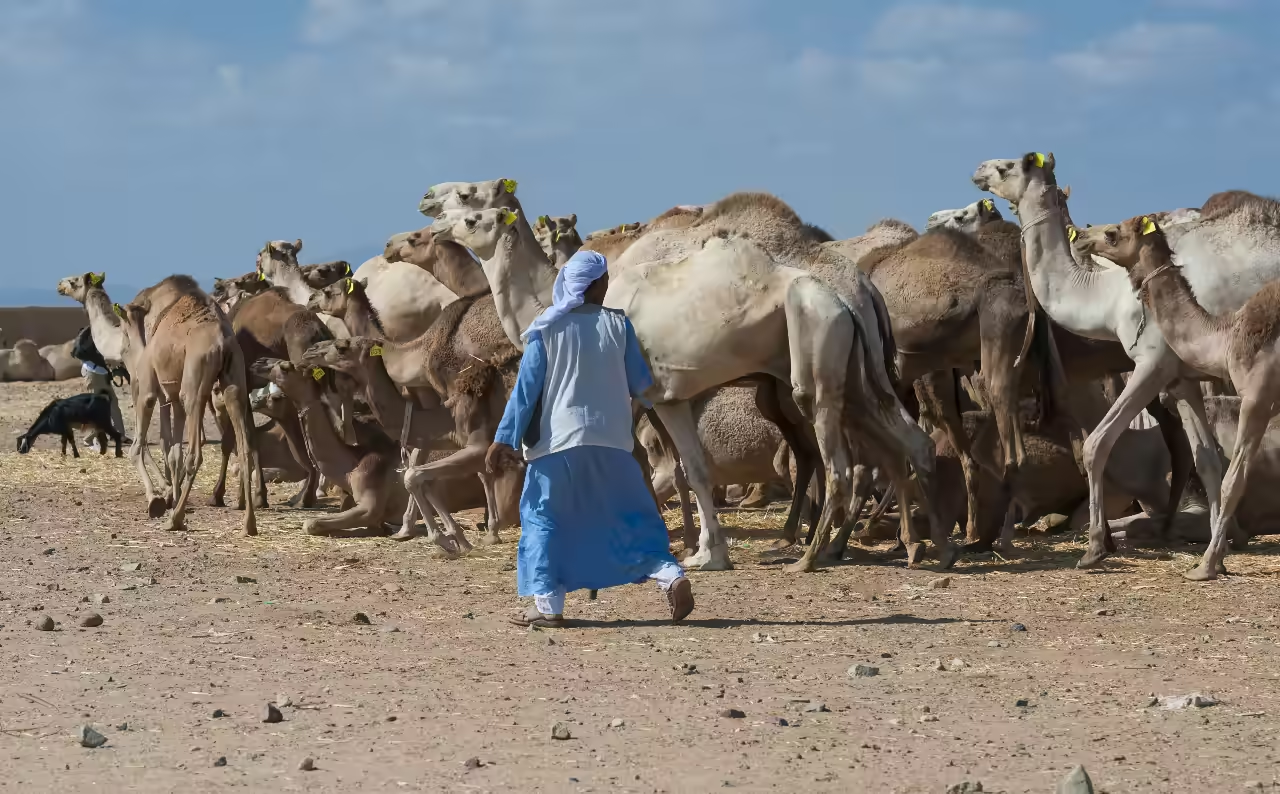
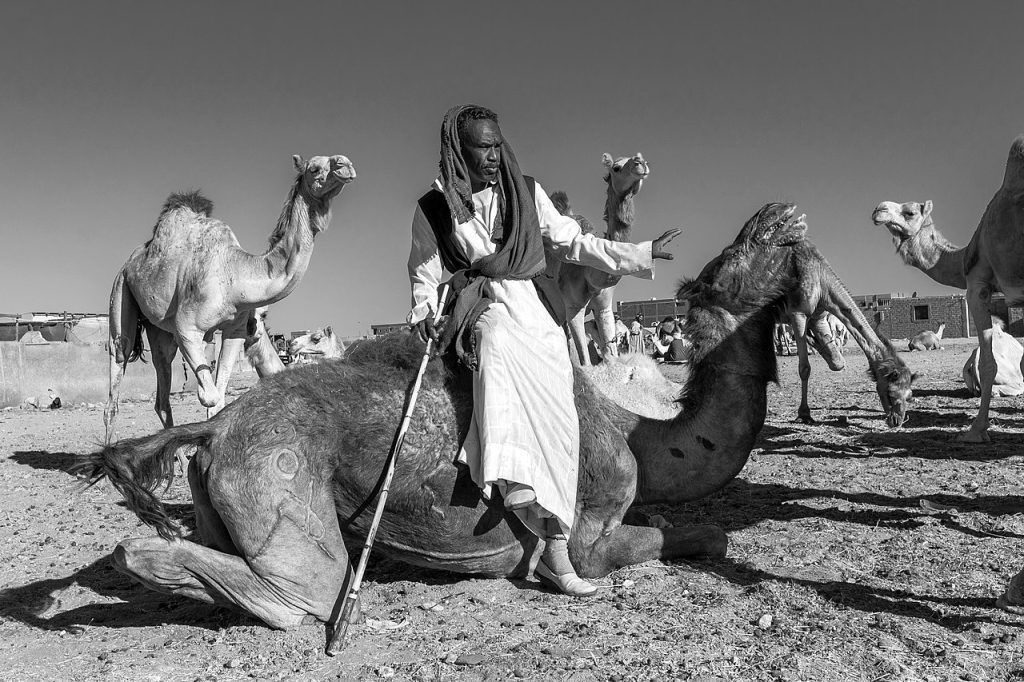
The Shalateen market is the largest of its kind in Egypt and serves as the primary gateway for camels entering the country. Most camels here have trekked for days or weeks across the desert from Sudan. It is a vital economic hub where the Rashaida, Bishari and Ababda tribes manage a trade that has remained largely unchanged for centuries, involving thousands of animals every week.
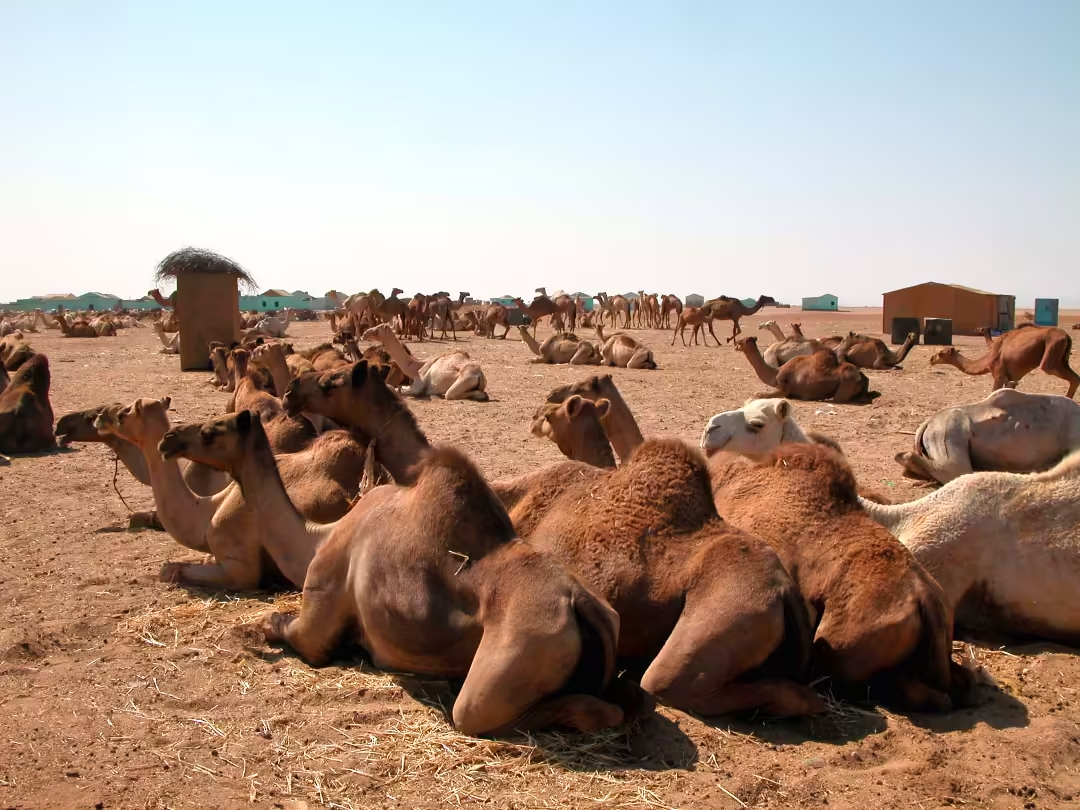
ID 132988083 © Gunold | Dreamstime.com

Sep 2012 – 6.25 mins – 8+ likes – 1,100+ views.
It is the Sudanese Rashaida herders who have usually travelled the furthest, sometimes armed with a traditional J-shaped knife and a whip, bringing their camels to sell to Egyptian traders. Some camels are bought for the tourism industry and some for meat. However it may not be suitable for everyone as a few traders have reportedly resorted to occasionally beating camels in order to get them into the lorries for transportation north to the Birqash camel market outside Cairo.
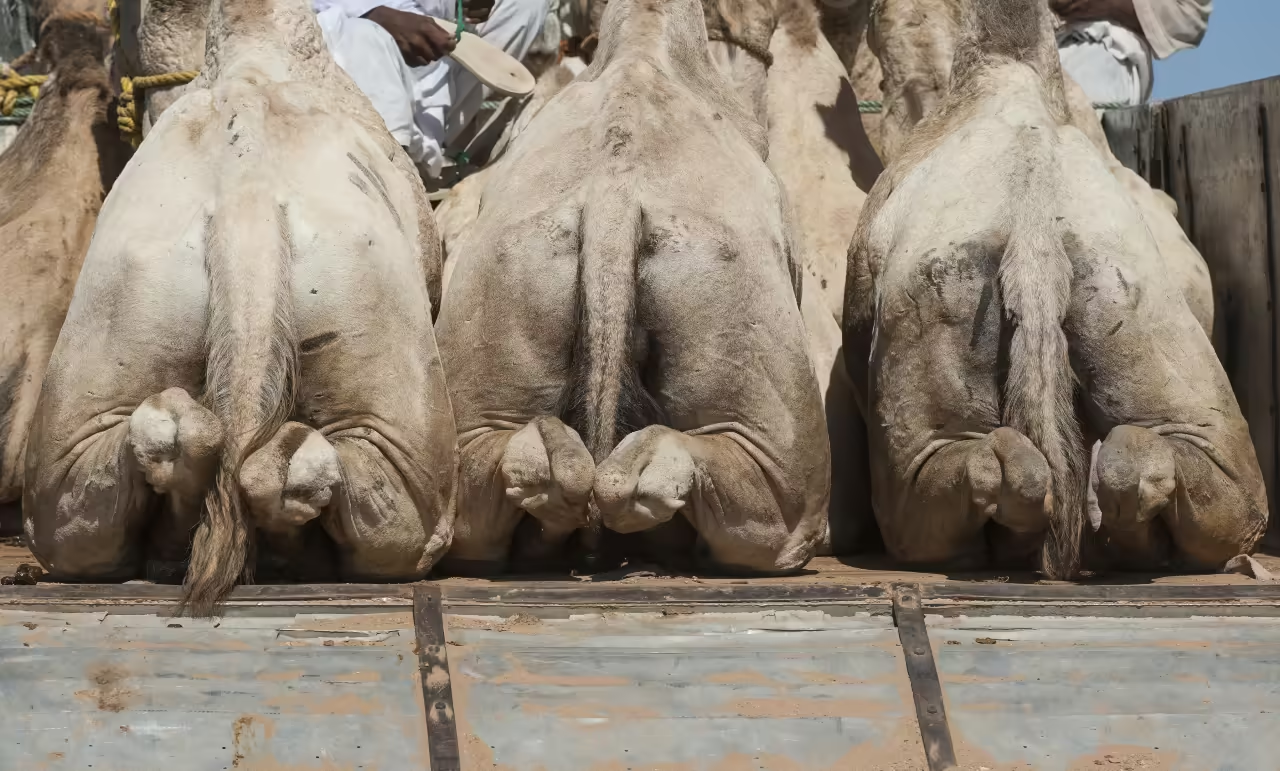
Paul Vinten/Shutterstock.com

Polish commentary
17.02.21 – 24m 58s – 2K+ likes – 74K+ views
If you wish to buy a camel, prices vary greatly but are typically in the range of 8,000 to 35,000 Egyptian pounds (around $170 to $420) as of early 2026. Prices might occasionally exceed this range for premium, sacrificial or racing camels. During the weeks leading up to Eid al-Adha marking the end of the Hajj pilgrimage, prices for healthy, well-proportioned camels can spike by 20% or more.
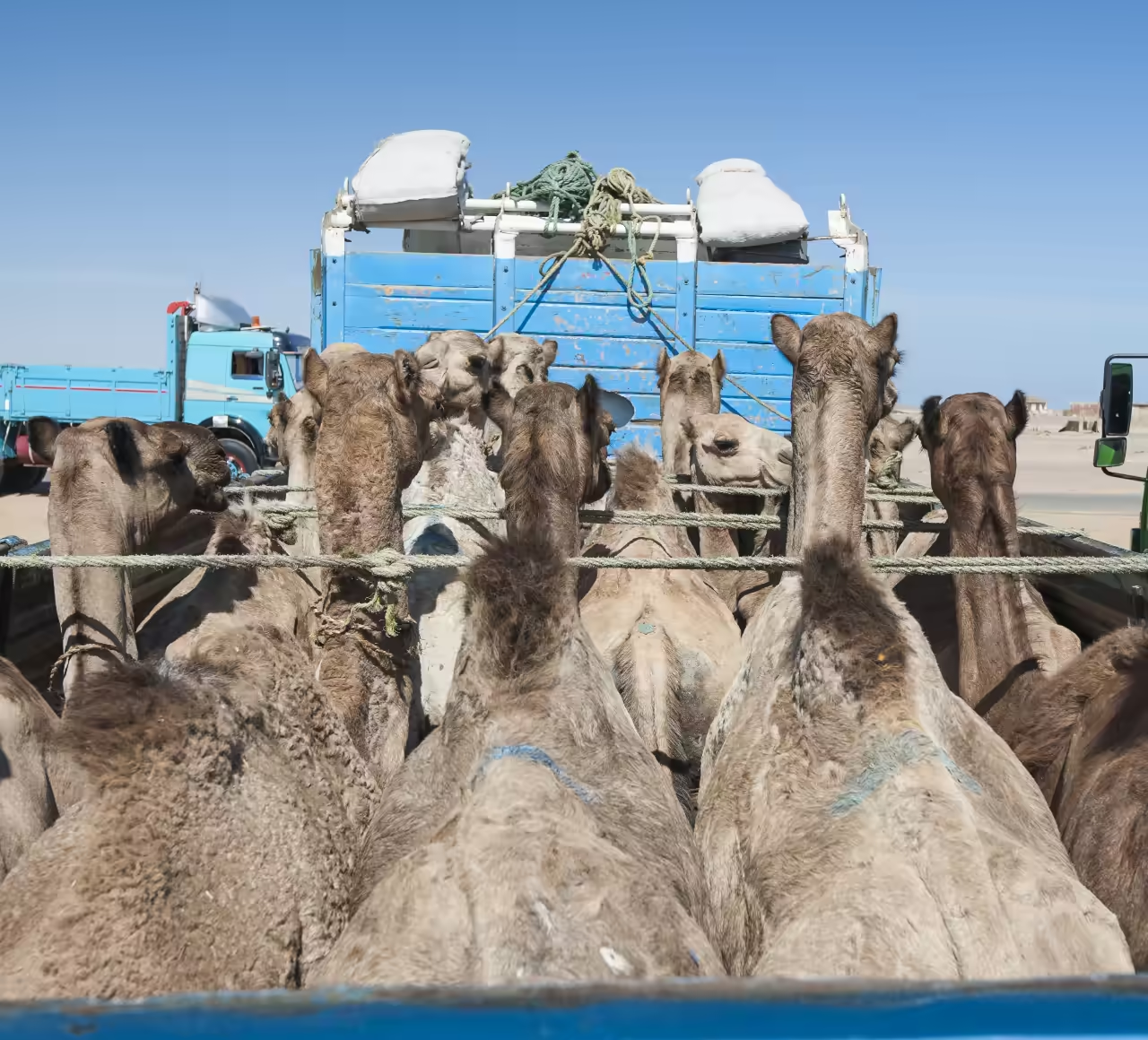
Paul Vinten/Shutterstock.com

06.09.15 – 25m 05s – 12+ likes – 930+ views
Traders at Shalateen evaluate value based on the thickness of the hump, the length of the neck, and the luster of the coat. The camel market is open daily but is usually busiest on Thursdays and quietest, though still open, on Fridays.
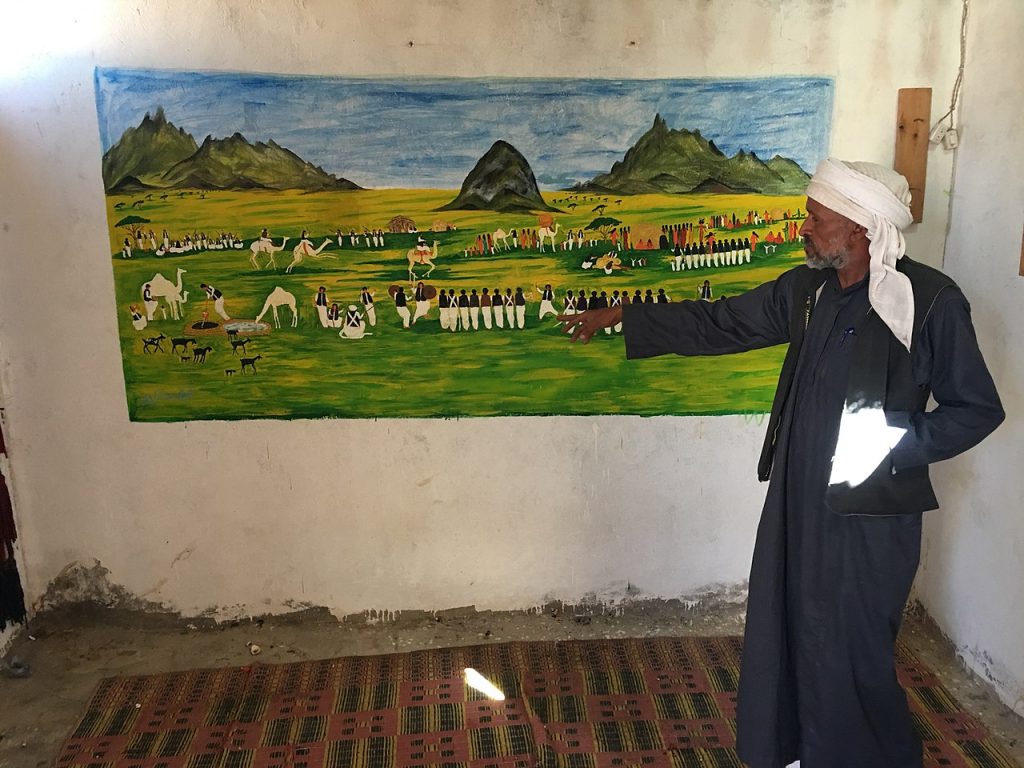
The local area is interesting as it remained outside Egyptian government control prior to 1992 and while the infrastructure has been recently modernized, much of the local way of life remains unchanged and is fascinating to observe.
The Egyptian government has offered free electricity and water to try and encourage the local Bedouin (both the Ababda and the Bisharin) to settle but many continue to make their living herding goats and sheep or trading in camels.
SHALATEEN TOWN
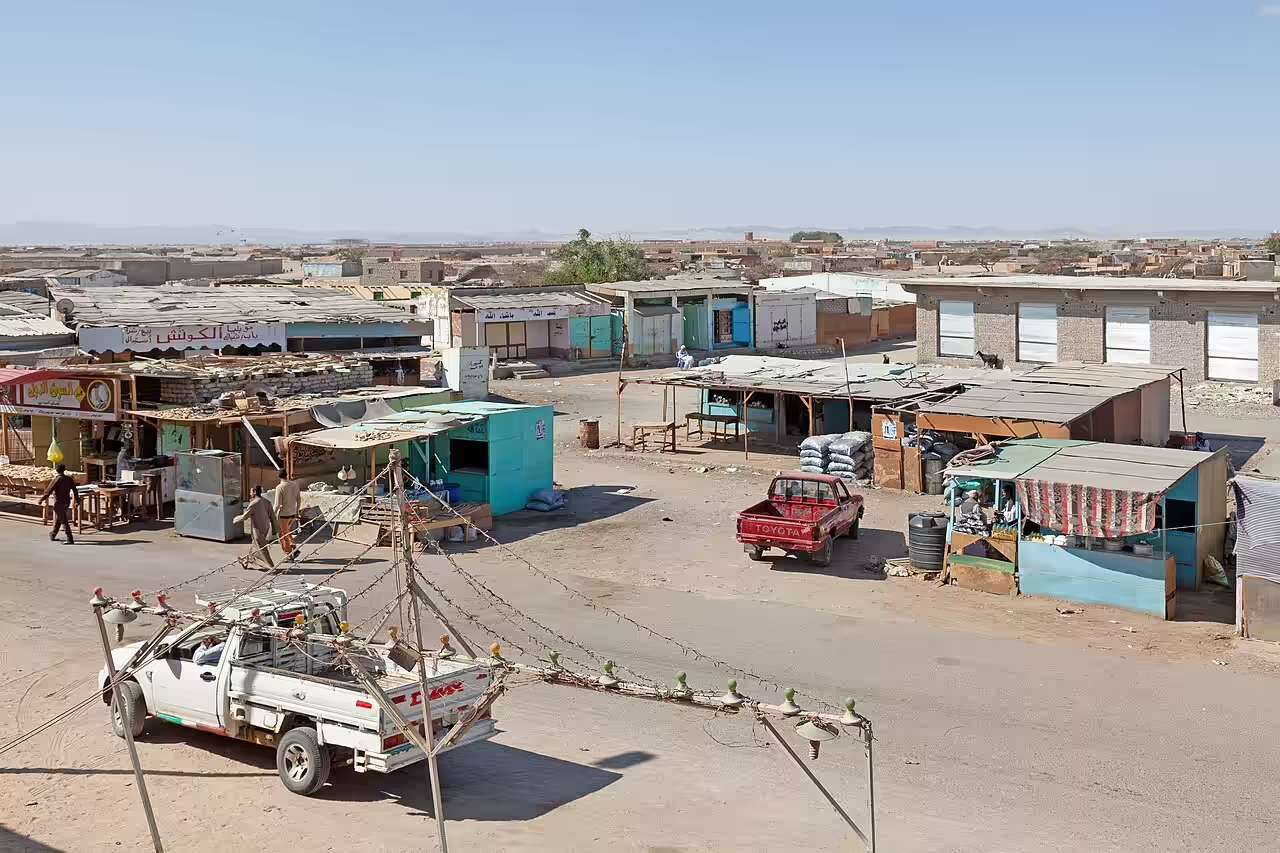
Can you see a goat on a roof?
Roland Unger CC BY-SA 4.0 Wikimedia.
07.01.24 – 2m 37s – 11+ likes – 698+ views.
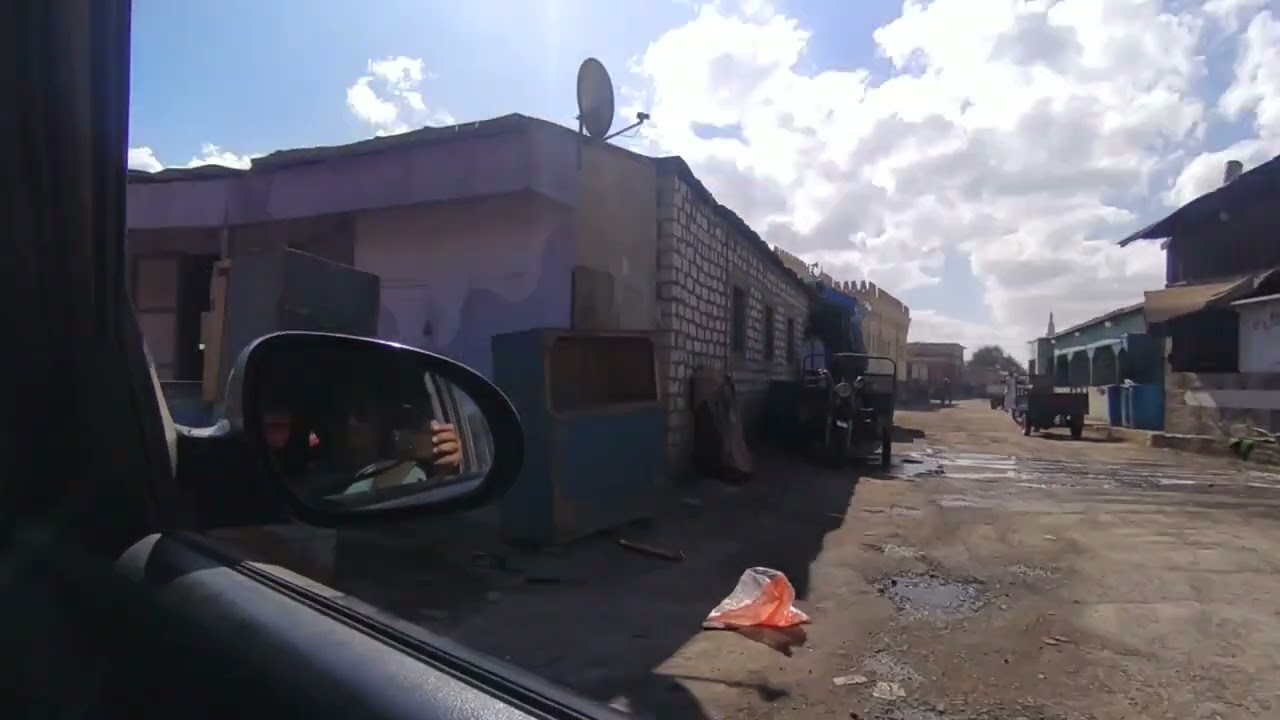
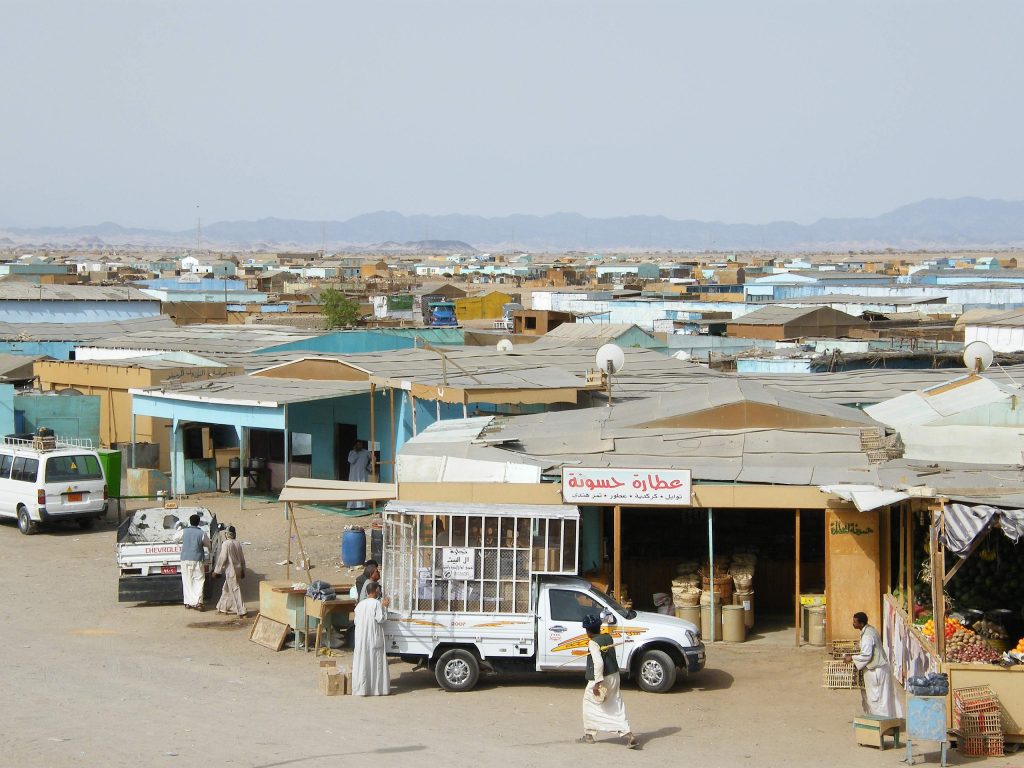
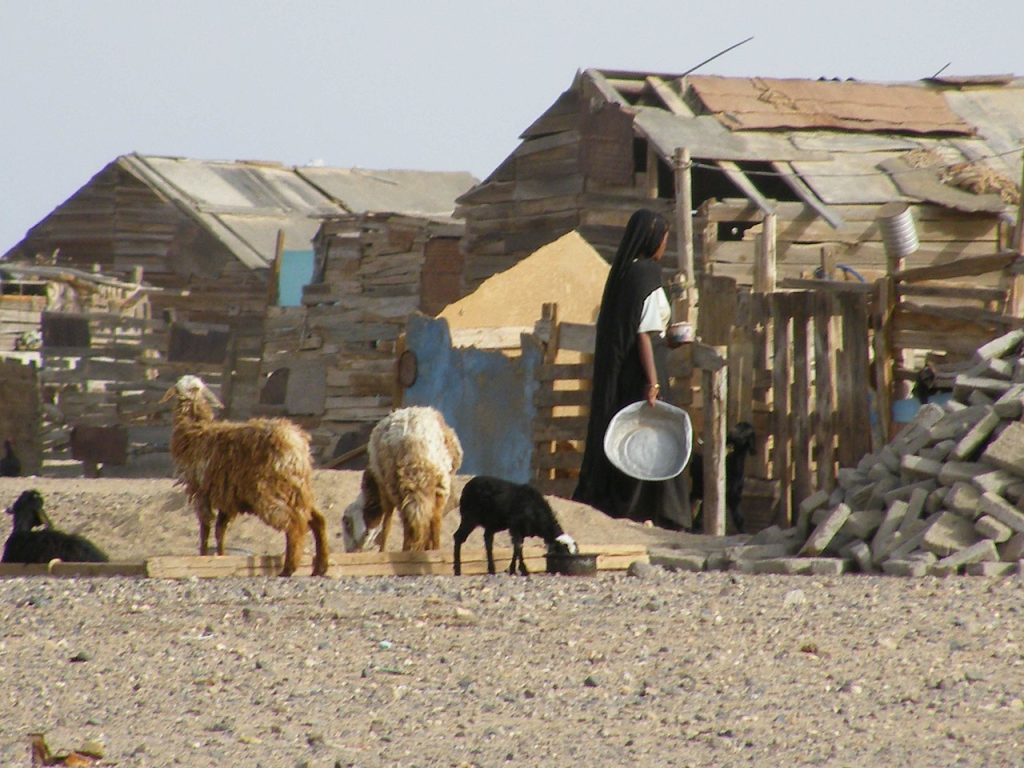
The town centre of Shalateen is defined by a modest density of low-rise structures, primarily constructed from concrete and local materials, reflecting the arid environment and the rapid pace of development in the late twentieth century. It’s divided into two sections – government and commercial buildings to the north and a shanty town of painted plywood and wooden plank houses to the south surrounding the souk.
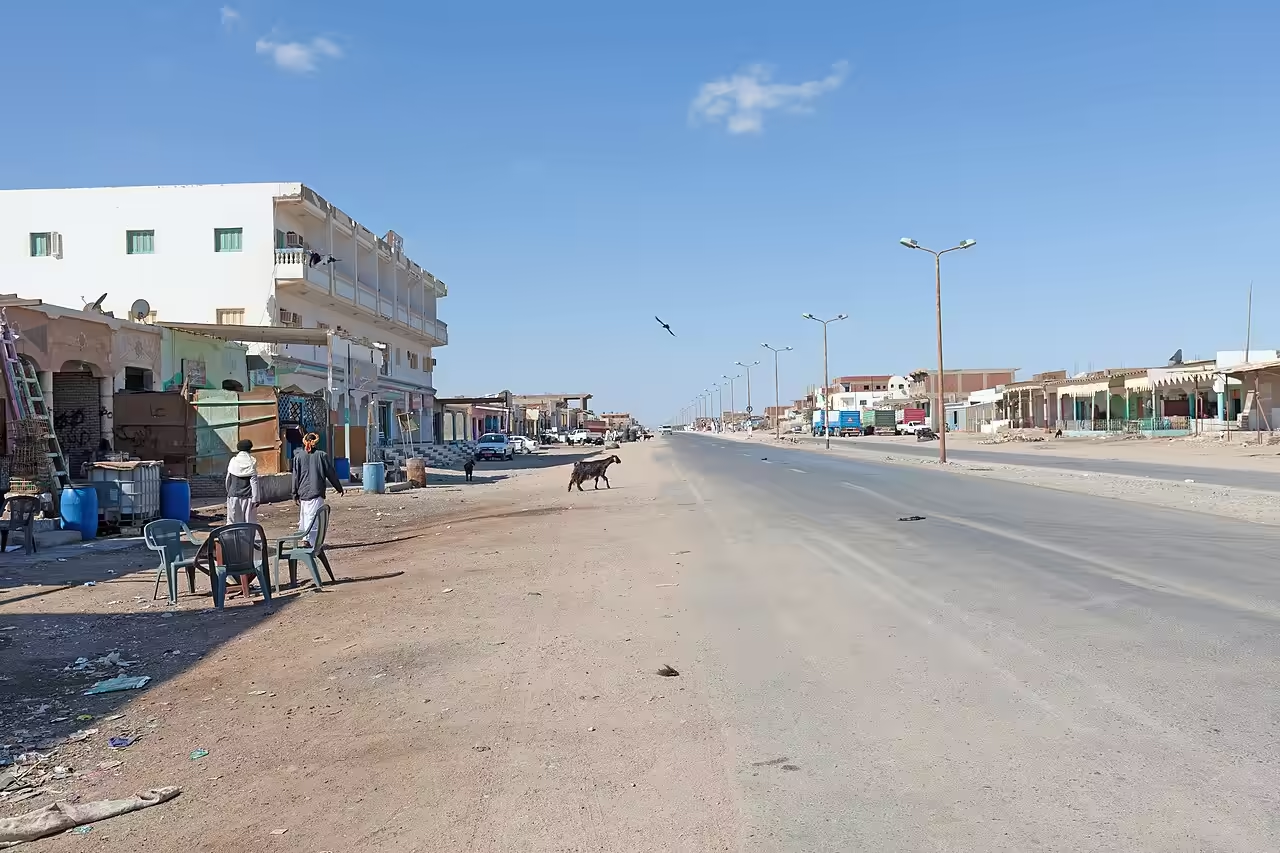
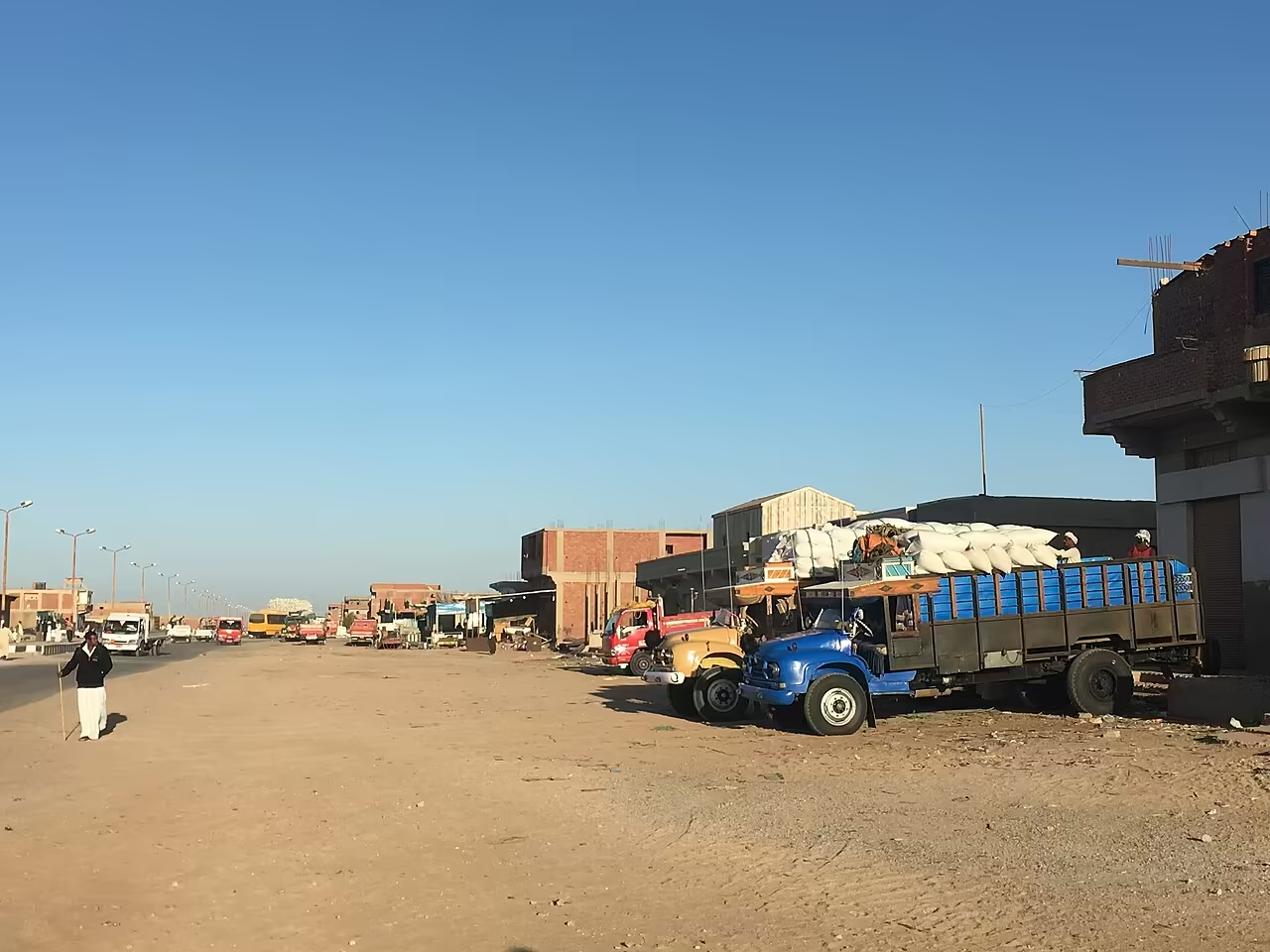
There are only a few limited facilities but there is at least a police station, a post office and a bank, the National Bank of Egypt with ATM facilities. However, visitors are strongly advised to carry sufficient Egyptian Pounds (EGP) in cash as even the most reliable ATMs might sometimes suffer from technical failure or be at risk of depletion, particularly during peak market days.
In the hopefully unlikely event of having any serious medical need, there is the Shalateen Central Hospital, with three operating theatres, a fully equipped intensive care unit (ICU), neonatal care units, and a CT scan and sonar department and about 40 beds across several departments.
EATING OUT IN SHALATEEN
As for eating places, there is a simple but popular restaurant, Basmit El Ganoub (Smile of the South). The restaurant is lauded by visitors and is considered the most reliable option for a substantial meal in the town centre offering various choices including grilled beef prepared over charcoal or grilled chicken served with traditional sides such as rice, tahini, and local bread.
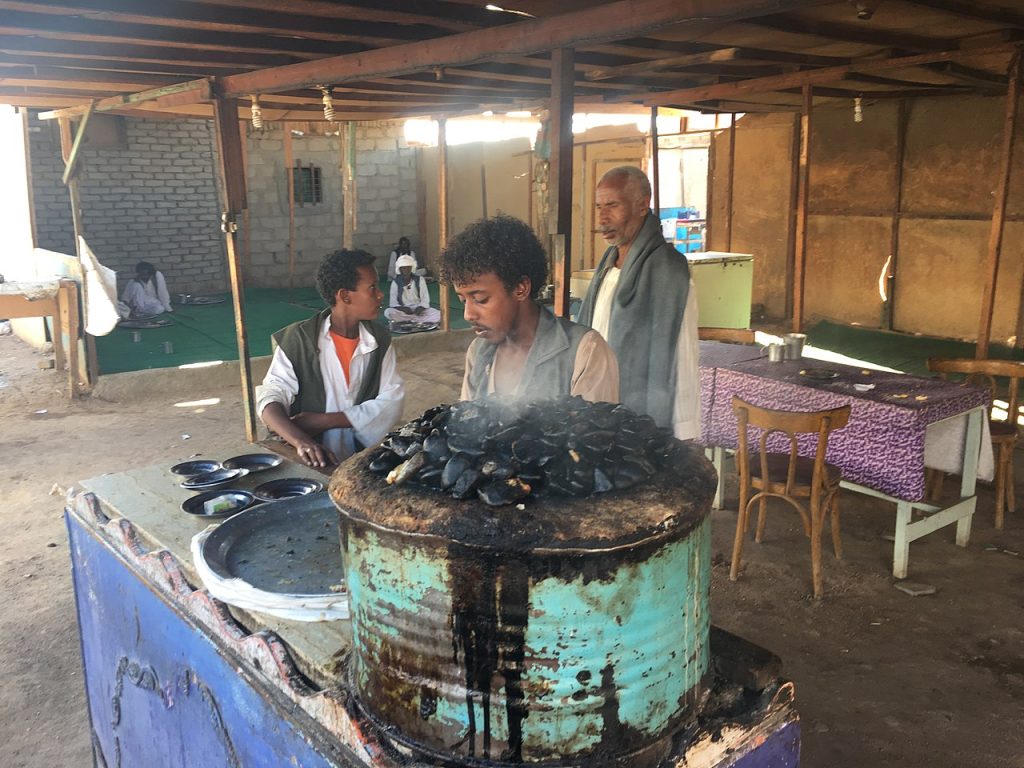
There are also several small restaurants/coffee shops which are concentrated in the one-street city centre alongside a few shops, where they remain open from the early morning until late in the evening. These venues are primarily male-dominated spaces where trade is negotiated and community news is exchanged. For tourists, these places offer an opportunity to experience the unique beverage traditions of the Ababda and Bisharin populations. The preparation of Gabbana coffee [more info on the Ababda page] is often accompanied by a traditional breakfast feast, which includes foul (fava beans), eggs, cheese, and jam.
SMALL SOUK
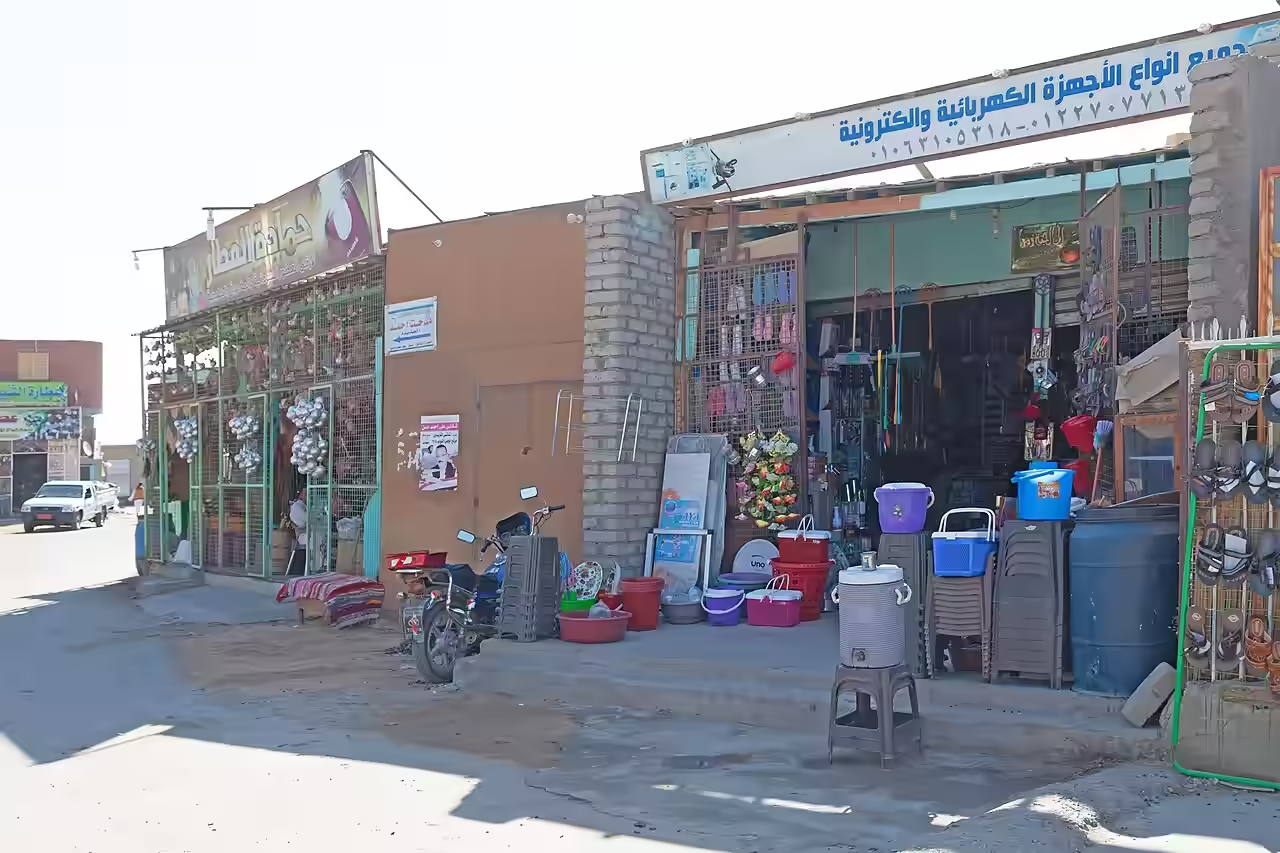
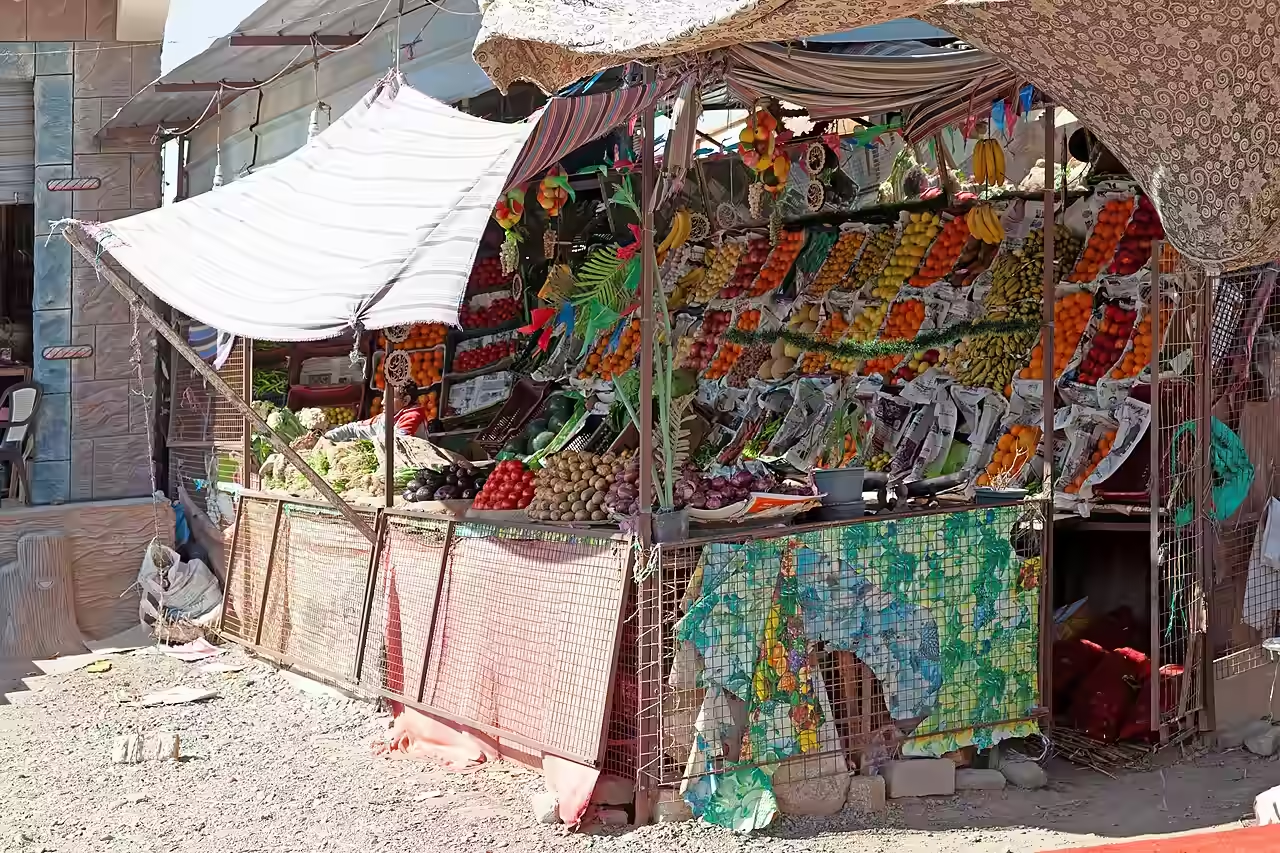
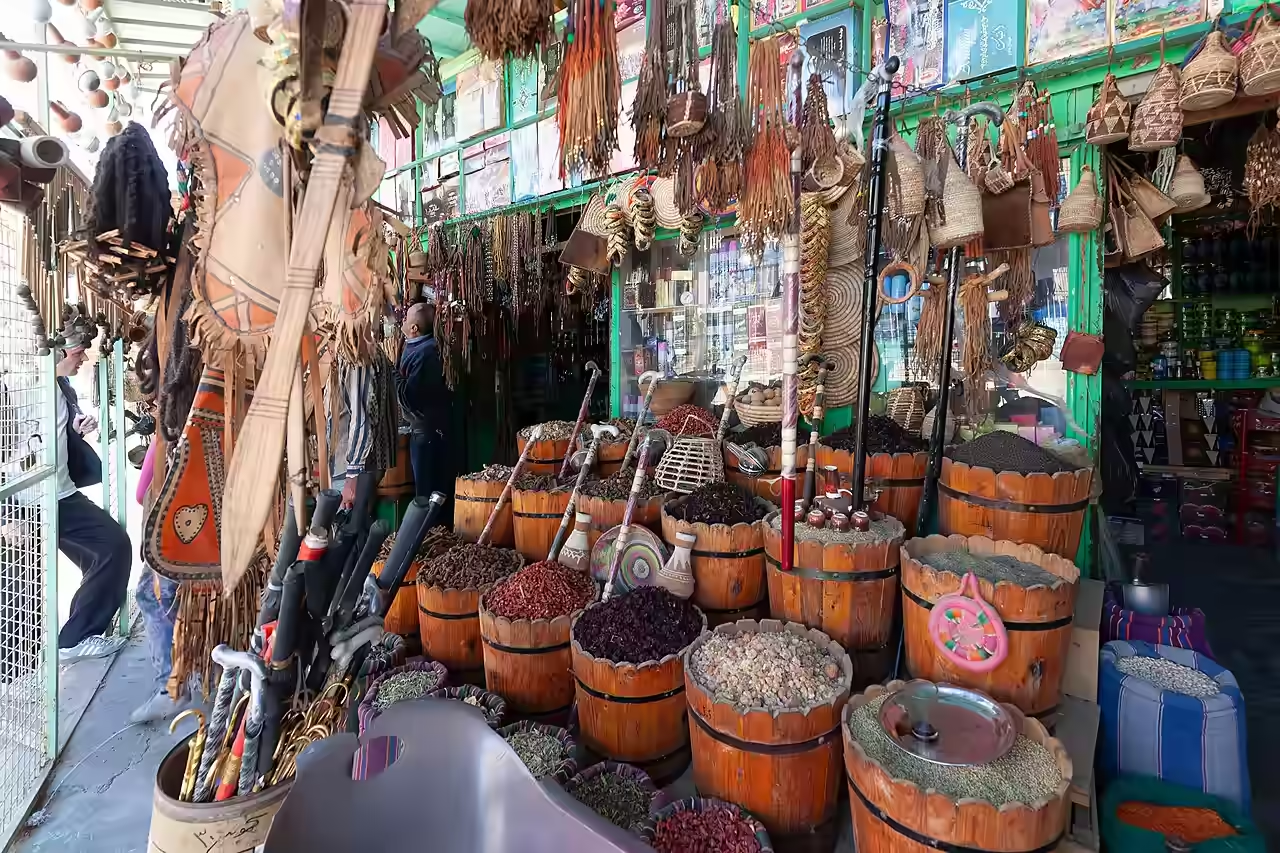
The general souk (bazaar) of Shalateen is located in the town centre and consists of several dozen small shops. These shops sell a variety of essential items for local people but a few shops also specialize in:
- Perfumes: Many of which are imported from Sudan and might not be available in other parts of Egypt.
- Traditional Herbs: The spice and herb shops of Shalateen are particularly rich in variety, offering rare botanicals like garad (or qarad) and Khorinjal (also pronounced Khulinjan or Khorinjan). Khorinjal is a rhizome closely related to ginger and used both as a flavour enhancer and as a natural medicine. The garad are the fruit pods of the Acacia nilotica tree, also known as the Prickly Acacia. It is primarily used as a powerful medicinal herb and a traditional tanning agent rather than a common culinary seasoning. The pods might be recognized by their dark, beaded appearance, looking like a string of small, flat peas. However to be safe you should ask your guide for advice on buying it and how to use it.
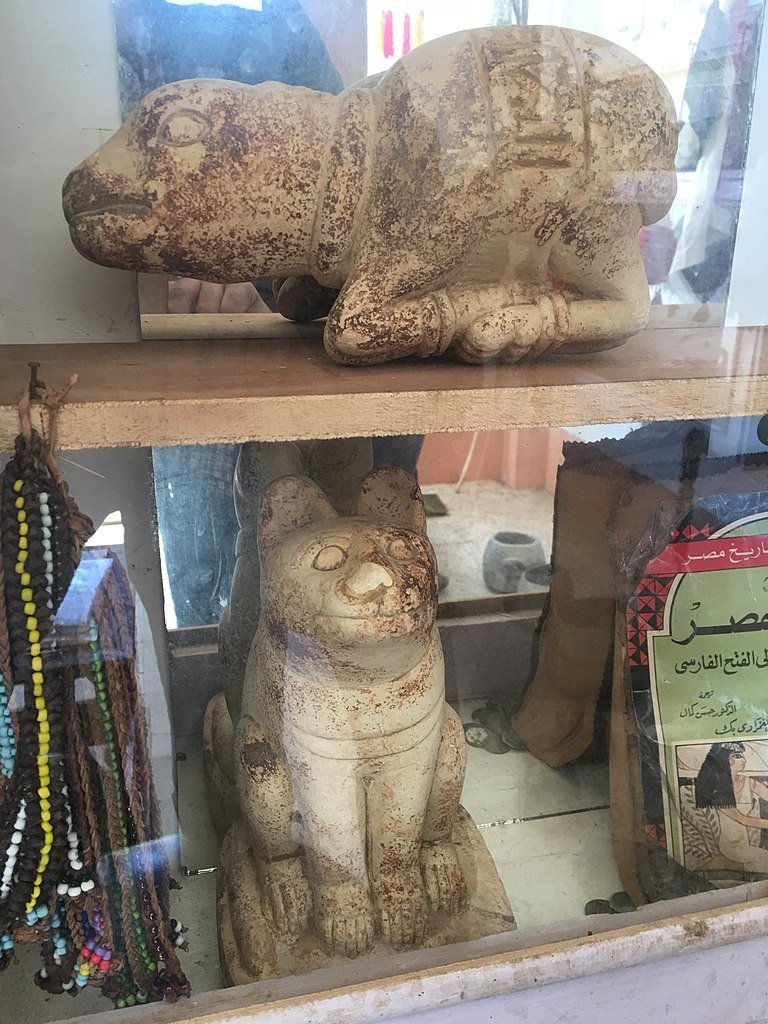
- Handicrafts: You can find some really fascinating items such as the traditional Bishari dagger with a curved double edged blade (avoid antiques as there as exports are prohibited and check all legalities and regulations regarding transporting it via air). You can also often find fine examples of leatherwork, and woven baskets reflecting local Ababda and Bishari artistic traditions.
SHALATEEN ACCOMMODATION
In terms of accommodation, a hotel called Dr Barghout‘s (referencing a type of wild plant or herb), one of the town’s few three storey buildings in a landscape of single storey dwellings. It has ensuite shower rooms and air conditioning should you wish to stay in Shalateen overnight, assuming you have permission to do that.
A few other modest hotels exist within the urban core, typically located near the main market area to serve the influx of Sudanese traders. These facilities generally operate on a walk-in basis, as digital presence and online booking systems are non-existent. The check-in cycle often aligns with the arrival of long-distance transport, with rooms typically becoming available in the early morning.
For the professional or tourist visitor, the hospitality landscape requires a high degree of self-sufficiency. It is advisable to maintain direct communication with local guides or tour operators who can facilitate entry and ensure that accommodation is available upon arrival, especially given the usual necessity of military permits for overnight stays.
SMALL GOAT MARKET
Hatem Moushir CC BY-SA 4.0 Wikimedia
Hatem Moushir CC BY-SA 4.0 Wikimedia
ID 27893343 © Paul Vinten
| Dreamstime.com
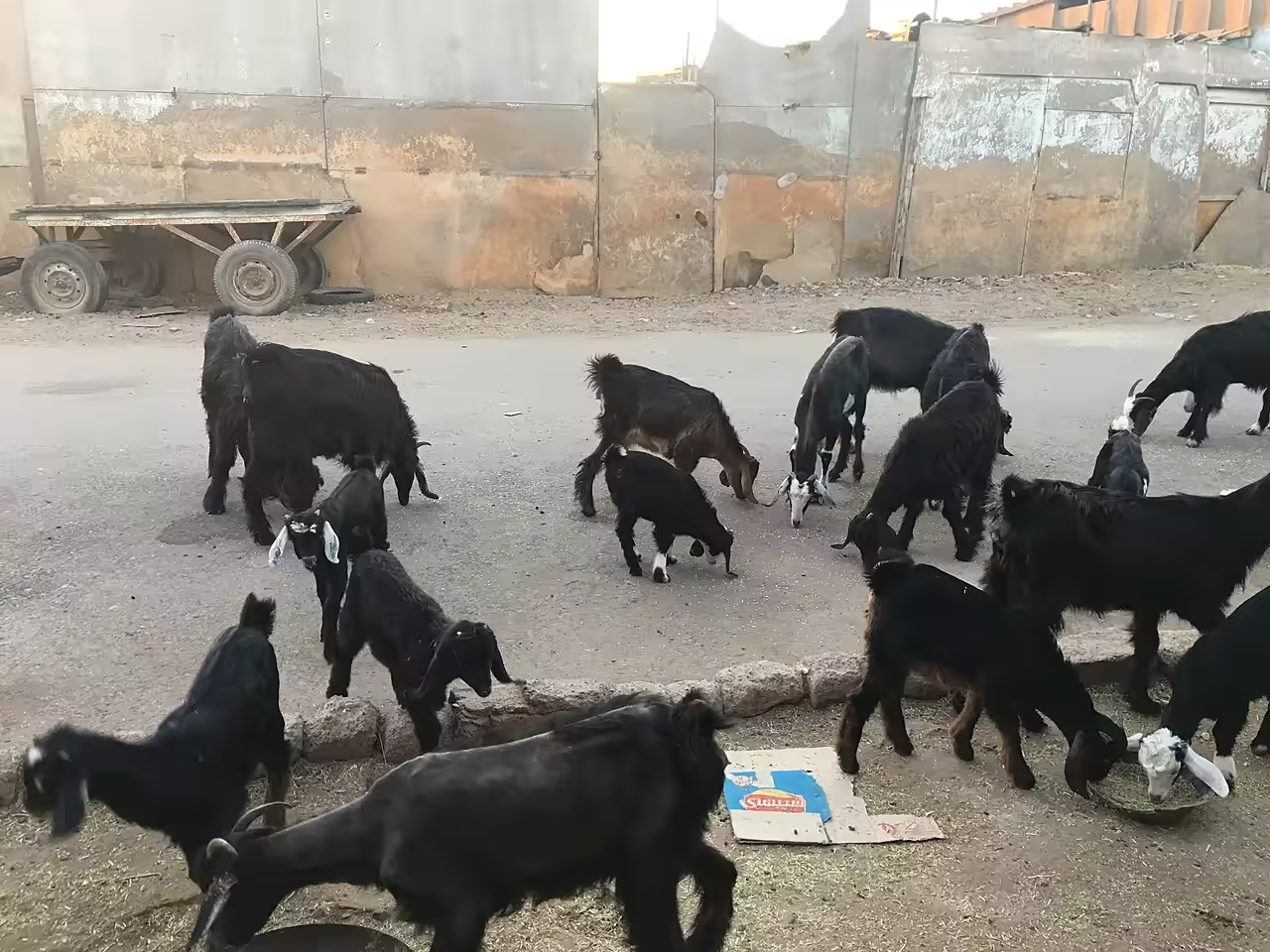
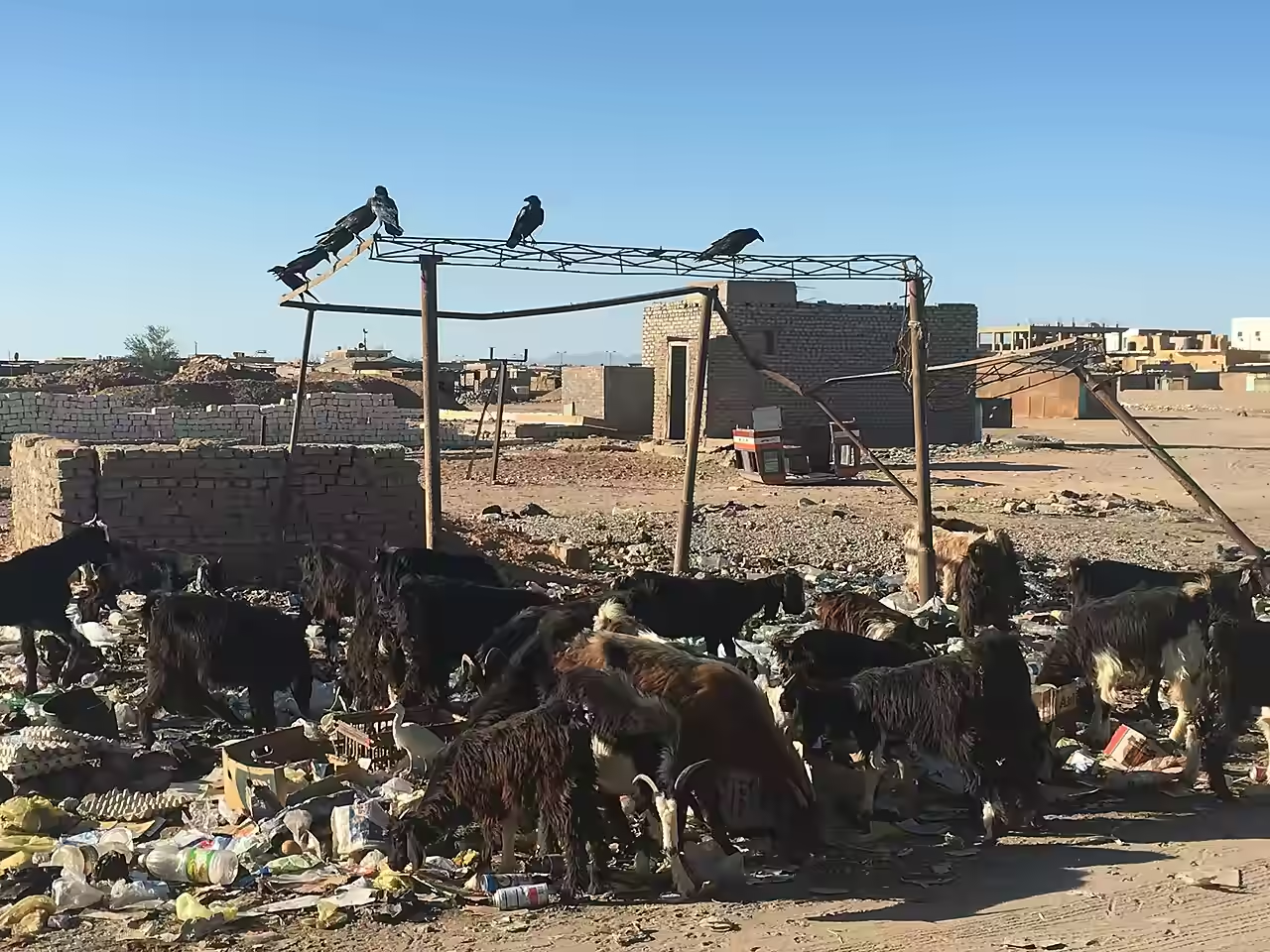
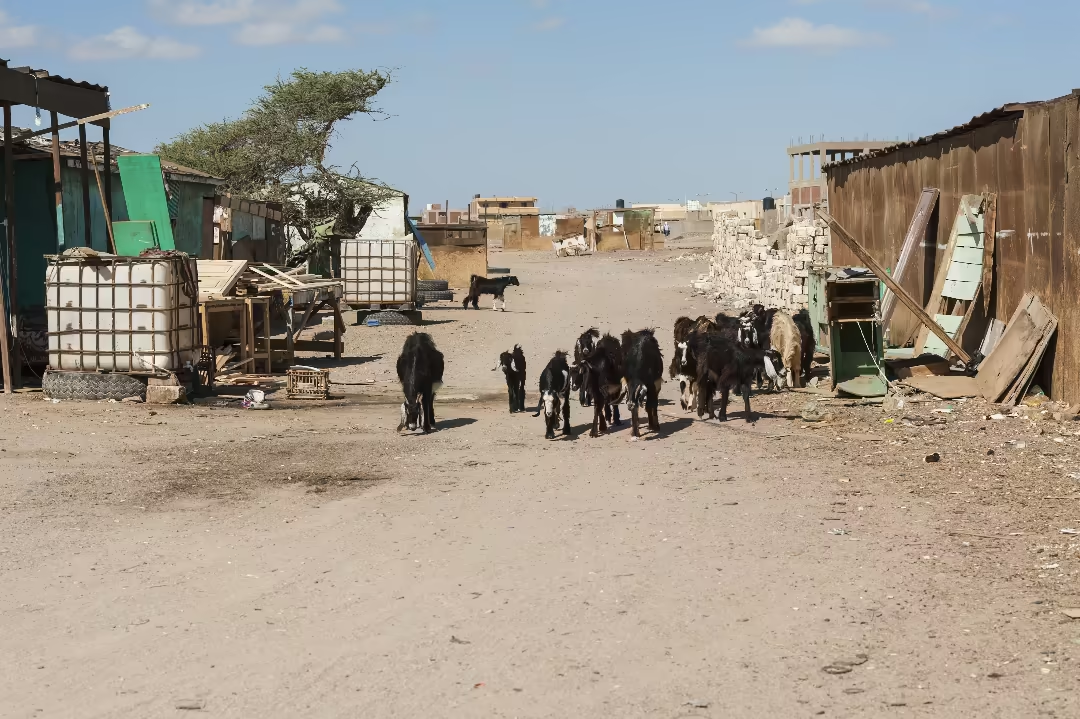
Located near the town’s souk, the goat market provides a smaller-scale glimpse into the region’s pastoral economy. Goats can be seen wandering everywhere around the streets, but somehow their owners seem to know precisely which goats are their’s.
NEARBY LAGOON
Approximately 1.5 to 2 kilometres from the town centre, a remote and pristine coastal lagoon offers a stark contrast to the bustling markets. You should find it only with the assistance of a knowledgeable guide as it’s a short walk from the main road and the tides in the area can change rapidly. It’s so little used, that you should be able to see the visible tracks of crabs, birds, and other local wildlife. You should also be aware that military patrols are common in this coastal zone, and they will frequently request to see the permits of any visitors found in the area.
RECOGNISING DIFFERENT TRIBAL DRESS STYLES
You should also be able to spot the Rashaida tribesmen, traders coming from the Sudan often in Toyota pickups, as they wear distinctive lavender and light blue galabeyas and the Rashaida women patterned vibrant red and black dresses. They are descendants of a tribal group which fled the Arabian peninsular to the Sudan, due to tribal warfare, around 1846, 180 years ago.
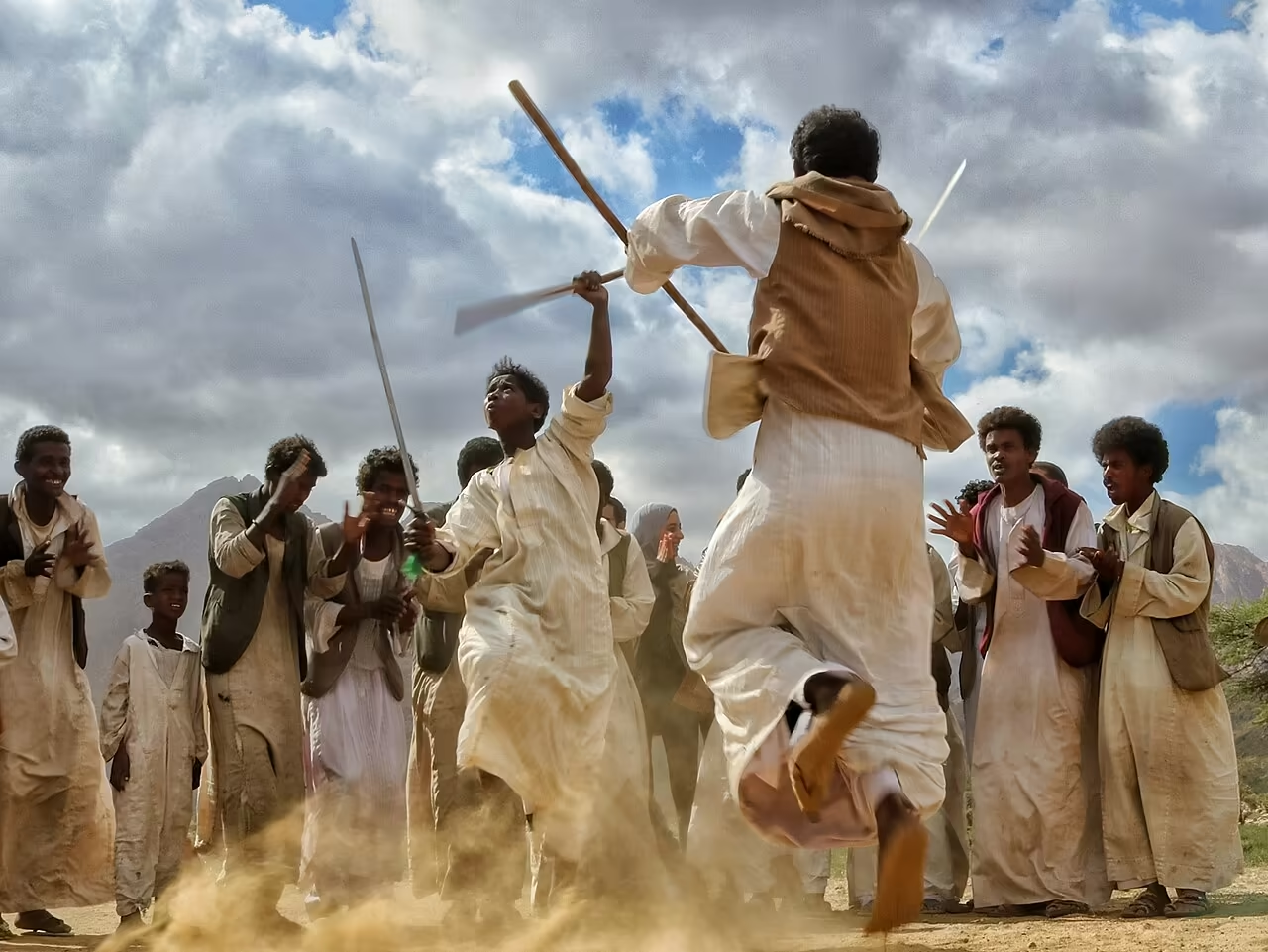
You will also likely see Bisharin at Shalateen. They inhabit the desert areas between Shalateen and the Sudanese border to the south. The men often wearing white galabeyas and large loosely wound white cotton turbans. Sometimes they might carry a long, thin, hand-braided leather whip draped over their shoulder or held in their hand and/or a J-shaped dagger with an ornate handle strapped to theirs waists.
Last but by no means least, you will also likely see the Ababda Bedouin who inhabit the desert lands north from Shalateen all the way to El Quseir. Ababda men, like the Bisharin, also wear white turbans but they tend to be wrapped more tightly around their heads, and their white galabeyas are more similar to those you might see in Luxor or elsewhere in Egypt. As for the Ababda women, they often wear a large black wrap (called a tob) over their colorful inner dresses. This gives them a more somber, modest appearance from a distance compared to the bright reds of the Rashaida.
THE MILITARY PERMIT SYSTEM
The most critical factor in visiting Shalateen is the military permit system. Because the town is located within a sensitive border zone and a disputed territory, all non-residents must obtain clearance from Egyptian military intelligence.
- Application Process: Permits should be requested well in advance of the trip, often through a licensed Egyptian tour operator. The approval process can often take several days, sometimes longer.
- Enforcement: Checkpoints are frequent along the road from Marsa Alam. Soldiers will verify the identity of all passengers and cross-reference their names with the issued permits.
- Group Size: Smaller groups (fewer than ten people) might face less scrutiny and fewer delays at checkpoints than larger, more conspicuous tour groups.
SOME FASCINATING CAMEL FACTS
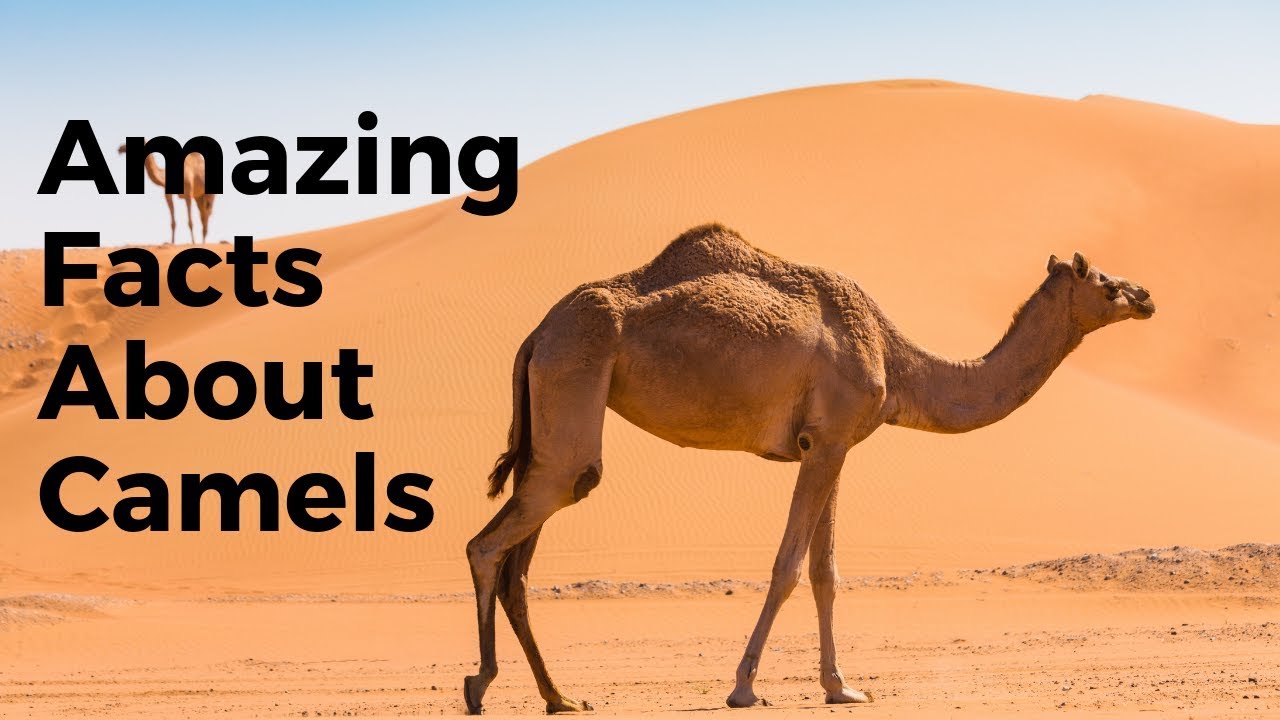
The name camel comes from the arabic Jamal (though it’s pronounced gamal across much of Egypt).
Its hump stores fat not water and this allows it to store less fat elsewhere which in turn allows heat to escape more easily from their body during the day, keeping them cooler in the intense Egyptian sun. When the fat is eventually metabolized, it also produces metabolic water, approximately one gram of water for every gram of fat processed.
Unlike humans their body temperature can vary between 34°C late at night to 41°C (about 106°F) in the day. This is a water-saving strategy called heterothermy. Most mammals sweat to maintain a constant temperature, but camels allow their body temperature to rise with the sun. By not sweating until they reach 41°C, they can save several litres of water a day. At night, they radiate this heat back into the cool desert air to start the next day at a lower temperature.
A large camel can drink up to 200 litres of water within three minutes – if you only had cans of perrier that would be 600 at more than 3 cans a second ! This would be fatal to most mammals because the sudden change in osmotic pressure would cause red blood cells to burst. However, camel red blood cells are oval-shaped (rather than circular) and incredibly elastic. They can swell up to 240% of their original size without rupturing, allowing the camel to safely store massive amounts of water in its bloodstream.
However they can get much of the moisture they need from green plants thereby reducing the need to drink.
They can east almost anything, even thorny twigs, without damaging their mouths.
During a sandstorm camels are able to close their nostrils to prevent damage from wind blown sand. They also have three eyelids: two with long, interlocking lashes to trap grains, and a transparent or translucent third eyelid that acts like a windshield wiper to clear the eye while still allowing some visibility. Their ears are also lined with thick hair to prevent sand from entering the ear canal.
When feeling threatened they often spit – don’t get in the way !
Camel feces is very dry so that the animal minimizes water loss but this also makes it easy to use as a fuel with minimal drying time needed.
They have large flat feet to prevent them sinking into the sand.
When a camel exhales, the water vapor is retained in its’ nostrils and then reabsorbed enabling it to remain relatively hydrated even in the most arid and hot conditions.
The average life expectancy of a camel is about 45 years.
They can run at speeds of up to 65km/h (45mph) so don’t try to race one !
04.09.2019 – 6m 52s – 4K+ likes – 754K+ views

10.08.25 – 27m 8s – 55K+ likes 1.4mill+ views
CAMELS WERE INTRODUCED TO EGYPT c 525 BCE
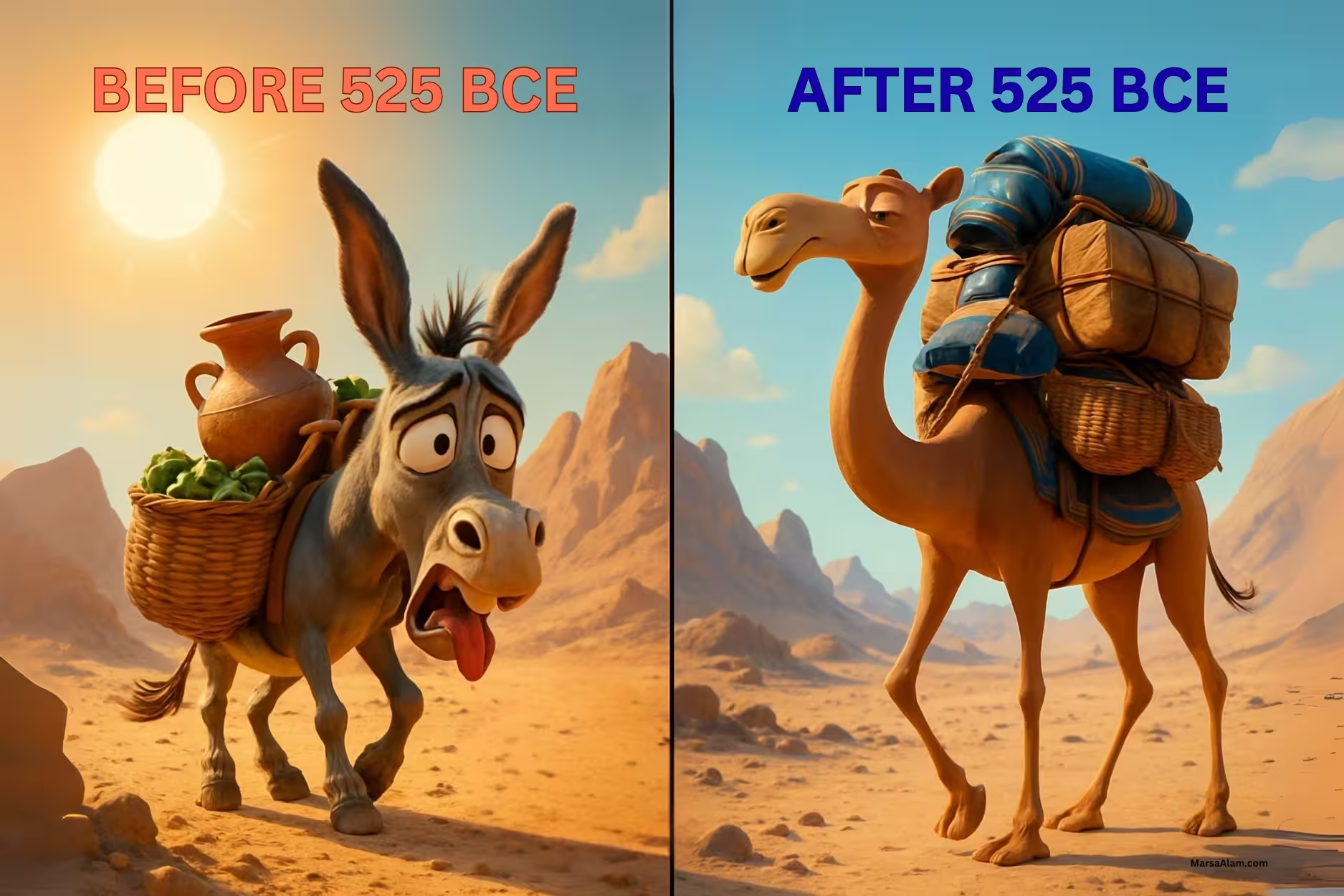
AI Image: MarsaAlam.com generated using Leonardo AI.
While camels are synonymous with Egypt today, they were not always around. They were likely introduced on a large scale only during the Persian invasion (525 BCE) or slightly earlier. Before the “ship of the desert” arrived, ancient Egyptians relied almost exclusively on donkeys for land transport. The camel revolutionized trade by allowing Egyptians to cross the vast Eastern and Western Deserts, which were previously nearly impassable.
SPECIALISED EGYPTIAN BREEDS
Egypt is home to distinct camel breeds tailored for specific environments. The Bishari camel, found in the south eastern desert, is famous for its slender build and speed, making it the preferred choice for riding and racing. In contrast, the Fallahi (or Delta) camel is much larger and sturdier, bred primarily in Northern Egypt for agricultural labor and carrying heavy loads through the fertile Nile Valley.
PHOTOS OF SHALATEEN, ITS CAMEL MARKET AND THE SURROUNDING AREA

Hossam El-Hamalawy – CC BY 2.0 – via Flickr

Hossam El-Hamalawy – CC BY 2.0 – via Flickr
Hatem Moushir CC BY-SA 4.0 Wikimedia
Mohamed Abdelzaher CC BY-SA 4.0 Wikimedia

Hatem Moushir CC BY-SA 4.0 – Wikimedia
Hatem Moushir CC BY-SA 4.0 Wikimedia
Ahmedsalahemam CC BY-SA 4.0 via Wikimedia.

Hatem Moushir CC BY-SA 4.0 – Wikimedia
Youssef Alam – CC BY 3.0 – Wikimedia
Youssef Alam – CC BY 3.0 – Wikimedia
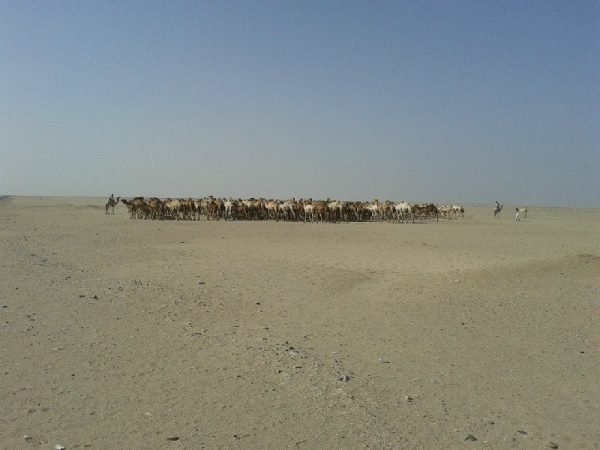
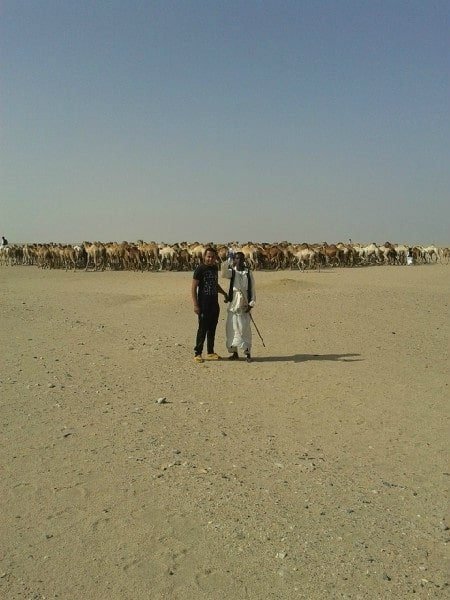
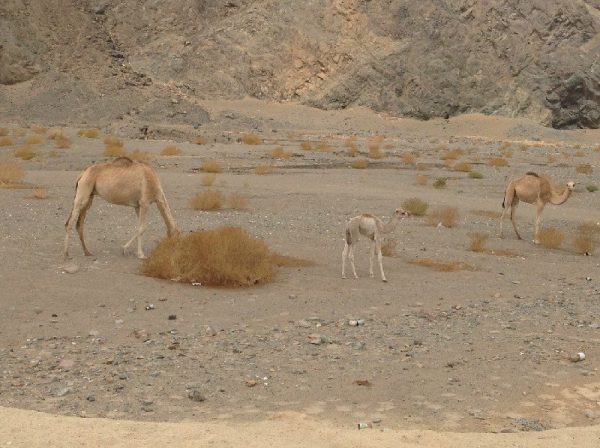
photo courtesy of Steven of Steven’s Taxis.
The inclusion of any person in any photo on this page does not imply any endorsement whatsoever by any person depicted of any product or service shown or mentioned on this page. Similarly, the inclusion of any image or photograph on this page does not imply any endorsement whatsoever by the image creator or photographer for any product or service displayed or mentioned anywhere on this page.