Shopping in Marsa Alam and Egypt
What To Get
What To Avoid
To book a shopping excursion to Luxor, Cairo or Aswan contact Steven@marsalam.com or via WhatsApp on +201029999978

Photo credit: Fotografia1979 /Shutterstock.com.
Please check the page to verify all specifics.
Egypt is a real Aladdin’s Cave for shopping and bargain hunters, and especially since the recent depreciation of the Egyptian pound against the Dollar, the Euro and the British pound. However you won’t gain any benefit if you are easily intimidated or persuaded by either outright hassle from street vendors or the more subtle, but financially lethal, charm of the skilled shop salesmen.
Always say “I’ll come back” just to allow yourself time to think. Whatever the shopkeeper says, it’s unlikely to be a “once in a lifetime opportunity” and if he shouts after you “Mr Come Back never comes back” just laugh politely. He’s trying to make you feel guilty – it’s all part and parcel of his sales skills.
Also don’t accept free drinks or food if it’s likely to make you feel obliged to buy something and don’t enter a shop on the pretext of any complicated story, such as helping to translate a letter – it’s usually part of a ruse to turn you into a captive customer.
When shopping within hotels, it’s important to remember that prices are typically higher compared to those in the nearby towns. This is partly because hotel shops often have little to no competition. Unlike popular resorts like Sharm El Sheikh, where you’ll find plenty of shops along the streets, Marsa Alam has few retail options close to any of the hotels. Walk out the main gate and you’ll typically be staring across open desert.
Plus, hotel shops usually pay steep rents for the privilege of such prime hotel locations. In contrast, when locating at some distance from the hotels in nearby towns, shops face much lower rental costs, but also much greater competition, usually obliging them to lower their prices.
31.05.25 – 28m 05s – 89K+ likes 3 mill+ views.

04.05.24 – 27m 17s – 3K+ likes – 305K+ views
So it can be a good idea is to ask Steven’s Taxis to arrange for a trip to either El Quseir – the best local town for shopping – or to Luxor, Aswan, Hurghada or Cairo. [ Latest prices by taxi here. ]
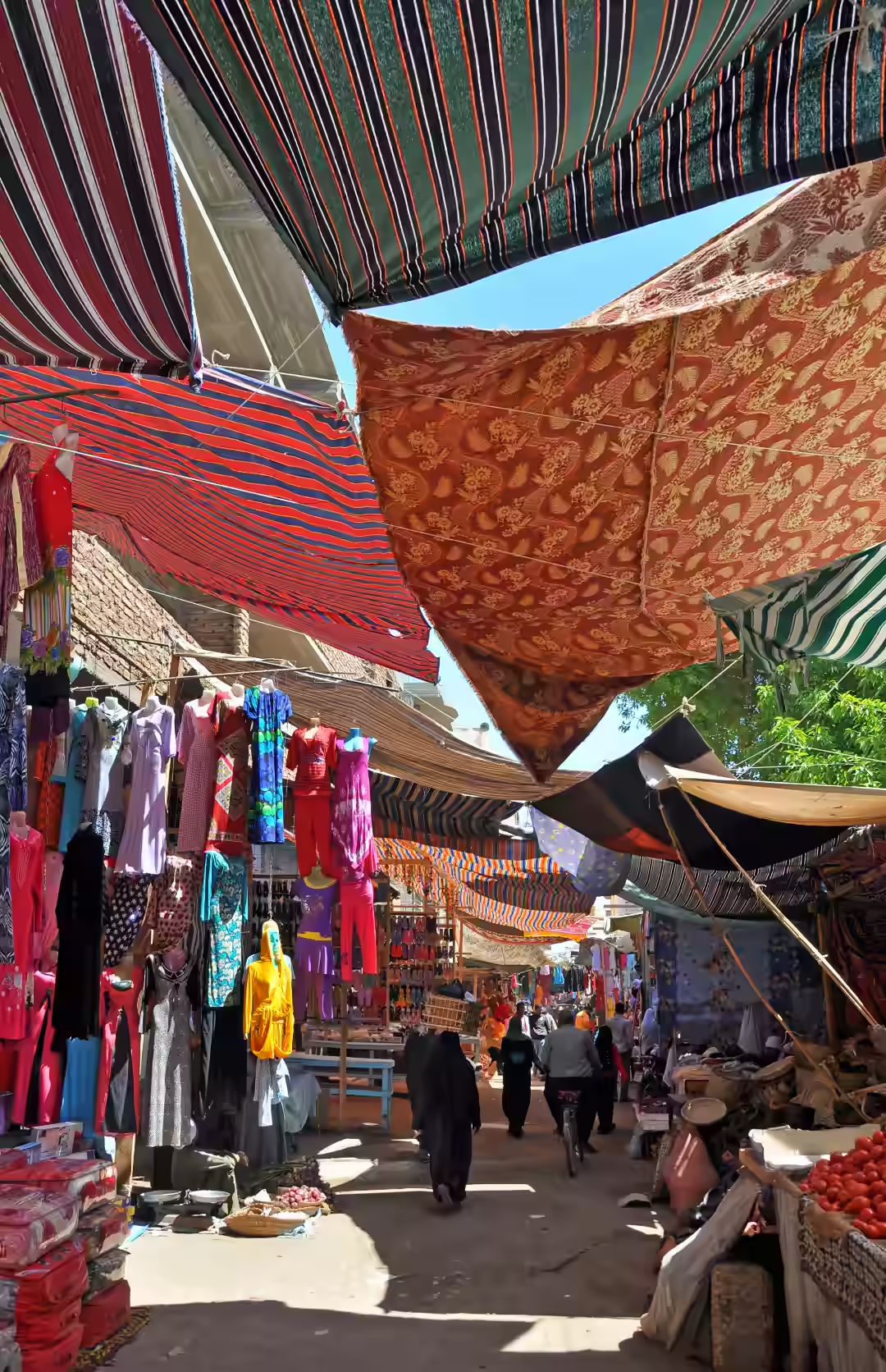
Marc Ryckaert CC BY 3.0 via Wikimedia
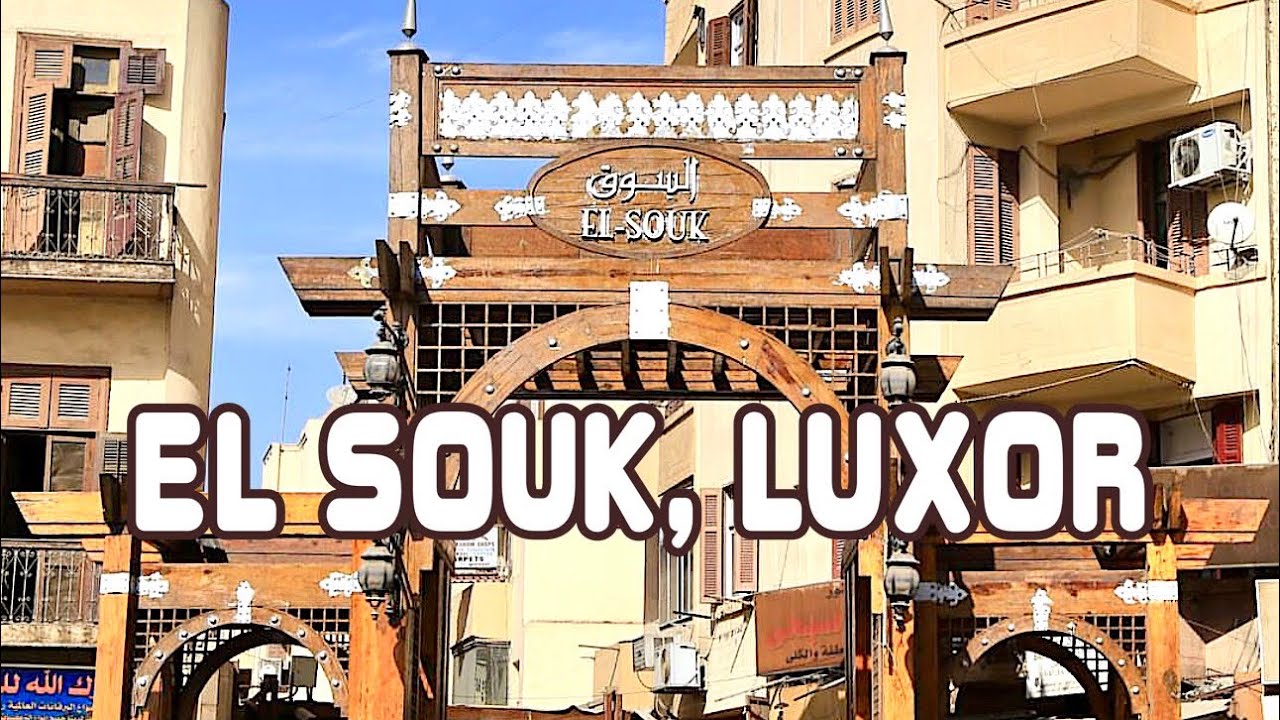
05.12.24 – 5m 7s – 103+ likes – 2K+ views
TOP SHOPPING EXCURSIONS –
LUXOR
Luxor, home of the fabled Valley of the Kings, has a busy main market, which is part covered, part open air, near Luxor Temple in the town centre. It offers a vast choice of handicrafts, souvenirs and various local products and is open from about 7 am to midnight (though many shops close early, especially on quieter days).
While in Luxor, consider taking a look at alabaster products made by local artisans across the river on Luxor’s west bank which are less expensive than in Cairo. Try out the Abo El Hassan Alabaster Factory (7 am to 7 pm) which doesn’t have the typical pushy sales tactics.
Silver is also particularly good value in Luxor, with many specialist jewellery shops creating custom pieces incorporating scarabs, ankhs, or cartouches. Also check out the markets and shops selling traditional local garments including galabeyas (traditional robes), scarves, and embroidered items which make for practical light weight souvenirs you can easily take back home. And for those with a sweet tooth, the best surprise – Twinky (8 am to midnight) near Luxor’s railway station for fabulous pastries!
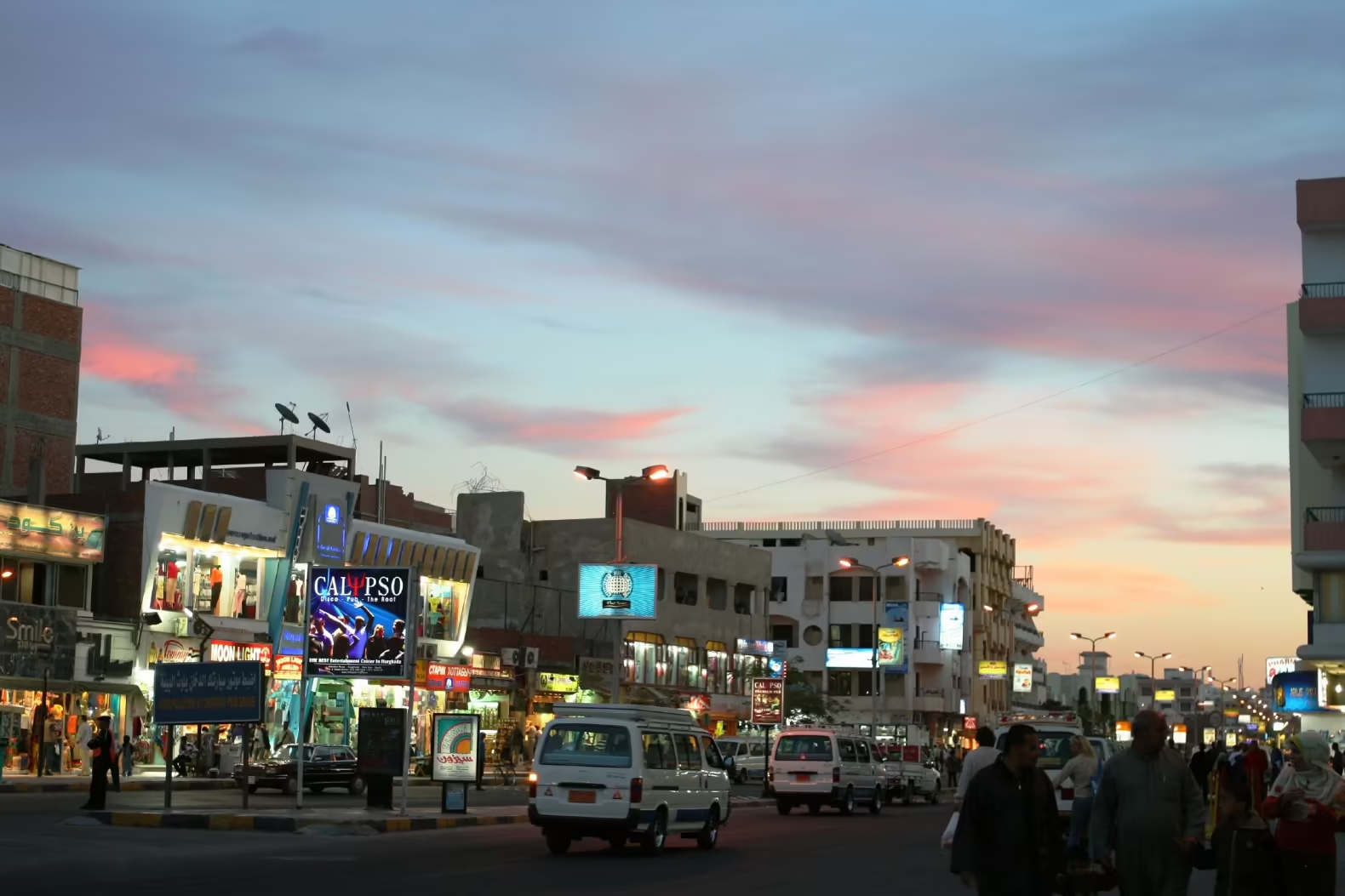
Tommy Wong CC BY 2.0 via Flickr

09.11.25 – 24m 14s – 505+ likes – 24K+ views
HURGHADA
Although not the most obvious destination for shopping, Hurghada is a popular and busy resort town and surprisingly affordable to reach by taxi at just 60 euros one way with Steven’s Taxis as of February 2026. Most tourists will head for Sheraton Road with dozens of bazaar-style shops offering a traditional shopping experience. Products range from souvenirs and handicrafts to clothing and accessories, although sales pressure and haggling can be fairly intense.
If however, you are looking for a more authentic experience, away from the resort areas visit the Ad Dahar Souk (open noon until late into the evening), an extensive covered market off An Nasr Street in the old town where you can often find all types of essentials as well as traditional crafts, spices, textiles, and souvenirs at better prices than in tourist shops, though bargaining is still essential. Finally, if it’s baking hot or you are yearning for an airconditioned Western-style shopping experience try Senso Mall (normally 10.00 am to 11.30 pm), located off Safaga Road to the south of the city.
ASWAN
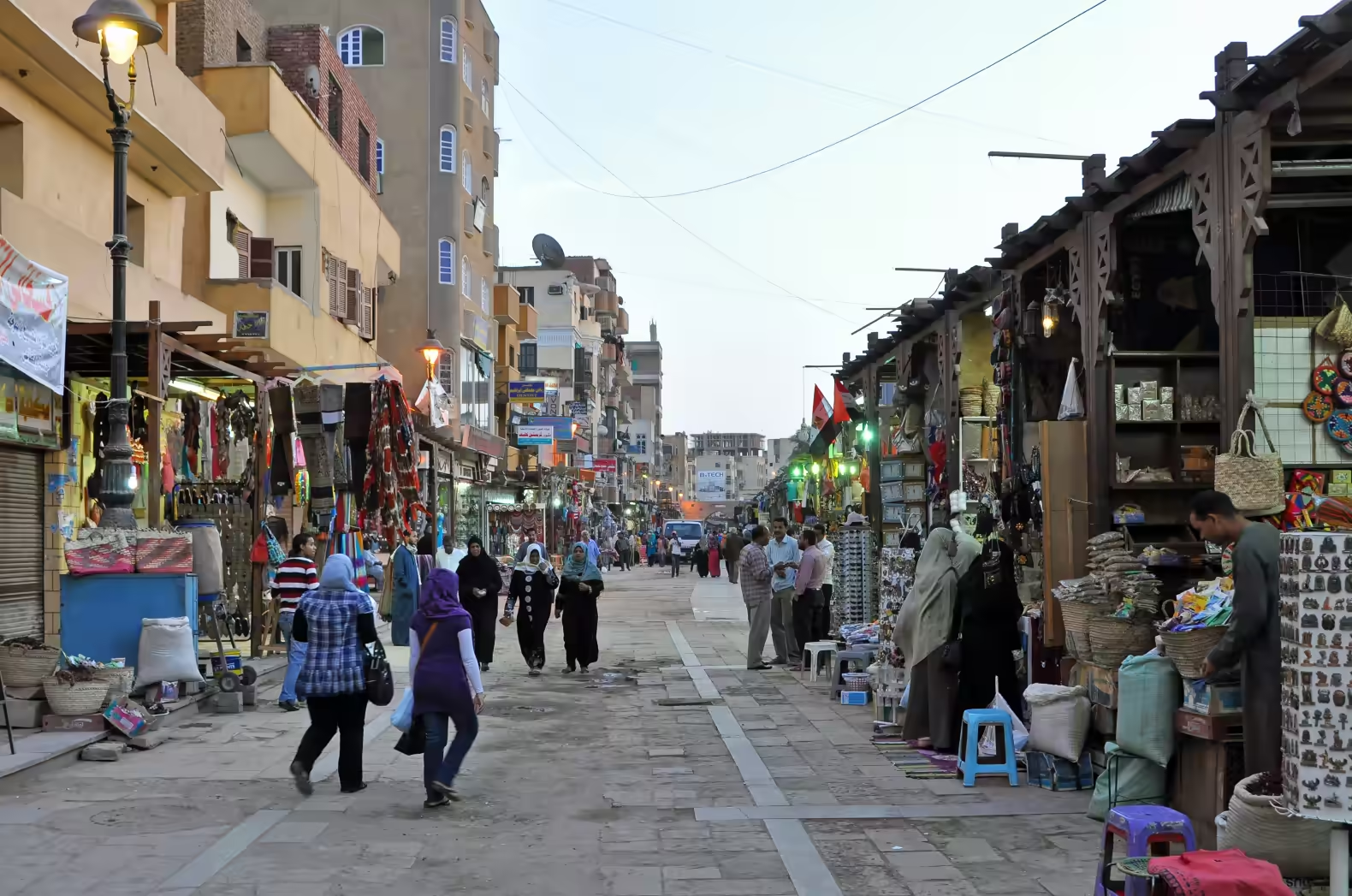
Marc Ryckaert CC BY 3.0 via Wikimedia.

28.02.25 – 31m 51s – 247+ likes – 10K+ views
If you have the time, Aswan is a fantastic addition to your holiday shopping itinerary. It’s one of Egypt’s most fascinating and culturally rich destinations. However, as of February 2026, reaching it from Marsa Alam isn’t straightforward. The journey covers over 660 km by road, following a circuitous route via Safaga and Luxor due to current travel restrictions. For the most up-to-date travel advice, you’re welcome to contact steven@marsaalam.com.

30.07.18 – 10 mins – 7K+ likes – 252K+ views
That said, Aswan is absolutely worth the effort. You’ll be captivated by the vibrant chaos of the city’s main market, Sharia as-Souq, near the central train station. It’s a sensory feast of vivid spices, fragrant perfumes, and traditional crafts. Be sure to keep an eye out for Nubian handicrafts — from geometric-patterned textiles and colorful woven baskets to intricate beaded jewellery, all reflecting the unique heritage of the region. With a bit of haggling and the confidence to walk away, you might just land yourself a bargain!
CAIRO
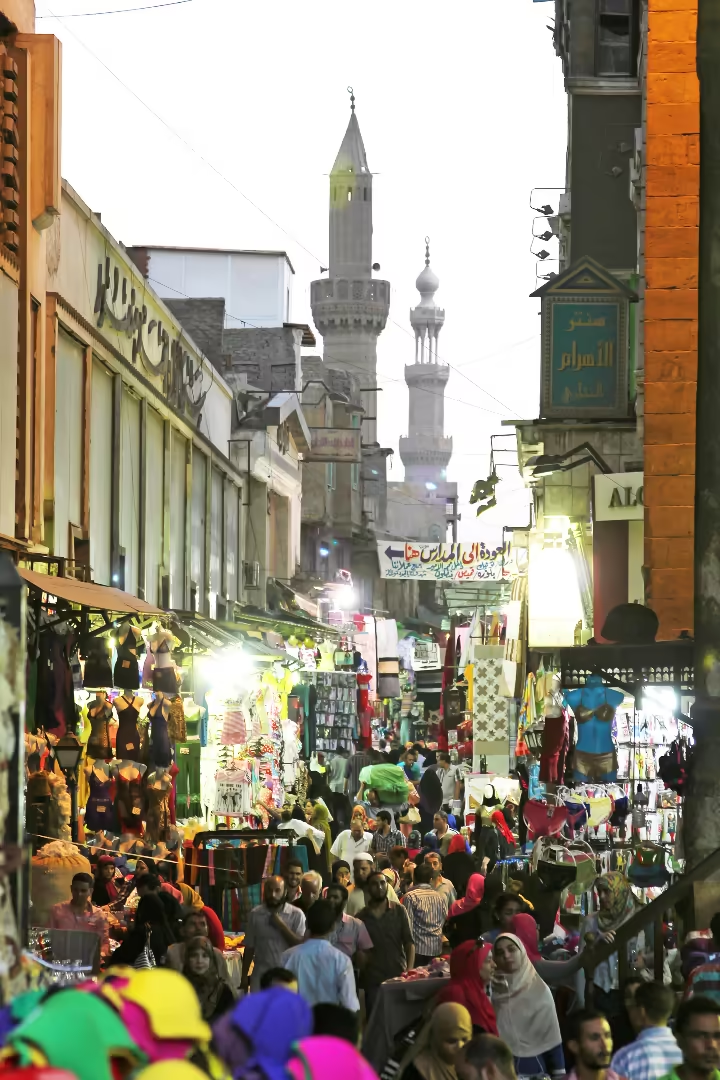
ID 86121706
© Mohamed Ahmed Soliman
| Dreamstime.com

16.01.24 – 52m 01s – 3K+ likes – 195K+ views
If you can spare the time — and the airfare — Cairo’s Khan Al Khalili souk is an unforgettable experience that shouldn’t be missed. One of the city’s oldest and most iconic markets, dating back to the fourteenth century, it offers a true maze of discovery, where getting lost among the narrow, winding alleyways is all part of the charm. Here, you’ll find an explosion of sights, scents, and sounds as vendors call out their wares — from gold jewellery and aromatic spices to handmade crafts, perfumes and souvenirs.
The market features streets dedicated to specific trades, such as the Street of Coppersmiths for engraved brass trays. Khan Al Khalili is also an antique hunter’s heaven, providing you know how to distinguish fake reproductions from genuine oriental antiques. Also be aware that generally the export of antiques, including original works of Pharaonic, Coptic or Islamic art, is strictly prohibited. You might be able to focus instead on quality reproductions or more recent vintage items, depending on the product, but always seek advice first.
Many streets within the souk are organized by trade, like the Street of the Coppersmiths, famed for its beautifully engraved brass trays and other metalwork. For those with a passion for antiques, Khan Al Khalili can feel like treasure hunting — but beware: genuine pieces can be hard to distinguish from clever fakes. Also keep in mind that the export of most antiques, especially items of Pharaonic, Coptic, or Islamic origin, is usually strictly prohibited. You might be able to buy high-quality reproductions or more recent vintage items, depending on the product, but ALWAYS seek expert advice before making any such purchase, both to check it is genuine and in case (as with most antiques) its export is prohibited.

14.11.25 – 28m 23s – 1K+ likes – 83K+ views.
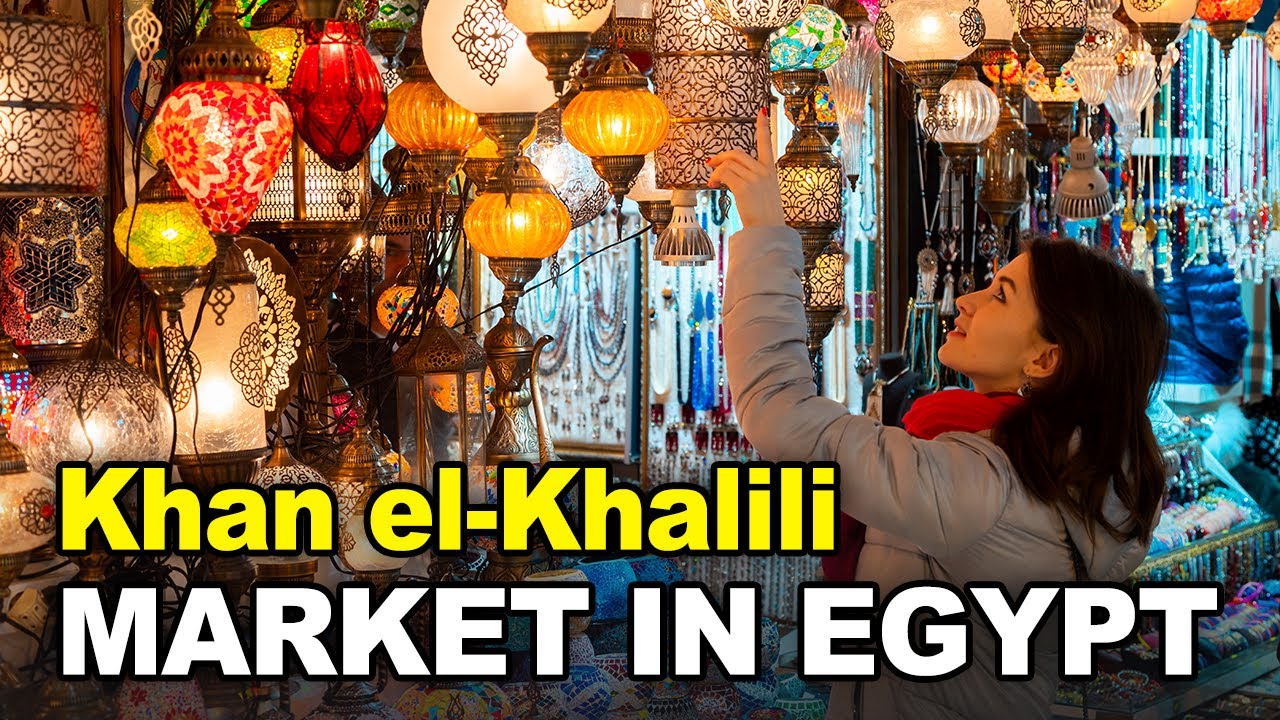
24.05.25 – 4m 1s – 131+ likes – 14K+ views
On a more positive note, even the most discerning shopper can find plenty of opportunities – such as wonderful wood and metal chests and beautifully inlaid wooden backgammon sets. But unless you are experienced always seek advice first. Khan El Khalili is open between 9:30am to 11 pm daily, with Friday afternoon being quieter during prayer times.
For further information about excursions to Luxor, Aswan, Hurghada or Cairo email Steven on steven@marsaalam.com or contact him via WhatsApp on +20 102 999 9978 or by phone on +20 128 433 2337. [ Latest prices by taxi here ]
THE ART OF HAGGLING
As you probably know, Egypt is the home of haggling but don’t let that put you off. You can seek advice from someone you trust about the value of something or set yourself a price that would be the maximum you would be prepared to pay and start bargaining from a much lower price. Don’t worry about the shopkeeper pretending to be offended and don’t believe any rules about half the asking price being the correct value – the salesmen rarely work to such fixed formulas.
LOCAL SHOPPING
EL QUSEIR
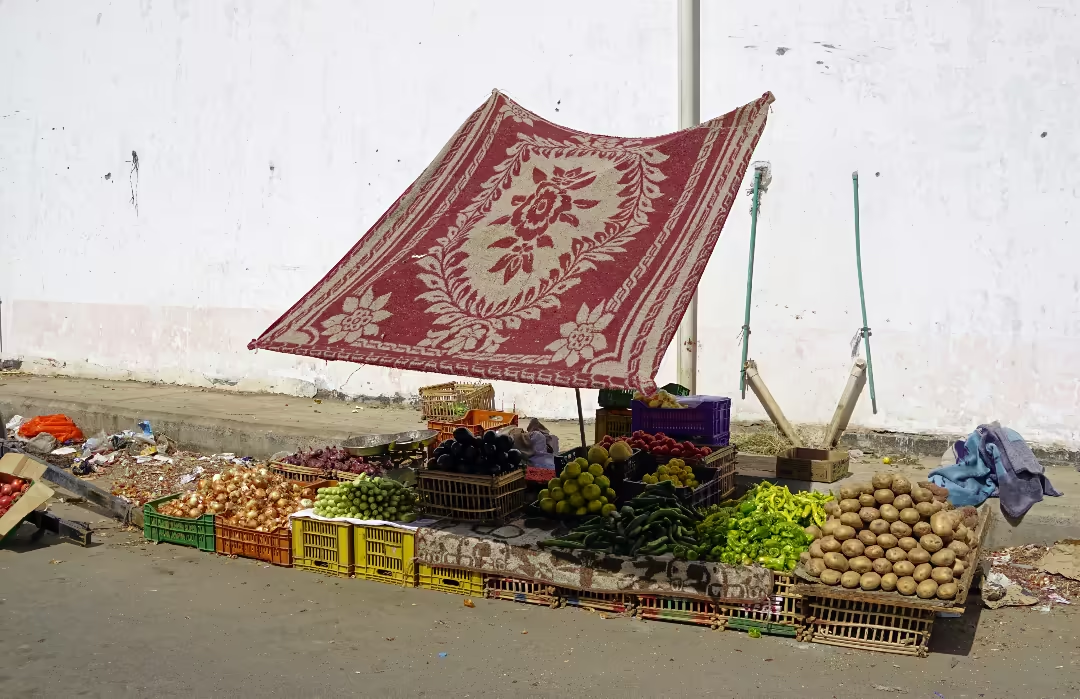
ID 413410480 © 7chriss3
| Dreamstime.com

14.05.2010 – 9m 15s – 24K+ views
At El Quseir, the most interesting experience is the fruit and vegetable market on Fridays when the local Ababda Bedouin (mostly from the south) or Ma’aza Bedouin (mostly from further north) come in to town. However, El Quseir also has a good choice of souvenir and other shops below the Ottoman Castle on the main street, Sharia el-Gumhorriya, selling papyrus, alabaster statues, leather goods, spices, and jewellery as well as all types of essentials. You’ll also find a bank on the same street.
MARSA ALAM TOWN
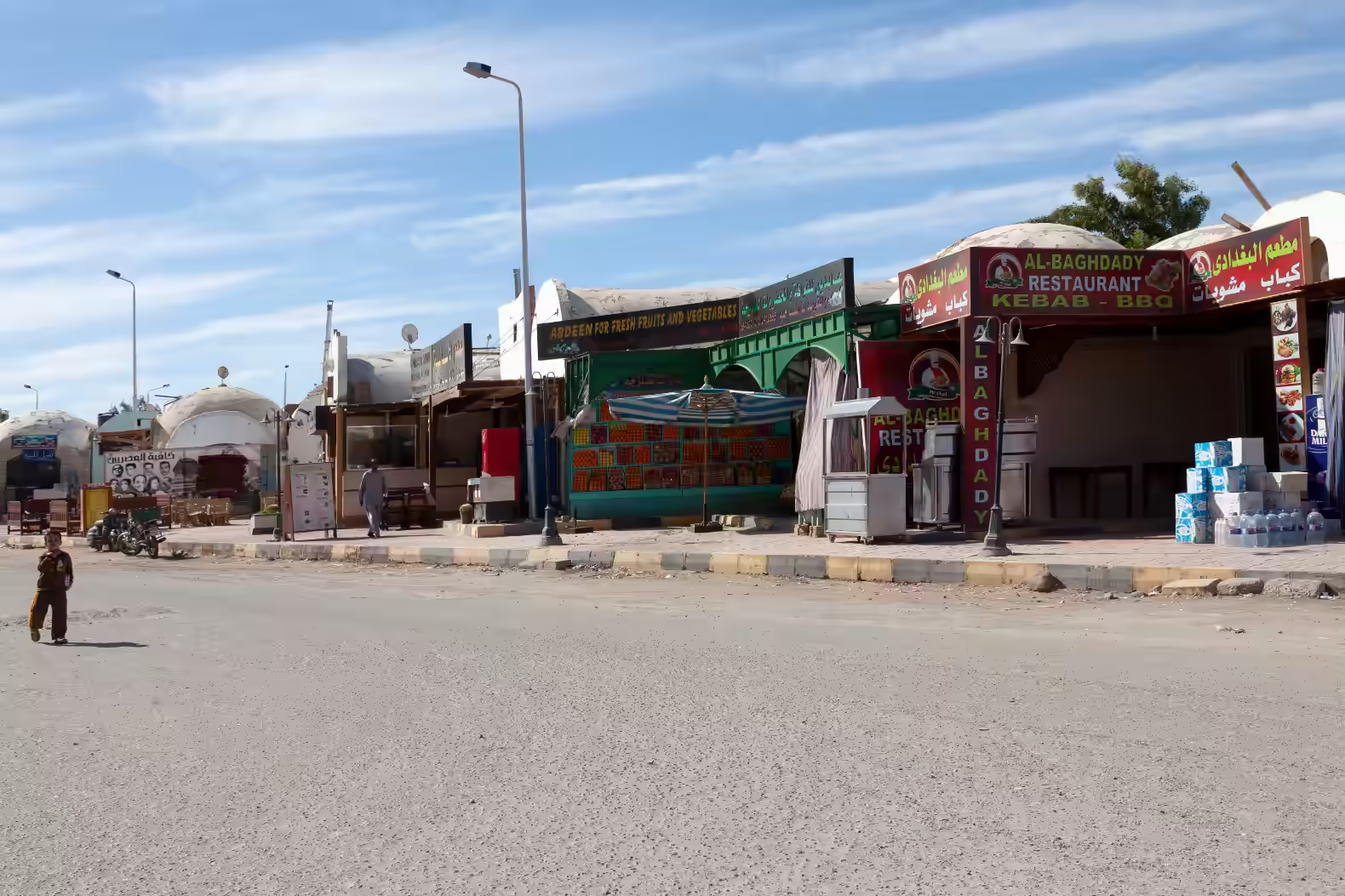
Only a tiny number of tourists ever venture into the small town of Marsa Alam, but if you do, try the small permanent souk dealing in fruit, meat, vegetables and all manner of household items. There are also some small cafes and restaurants and it lies hidden behind the town’s main (68th) street. Just ask for the souk. “Feyn el souk ?” “Where is the market ?”
PORT GHALIB
31.05.25 – 1m 57s – 12+ likes – 7K+ views.

10.11.24 – 6m 50s – 52+ likes – 15K+ views.
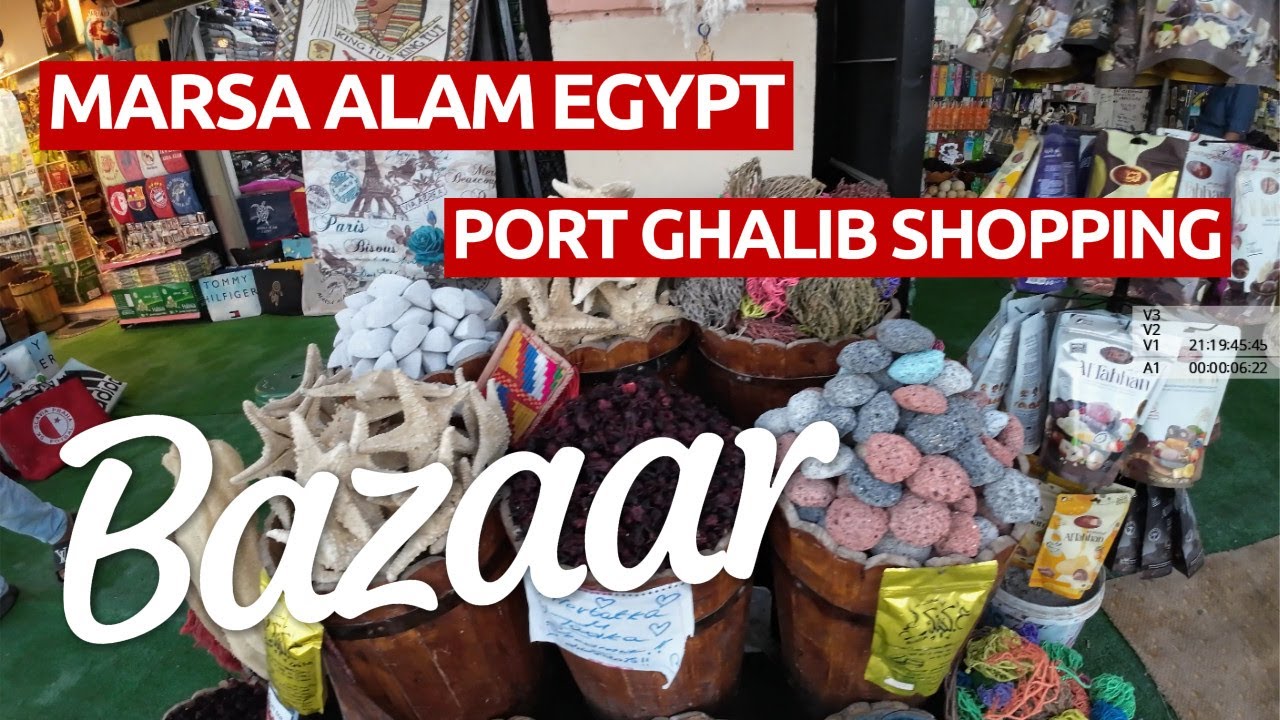
If you are in a hotel close to the airport, it’s well worth a shopping trip to Port Ghalib. It’s home to a staggering 120 retail outlets in its El Khan Shopping Arcade although depending on the season, not all my be open. And don’t imagine that you will be competing with sheep and donkeys and stepping over chickens – No, this is a highly sanitized souk with prices to match.
But there is at least a great choice not just of shops, but also of restaurants, cafes, bars or the popular Tutti Frutti on the marina for ice-cream whenever you want to take a break. You can find many boutique stores selling souvenirs, art, handicrafts, clothing, handbags, watches and diving equipment. So if you are looking for a Bedouin tapestry this may be the most convenient (though perhaps not the cheapest) place to find one. However if in doubt about the price try to arrange an excursion to El Quseir where shop rents and prices are often lower.
If you are looking for a few food items, last time we checked there was a small minimarket open in Port Ghalib’s harbour area. Most shop owners at Port Ghalib accept euros and pounds sterling, although you might sometimes, though not always, get a better price if you offer to pay in Egyptian pounds.
For advice on any of these markets locally or further afield you are welcome to reach out to Steven at steven@marsaalam.com or via WhatsApp on +20 102 999 9978 or by phone on +20 128 433 2337.
WHAT TO BUY ?
ALABASTER ORNAMENTS

Aligatorek – CC BY-SA 3.0 via Wikimedia.
This is a traditional hard-wearing material used to make Pharaonic statues and figurine souvenirs. It is difficult to break and a shopkeeper may even drop one on the floor to prove that its quality is genuine. Some shops import cheaper plaster souvenirs – often from China.
Good quality alabaster is translucent, allowing some light to pass through it when illuminated. Alabaster statues, vases, and decorative items are particularly associated with Luxor, where visitors can explore workshops on the West Bank and observe how these pieces are made. Keep in mind, however, that prices are often marked up for tourists, so be prepared to bargain.
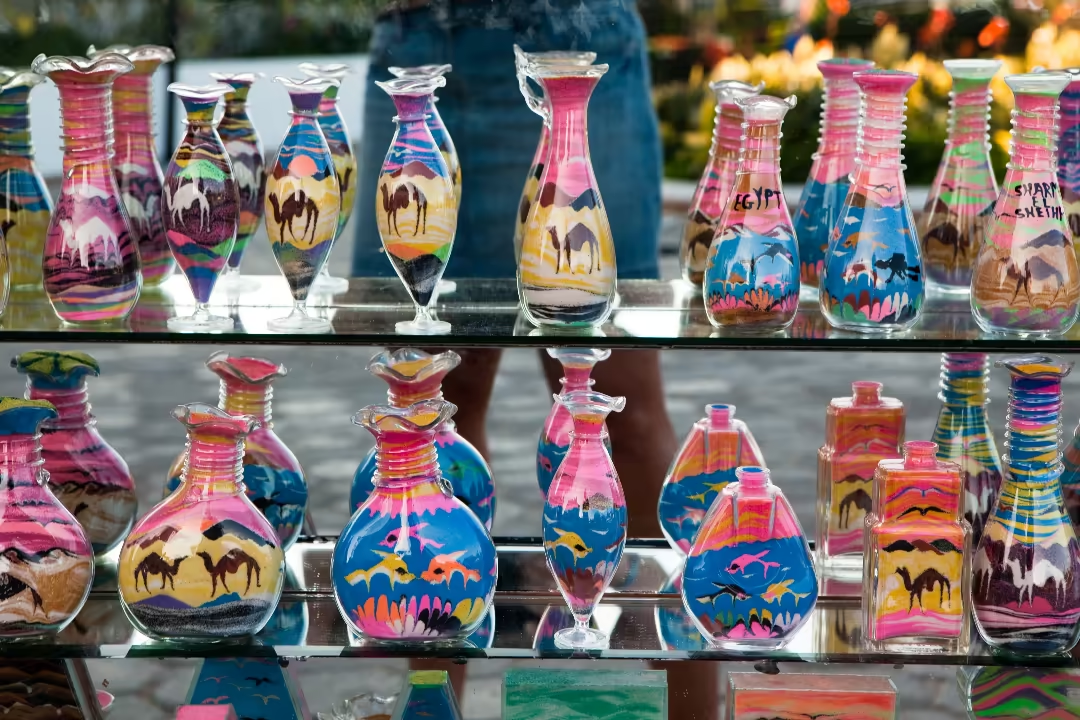
BOTTLES OF COLOURED SAND WITH PICTURES
ID 12575432 © Birute Vijeikiene
| Dreamstime.com
In markets from Marsa Alam to Aswan, you can watch these artists work with incredible speed. Using only a thin metal rod and a funnel, they “draw” complex scenes of camels, pyramids, palm trees or other Egyptian symbols inside the glass. There is usually no glue involved if they are done using traditional methods; the pressure of the packed sand alone can keep the intricate desert landscapes perfectly in place for decades.
However, in some lower-quality or mass-produced versions, vendors may apply a thin layer of glue to the inside of the glass to create a rough outline or “stencil.”
No two examples are ever exactly the same, with the best ones showing fine detail and clear colour separation. They can also make for great novelty gifts, but unless it’s an unusually superb example, don’t pay too much as it doesn’t take long to make one. Also, beware that shaking, vibrations or impacts can sometimes cause the colours to mix.

21.07.24 – 56m 34s – 1K+ likes – 66K+ views

22.04.13 – 7m 28s – 5K+ likes 517K+ views

25.02.20 – 10m 21s – 52+ likes – 4K+ views.

Mar 2020 = 6.37 mins – 7+ likes = 252+ views.
JEWELLERY

31.03.20 – 11m 43s – 63+ likes – 2K+ views

24.10.22 – 7m 50s – 5K+ likes – 230K+
When bought carefully there are some bargains – especially of genuine items in Luxor and Cairo (try Khan el-Khalili’s Souk as-Sagha). You can find a wide range of distinctive jewellery styles, many derived from ancient-inspired designs featuring motifs like the ankh or scarab.

06.10.24 – 6m 22s – 75+ likes – 4K+ views
The ankh (the symbol of life in ancient Egyptian culture) and the scarab (symbol of rebirth and regeneration) appear frequently in jewellery throughout Egypt. Available in various materials from precious metals to carved stone, authentic designs should match historical examples in proportions and styling.
When purchasing precious metals, look for hallmarks indicating purity. Also always be careful and consider the shop’s reputation. When buying gold, for instance, a seller might insist a piece is 18 karat but it might actually be of inferior quality.
LEATHER GOODS
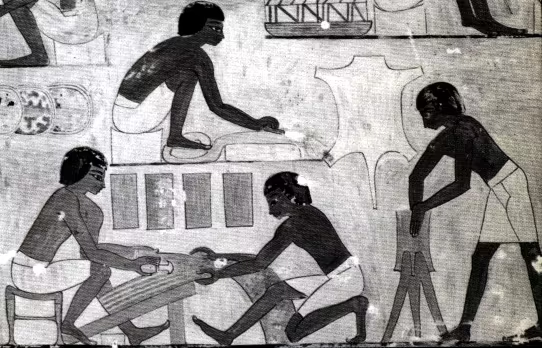
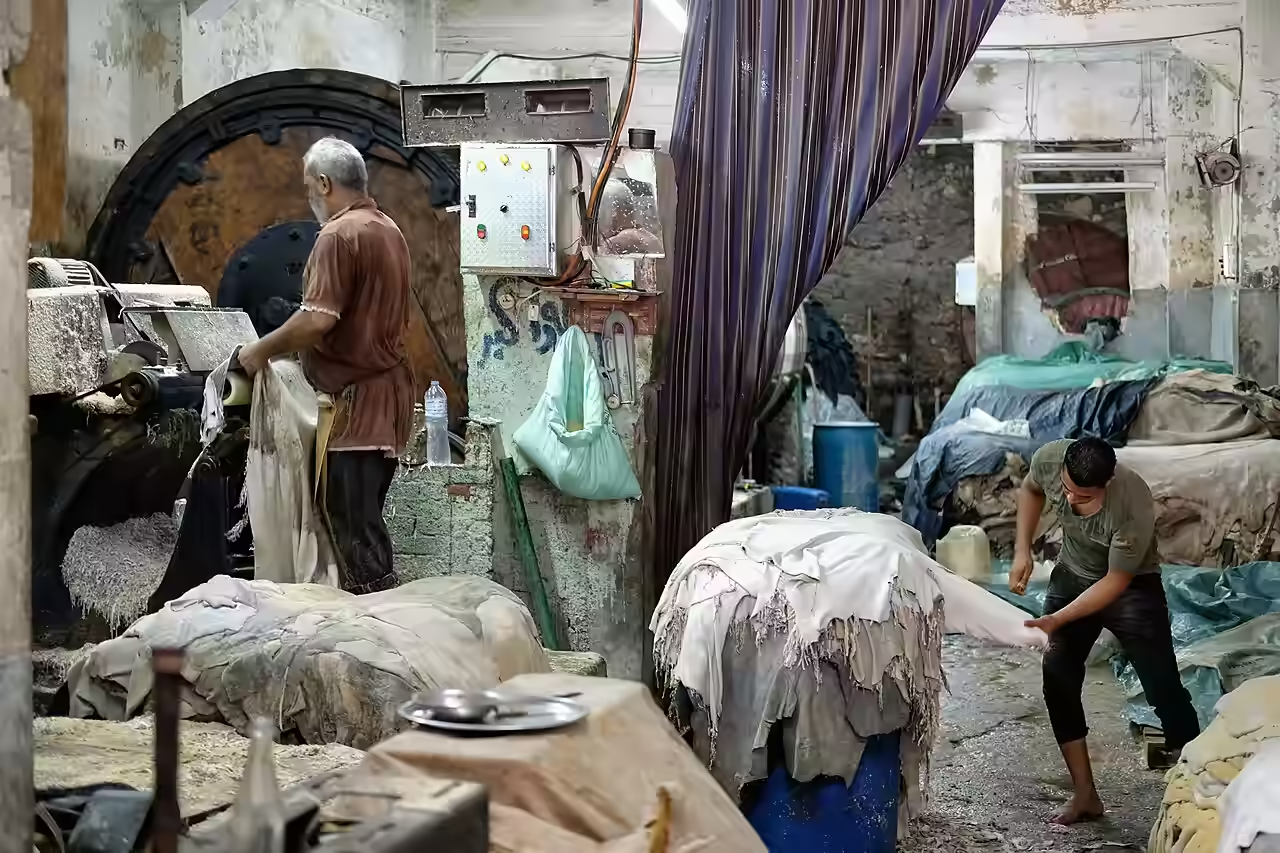
You will probably see a lot of bargain priced leather bags, belts, shoes and wallets. Some of them imprinted with tribal patterns but beware of many fake designer labels. Look for quality stitching and natural (rather than chemical) smells. Besides cow leather, camel leather is also relatively easy to find in Egypt.
For the most authentic leather goods, skip the main tourist stalls and head into the narrow back-alleys of Cairo’s Khan el-Khalili. You can often watch master artisans hand-stitching journals and belts right at their workbenches, ensuring your piece isn’t a mass-produced import. Some specialist bookbinders may be able to stamp your name in golden Arabic calligraphy on hand-bound leather notebooks while you wait.
PAPYRUS

26.04.19 – 2m 30s – 562+ likes – 61K+ views

10.12.2025 – 7m 44s – 9+ likes – 271+ views
The world’s first writing material – It’s light and reasonably easily to transport and framed on your wall at home can be a great way to remember your holiday. There’s also usually a vast choice of scenes from Pharaonic legends and gods to Nile valley scenes. Beware however that some shops sell papyrus prints which have been imported from China and others sell prints made on banana leaf which doesn’t last as well as genuine papyrus.
To distinguish authentic papyrus from banana leaf imitations, hold the sheet up to the light — true papyrus reveals a crisscross pattern of fibres. The best quality pieces tend to be found in specialized galleries rather than with street vendors.
PERFUMES AND OILS
Darla دارلا Hueske CC BY-ND 2.0 Flickr.
ID 33902158 © Photographerlondon
| Dreamstime.com
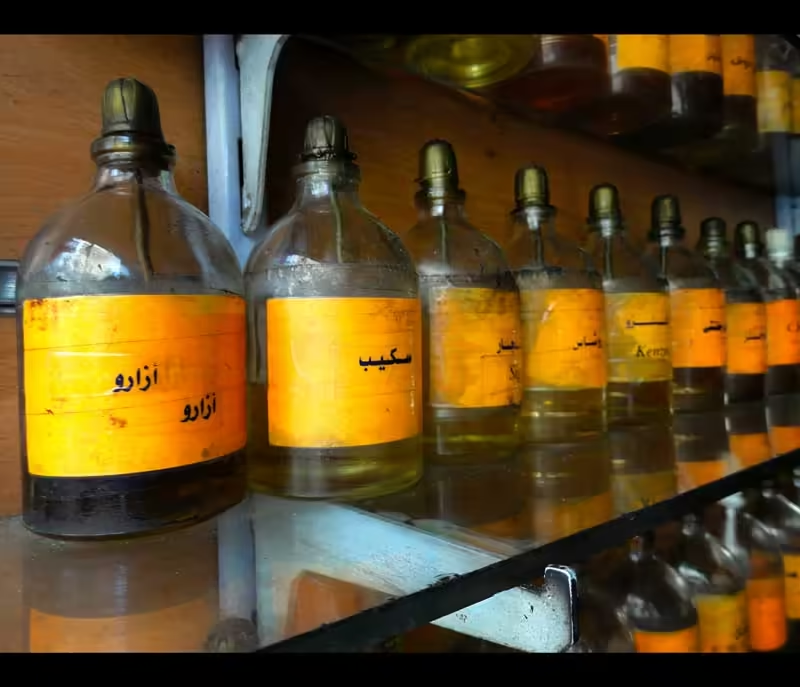
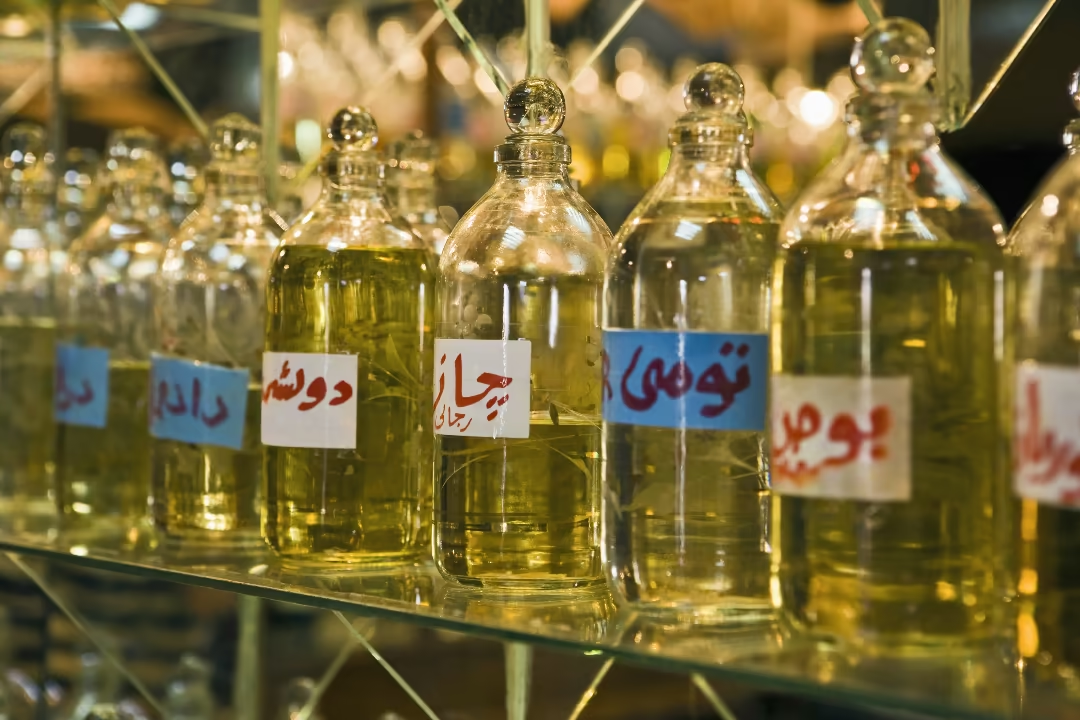
Egypt, home of the jasmine flower, has long been famous for its perfumes – but today the buyer has to be cautious as it is not unknown for rogue traders to occasionally mix paraffin and other liquids to “stretch out” their perfume supplies. Perfume salesmen are by reputation highly skilled and will often make a great spectacle of showing you how a tiny drop of perfume will sink intact to the bottom of a glass of water and other similarly impressive displays. However if you bargain well you can certainly get a great deal. Just don’t pay too much and be aware of any customs limitations in your country.
Traditional Egyptian scents are sold in ornate glass bottles in markets nationwide. Popular fragrances include jasmine, lotus, and the famous “Secret of the Desert” (different sources tend to list different ingredients but often including citrus fruits and jasmine). Quality oils should last on the skin for hours without fading.
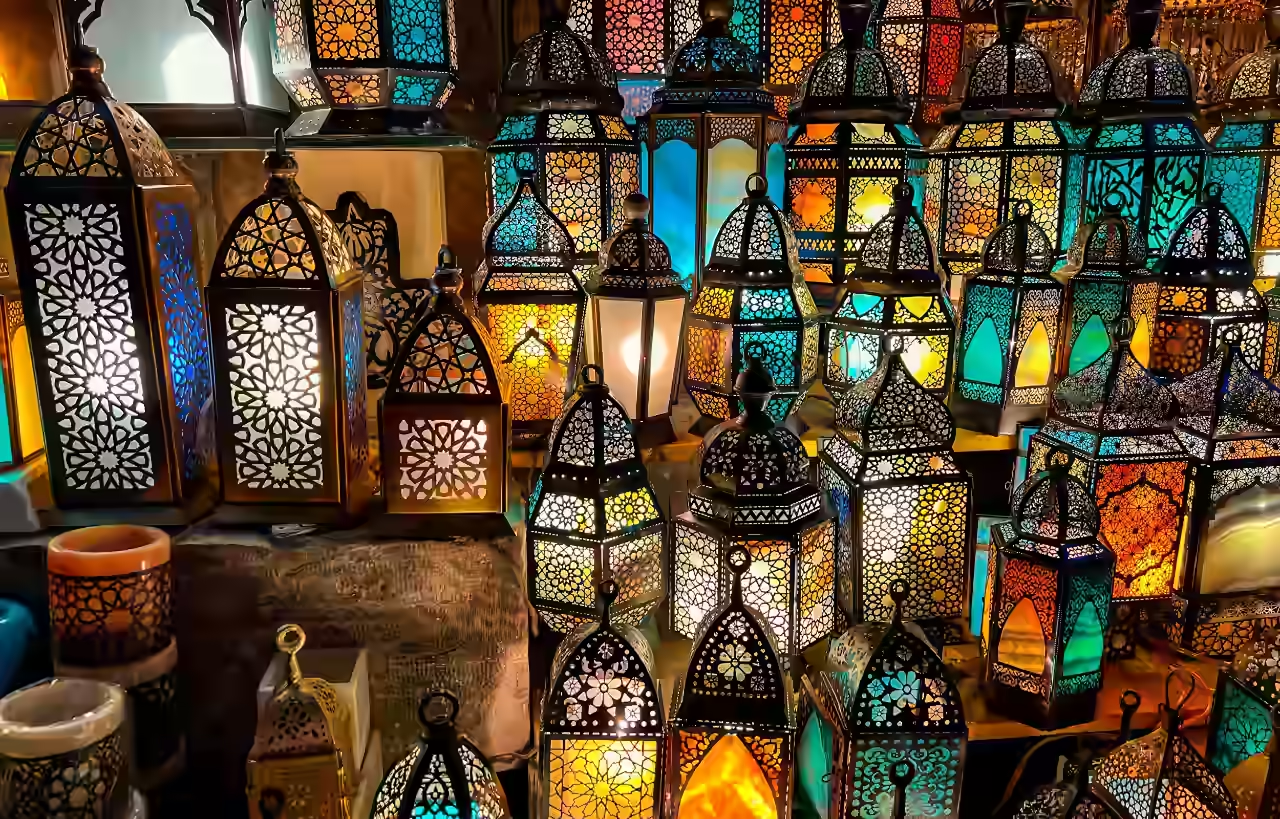
RAMADAN LANTERNS (SEASONAL)
Brookgardener/Shutterstock.com
Ruslan Suseynov/Shutterstock.com
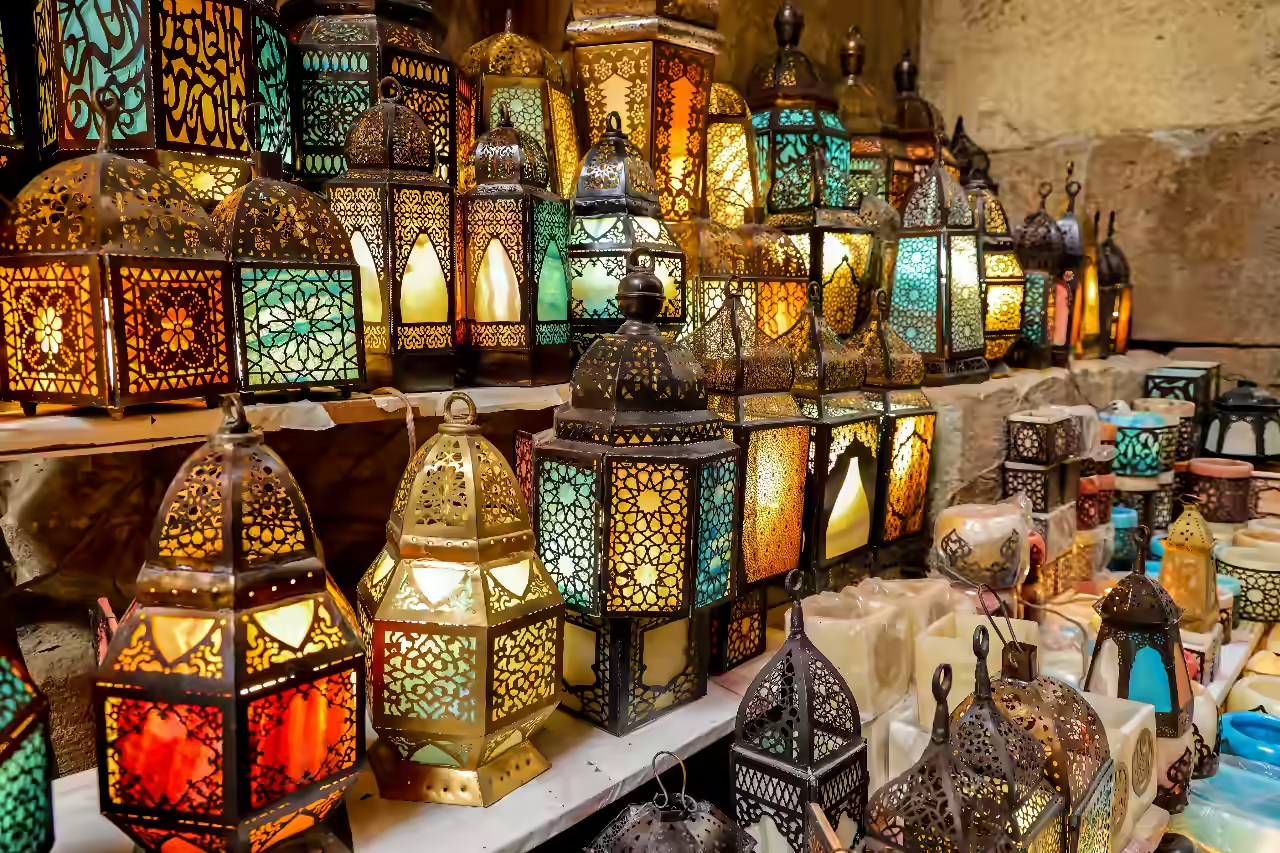
These eye-catching lanterns, a hallmark of Ramadan celebrations, range from classic copper and brass styles to vibrant modern designs bursting with color. The most dazzling variety appears in Cairo’s bustling markets in the weeks before Ramadan, when the city comes alive with festive energy. Among collectors and locals alike, the traditional metal lanterns with stained glass panels are especially treasured for their intricate craftsmanship and timeless charm.
SHISHAS
Otherwise known as the hubbly bubbly or waterpipe, you will see them used extensively in Egyptian coffee houses and cafes – often with the alluring smell of fruit favoured tobacco drifting from them. A good-quality shisha is built to last — it has strong, airtight seals between the parts, a sturdy hand-blown glass base, and solid, long-lasting materials throughout. They are much cheaper to buy in Egypt than in Europe if you get them at the right price but remember even the better quality shishas are fragile and need a lot of protection when being transported.
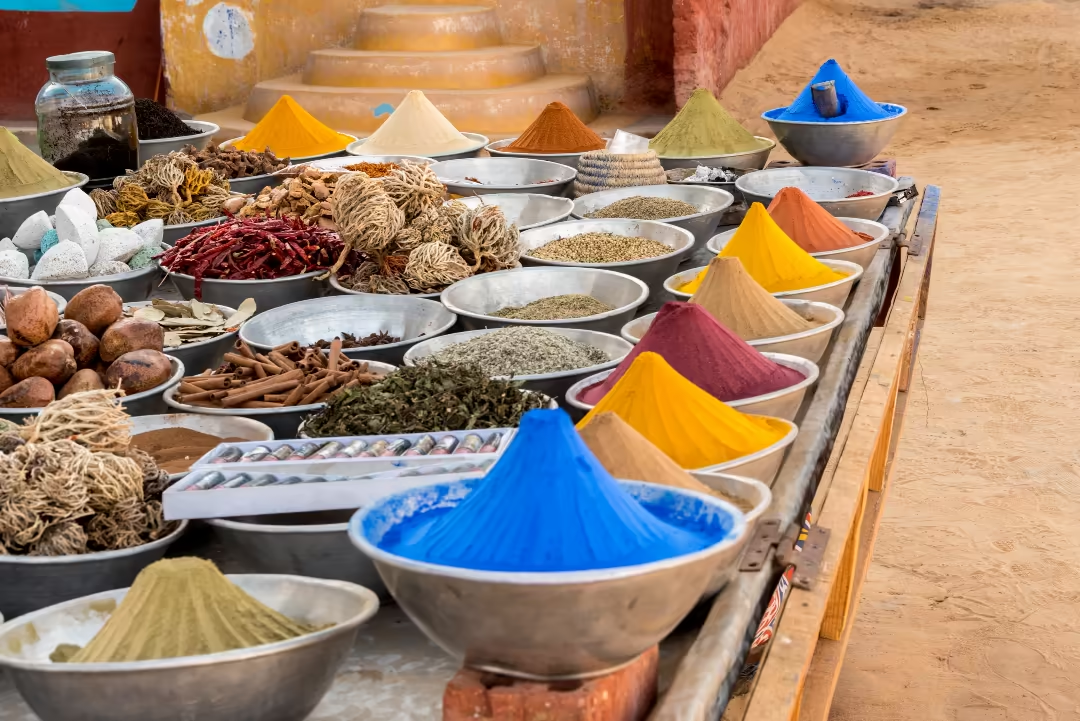
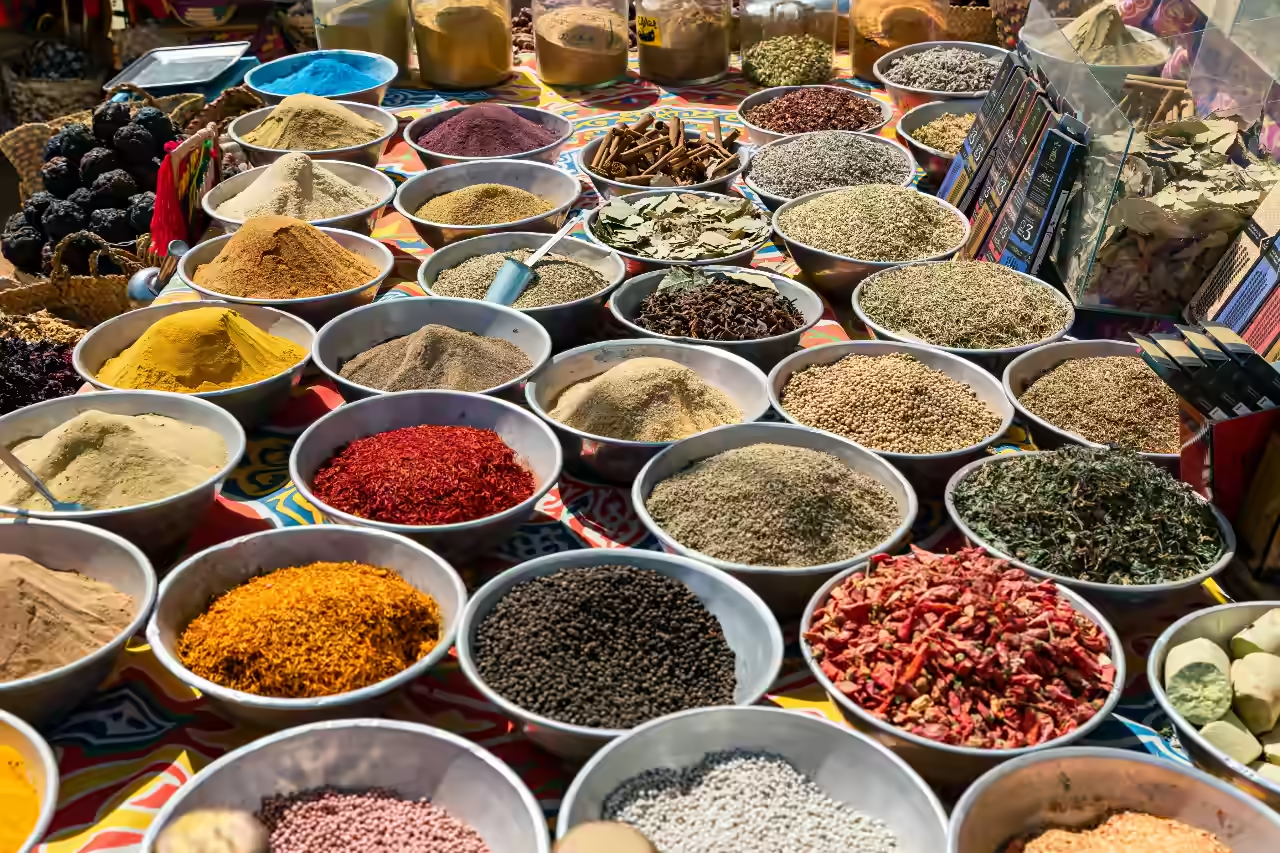
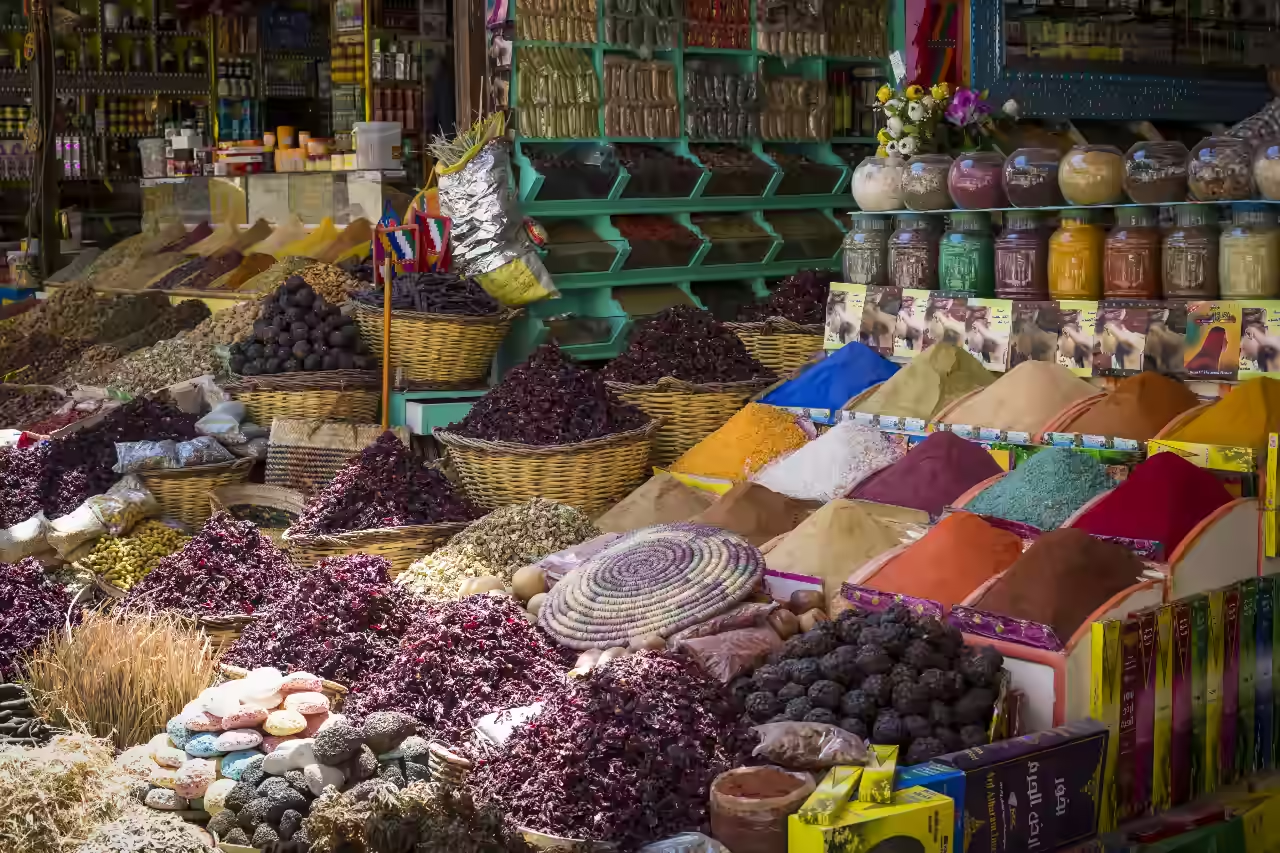
SPICES AND HERBS
ID 91876083 © Sabrina Taylor
| Dreamstime.com
Curioso.Photography/Shutterstock
Curioso.Photography/Shutterstock
In the larger Egyptian markets you’ll frequently find stores with attractive displays of exotic spices like saffron, cumin, hibiscus (used for karkade tea), and distinctive spice blends. The best spice markets are found in Cairo, Luxor, and Aswan. Look for vibrant colours and strong aromas indicating freshness. Vendors will typically allow sampling of scents before purchase.
T-SHIRTS
Many of them imported from China and very cheap although prices tend to be marked up in hotels. Often with humorous slogans and some pretending to be designer brands or authentic football club shirts. Sometimes it’s easy to recognize the fakes but always be cautious !
SILLY STUFF IMPORTED FROM THE UK OR EUROPE
Are you British and crazy about HP sauce, “Yorkshire” tea or marmite? – then you need to make a trip to Arkwright’s Gourmet Food Supermarket in Luxor. None of it is cheap and, although this is probably the most likely place to find such items, I’m not guaranteeing that you’ll necessarily find them in stock.
WHAT NOT TO BUY
Avoid purchasing antiquities as their export is generally strictly prohibited under the Antiquities Protection Law No 117 of 1983. It’s also possible that other legal restrictions may apply on certain products. Also avoid ivory products (import prohibited by most Western countries), fake or low-quality reproductions sold as “authentic,” mass-produced items falsely claimed to be handmade, and counterfeit branded goods. Bargains that seem too good to be true usually are, particularly with precious metals and gemstones! Take some time to do a little research and seek professional trustworthy advice when making any significant purchases.
SHOPPING ETIQUETTE
Shopping in Egypt is as much about the experience as the purchase — and knowing a few local customs can go a long way. Dress modestly, especially in more traditional neighbourhoods, and always begin with a friendly “Salam Aleikum” (peace be with you) to show respect before diving into bargaining. Be mindful of body language too — never point the soles of your feet at others, and remember that picking up an item signals real interest, so only handle what you might buy. In tourist hotspots, many vendors speak English, but using a few simple Arabic phrases will earn you extra smiles and maybe even better deals!
SHOPPING HOURS
In Egypt, shops tend to have long opening hours. Most open around 10am and stay open until about 10pm, though smaller stores might shut their doors a bit earlier, around 8pm. Traditional markets (souks) often get going earlier, from around 9am, making for an interesting morning stroll. During the holy month of Ramadan, expect a shift — many shops close at sunset for iftar (the breaking of the fast), then reopen later in the evening. Shopping malls usually stick to regular hours all week, but on Fridays, many places pause midday for prayer, so plan accordingly.
The inclusion of any person in any photo on this page does not imply any endorsement whatsoever by any person depicted of any product or service shown or mentioned on this page. Similarly, the inclusion of any image or photograph on this page does not imply any endorsement whatsoever by the image creator or photographer for any product or service displayed or mentioned anywhere on this page. Nor is there necessarily any implied endorsement by the website of any service or product mentioned or included in the text or a photograph displayed on this page.