EL QUSEIR
23 FASCINATING FACTS
To book an excursion to El Quseir contact Steven via WhatsApp on +20 1284332337. Details given near the bottom of this page.
Welcome to El Quseir, a place where every stone has a story to tell. After spending a year researching the history of this legendary port, I am excited to share my personal list of the 23 most fascinating facts about its past.
This town wasn’t always where it stands today. In fact, if you are staying near the modern Mövenpick Resort, you are walking right over the heart of the medieval city!
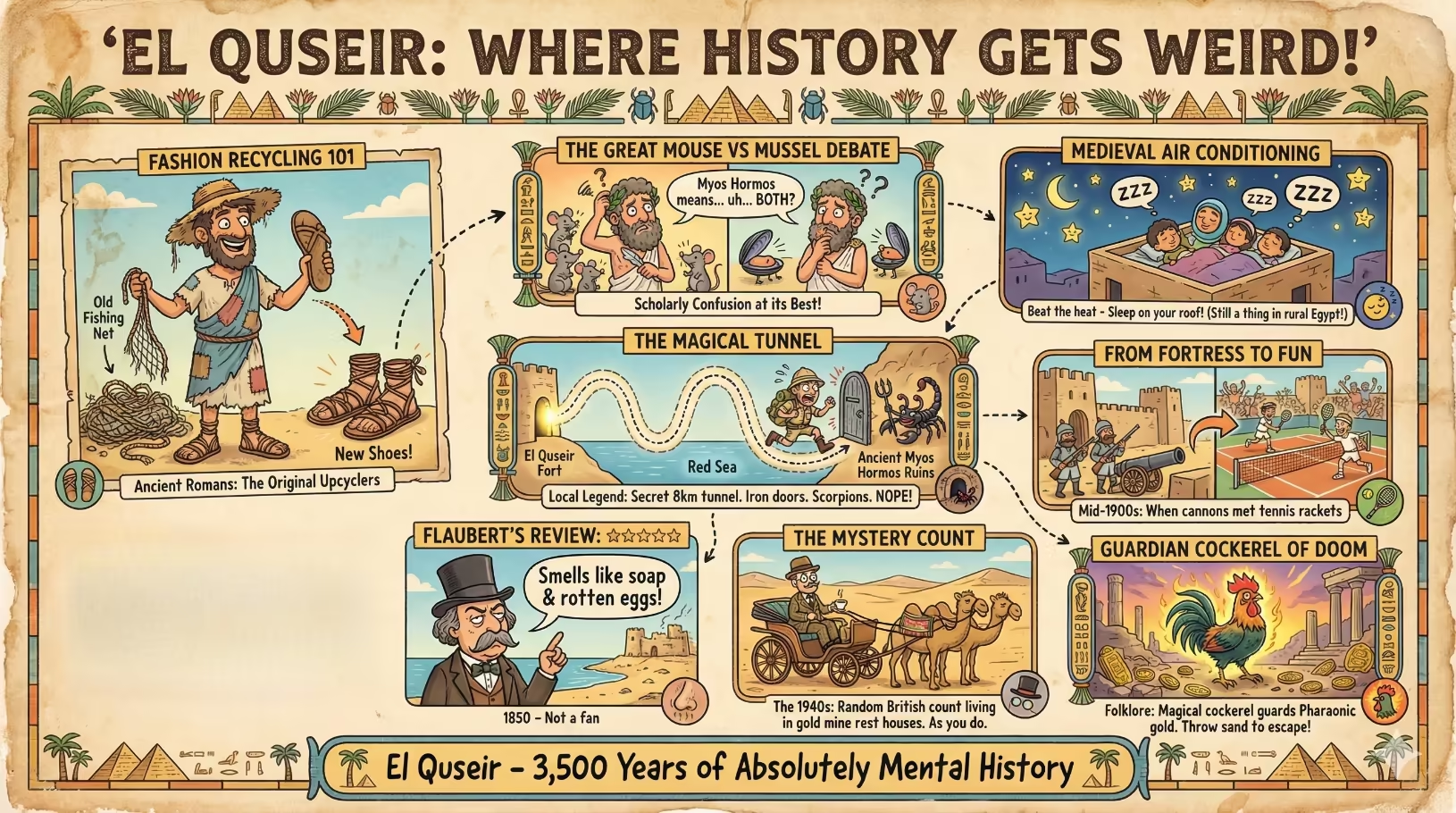
Across the millennia, El Quseir has repeatedly reinvented itself. It was the bustling Roman gateway of Myos Hormos, the medieval trading hub of Quseir Al Qadim, and finally the El Quseir we know today. Each era left behind secrets that transformed this port from a simple harbour into a legend. Ready to explore? Here are the 23 facts that make this town truly unforgettable.
The Mysterious Count of El Quseir

In the 1940s, the inland desert beyond El Quseir was home to a mysterious Englishman who still lingers in local memory. He was known only as “the Count,” and made his home near the long-abandoned Byzantine gold mines of Bir Umm Fawakhir, ninety kilometres along the winding Wadi Hammamat track through the barren mountains, that since pharaonic times has been the main route linking the Red Sea coast to the Nile Valley.
He maintained two colonial era rest houses there. He occupied one in the height of summer and the other to stay warm during the cutting chill of winter nights. He was believed to be Jewish, and local elders spoke of a wife they called “the Countessa,” a title poised somewhere between fact and folklore. On his rare journeys outside his two rest houses, he travelled in a distinctive carriage, which is likely the same restored carriage now displayed in the inner courtyard of El Quseir’s Ottoman Fort.
Legend holds that King Farouk visited the Count in 1949, sharing a lavish banquet with the local people before departing with gold and statues from the area. The story of the Count, a solitary European living in aristocratic seclusion in the heart of Egypt’s Eastern Desert, adds a modern layer of folklore and intrigue to the region’s already rich history.
For further reading – see Wael Bakry Rashedy, “Royal rest houses in Upper Egypt (Qena – Quseir) ) Study and Publication,” Journal of Art, Architecture and Humanistic Sciences, Volume 6, Issue 28 accessed via mjaf.journals.ekb.eg.
A Magical Tunnel
MarsaAlam.com: AI gen using Google Gemini
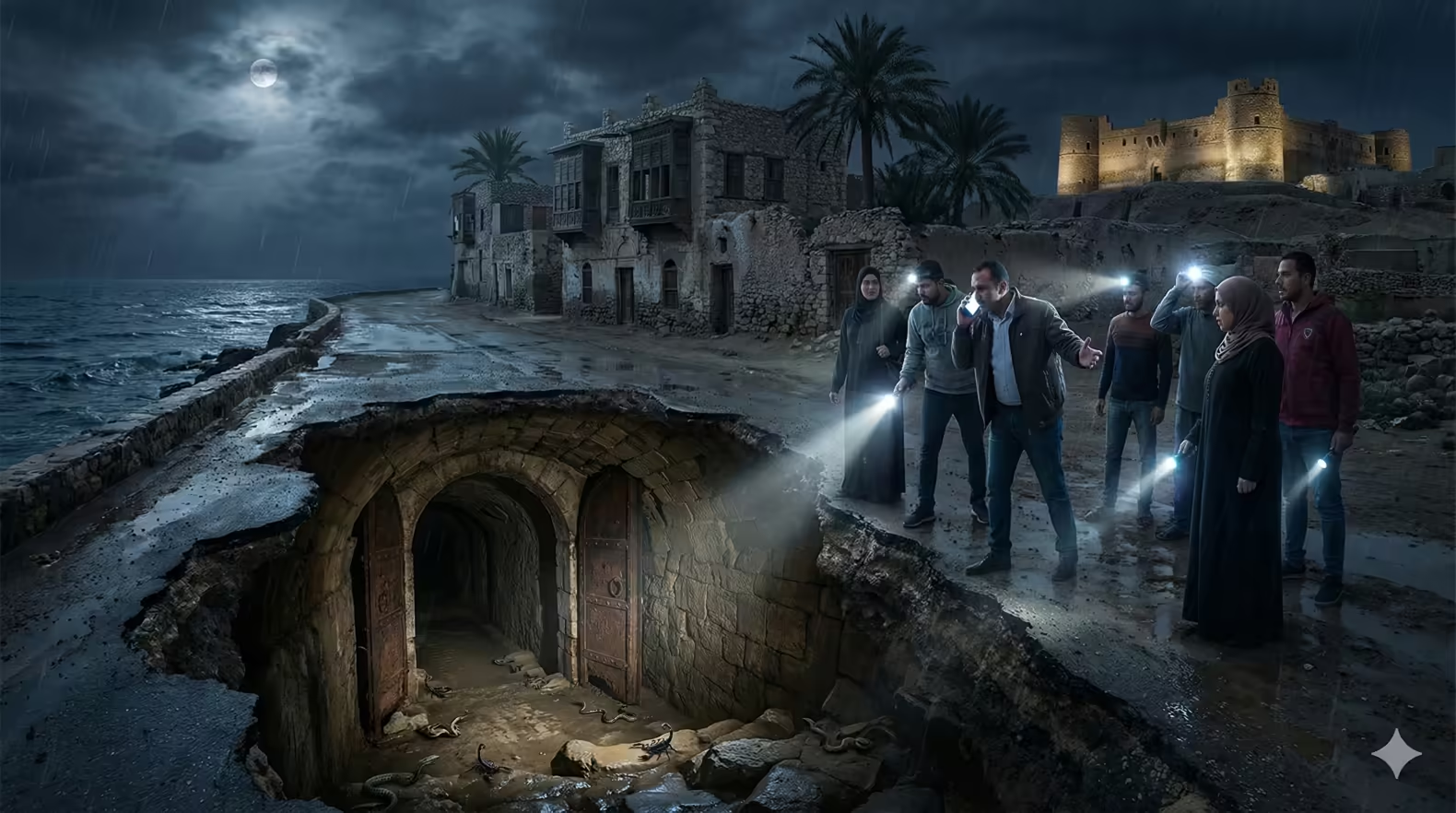
In the folklore of El Quseir, a magical tunnel is said to bind the modern town to its ancient predecessor. The passage is believed to run from the Ottoman citadel to the ancient ruins of Medieval Myos Hormos, eight kilometres away. Tales passed down through generations speak of a gaping hole opening in the ground near the site of the Mövenpick hotel, close to the former Medieval harbour, after heavy rains, briefly revealing the entrance to this subterranean passage. Similar openings were reported during a football match inside El Quseir Fort, and again when builders began work on the construction of the Mövenpick.
Some stories go further, claiming that people who ventured into the tunnel from the citadel found themselves walking for miles underground in the direction of the ancient port before fear forced them to turn back. “There were doors inside it,” recounted one witness, “iron closed doors, so they were scared of snakes and scorpions and things.” This enduring legend creates a tangible link between the modern city and its ancient predecessor, like a symbolic umbilical cord that binds the two places together in the collective imagination of the community.
For further reading – see Glazier, Darren, “We make the diamond shine: Archaeological Communities in Quseir, Egypt,” PhD Thesis, The University of Southampton, accessed via eprints.soton.ac.uk.
Ancient Recycling.
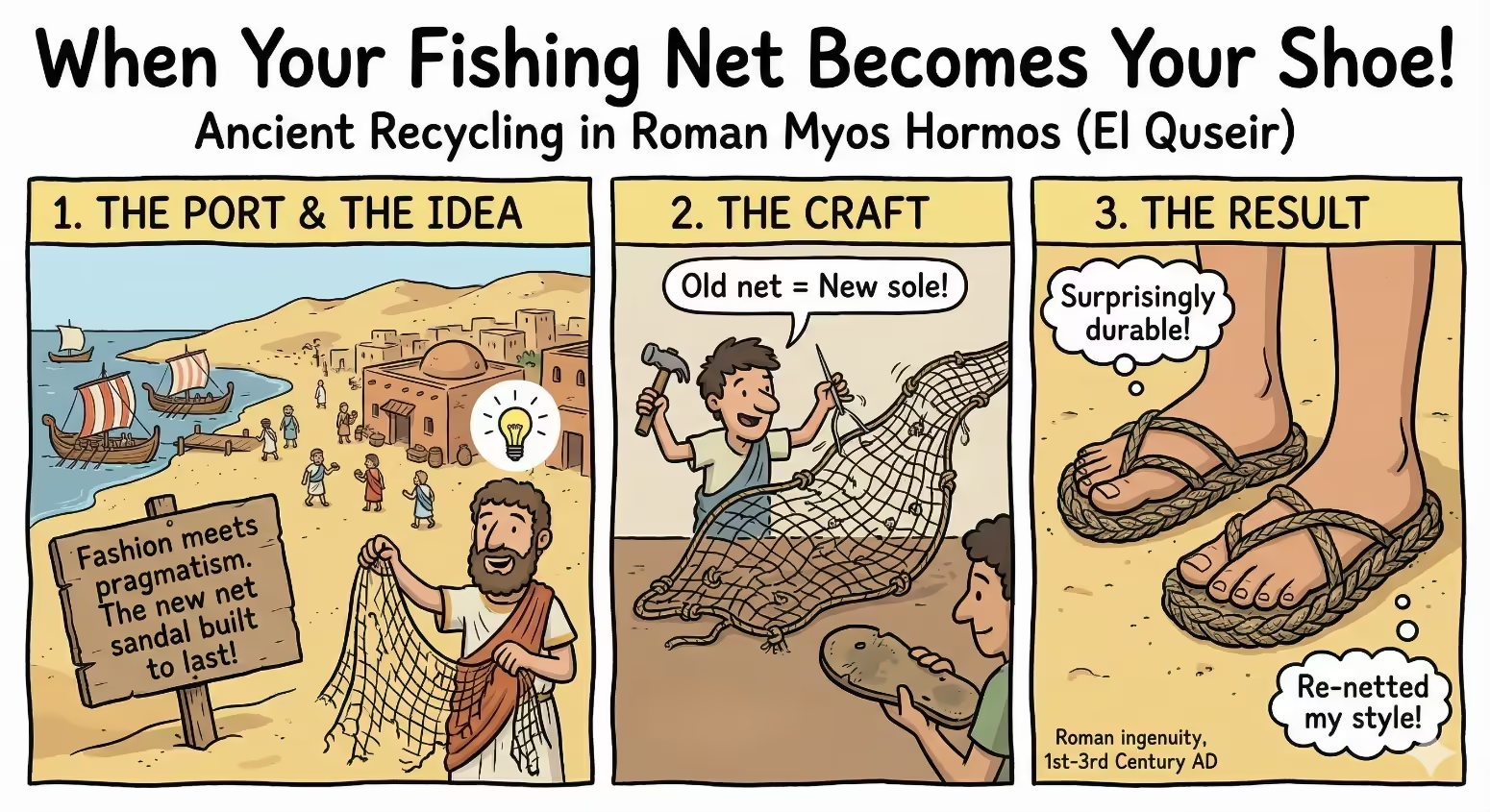
In the resource-scarce environment of the Roman desert port of Myos Hormos between the first and third centuries AD, nothing went to waste. One of the most striking examples of this ingenuity is seen in the discovery of sandals whose soles were made from old plaited fishing nets. The nets, likely made from flax or other bast (flexible plant) fibres, would have been used to catch fish in the Red Sea.
Once they were too worn or damaged to be repaired, instead of being discarded, they were repurposed into sturdy footwear. This clever recycling offers a remarkable insight into the daily lives and pragmatism of the ordinary people of ancient El Quseir, showing how they adapted to their harsh environment and made full use of every available material.
For further reading – see Thomas Ross, “Fishing Activity” in David Peacock and Lucy Blue (Editors), “Myos Hormos – Quseir al-Qadim
Roman and Islamic Ports on the Red Sea: Volume 2: Finds from the excavations 1999-2003, University of Southampton, Series in Archaeology No. 6., p. 212.
A Little Italy in Egypt
MarsaAlam.com: AI gen using Google Gemini.
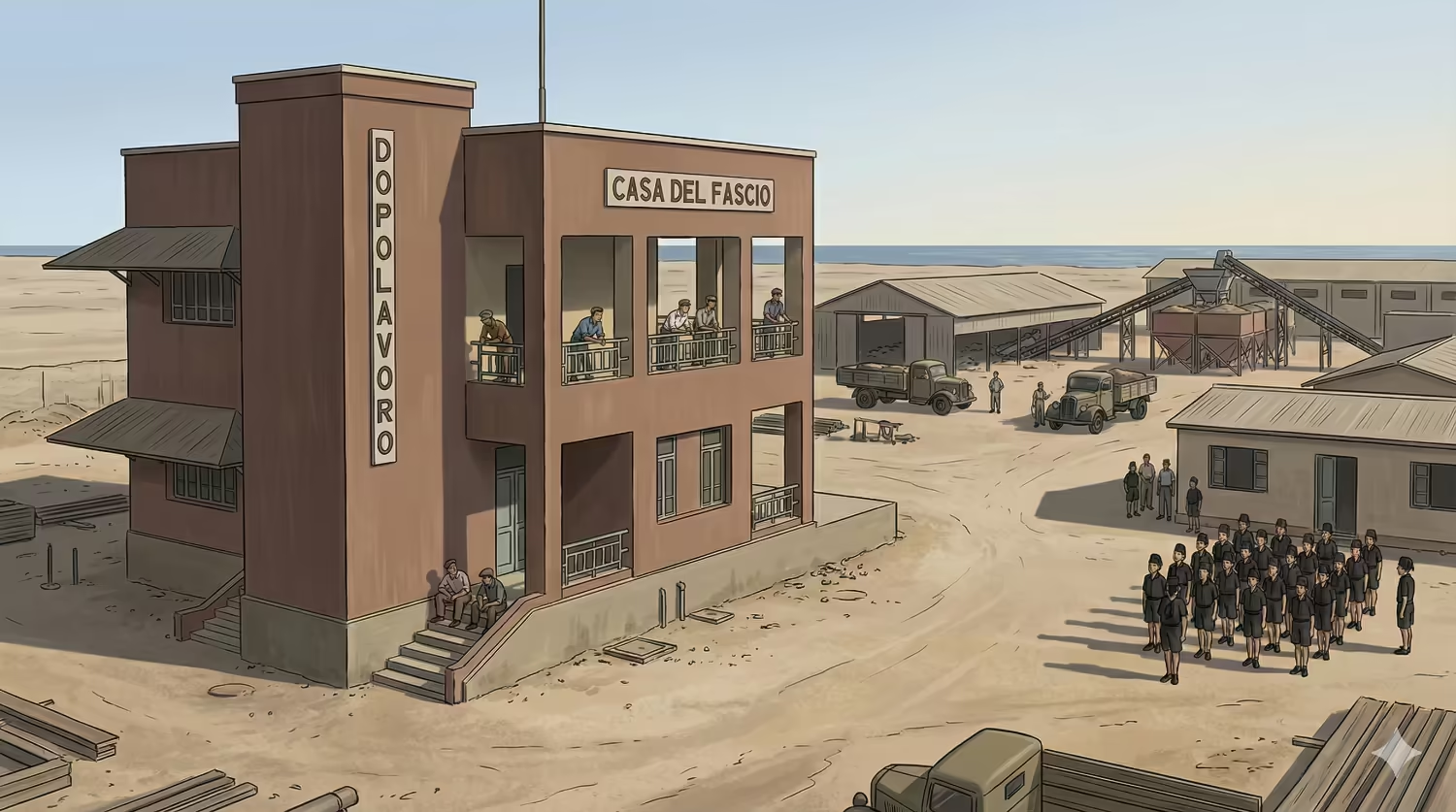
In the 1930s, the northern quarter of El Quseir, which was then centered around the Italian-built phosphate processing plant, acquired the nickname “Little Italy.” The factory area featured striking symbols of Italian Fascist influence and ideology, most notably a Casa del Fascio, the Fascist headquarters building with its own canteen and worker’s club, which still stands today not far from the beach, and children attending the local elementary school wore Balilla uniforms with breast pockets and stiff, integrated collars that mimicked the style of the Fascist Blackshirt militia. The uniforms were clearly intended to serve as instruments of indoctrination and as preparation for eventual enrollment into the Italian military.
For further reading – see Antonella Cabassi, ‘Kossier: A Phosphate Mining Town,’ in Claudine Piaton et al, Building Beyond The Mediterranean – Studying The Archives of European Businesses (1860-1970), Open Edition Books, 2012, p109.
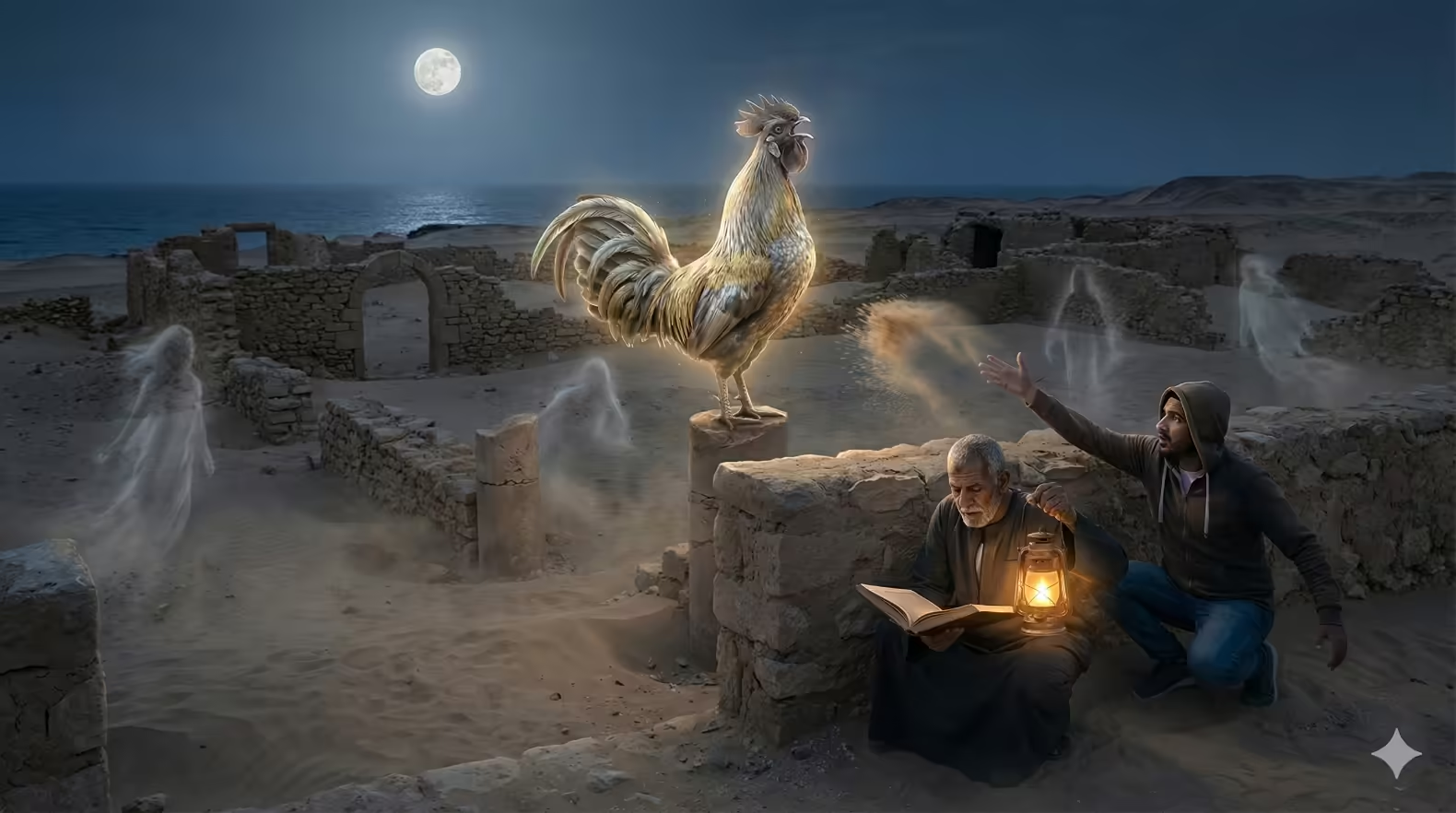
The Mysterious Cockerel Which Guards Quseir Al Qadim.
MarsaAlam.com: AI gen using Google Gemini
The desert landscape around Quseir al-Qadim, located about eight kilometres north of El Quseir’s town centre, is steeped in folklore, much of it involving jinn and curses. One especially persistent and unusual tale centres on a mysterious cockerel said to guard the ruins. According to one story, the bird guarded Pharaonic gold and silver. At nightfall and in the early morning, it would emerge from the ruins and let out a piercing eerie cry, terrifying anyone who heard it.
One witness recalled that the only safe way to enter the ruins and escape the curse was to recite specific words from a book and then throw sand at the cockerel, forcing it to fly away. Another interviewee told historian Darren Glazier:
“My grandfather told me a lot of stories about a cockerel at Quseir al-Qadim and a lot of other voices there. Some people came from Morocco, especially Morocco, who knew how to deal with these kinds of things. Everywhere the Pharaohs have been there is a lot of things, but they stored it so that no one could enter.”
For further reading – see Glazier, Darren, “We make the diamond shine: Archaeological Communities in Quseir, Egypt,” PhD Thesis, The University of Southampton, pp. 149-150, accessed via eprints.soton.ac.uk.
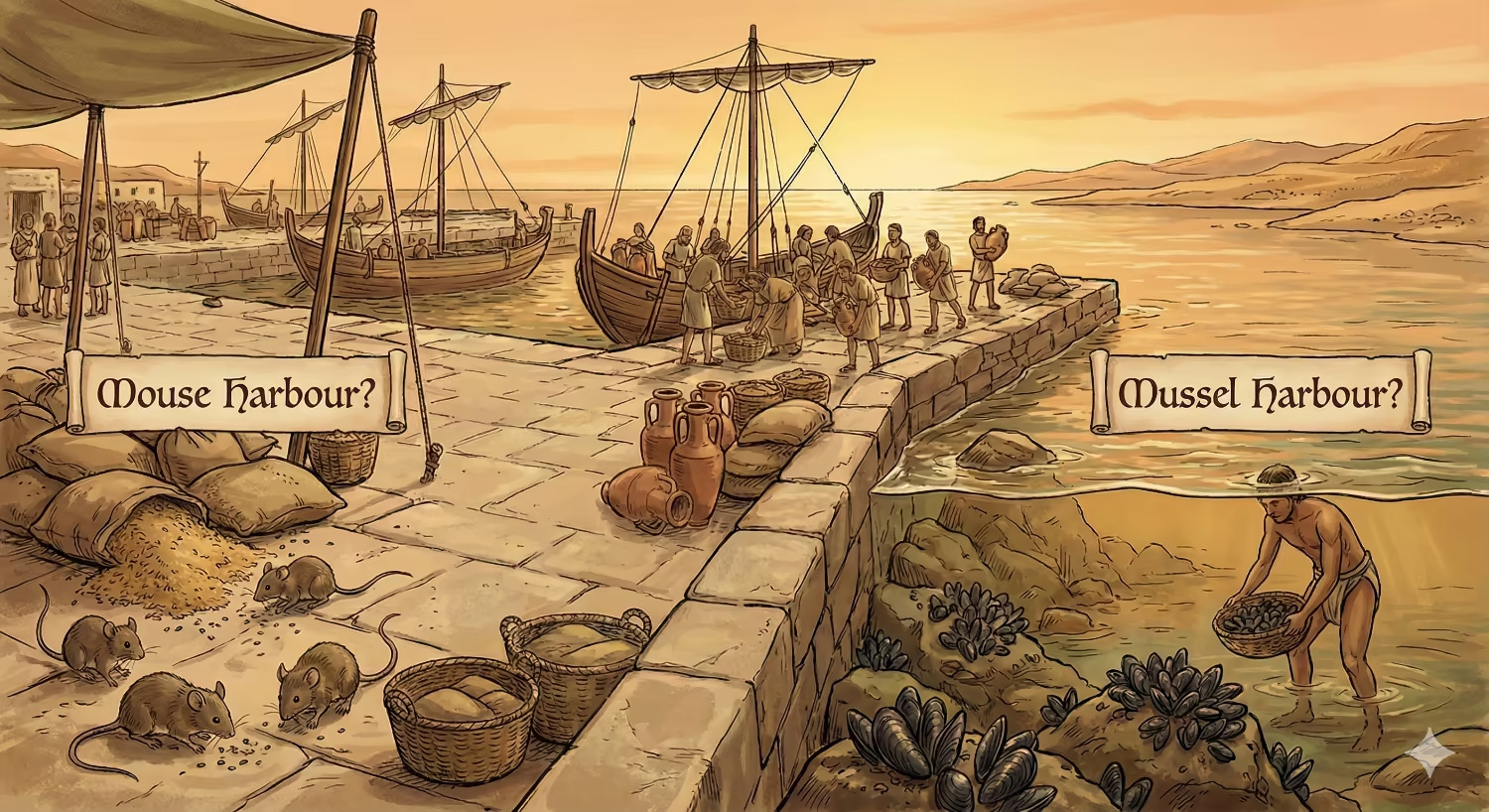
“Mouse Harbour” or “Mussel Harbour” ?
MarsaAlam.com: AI gen via Google Gemini.
Long before the Romans dominated the Red Sea, possibly around 116 BCE, the Greek geographer Agatharchides of Cnidus described the original port, located about eight kilometres north of El Quseir’s present old town. He called it Myos Hormos, which might be translated as either 1) “Mouse Harbour,” a name that may have stemmed from the abundance of mice or rats that would have swarmed the port, attracted by the grain and other foodstuffs stored on the ships or nearby warehouses, or alternatively as 2) “Mussel Harbour,” a name which might have been inspired by the rich mussel beds along the coast.
Agatharchides’ writings offer some of the earliest documentary evidence for the port’s existence, describing a narrow winding entrance and three small islands that protected its harbour. Agatharchides’ account is crucial because it confirms the port’s early importance in the Ptolemaic period, long before the Roman-era boom.
For further reading – see Earl, Graeme Peter (2002) Constructed places: Roman architecture and the mind’s eye. A thesis on the application of spatial theories and computer visualisation to experience an Egyptian Red Sea port around AD 120. University of Southampton, Doctoral Thesis, Faculty of Arts, Department of Archaeology, October 2002 p. 182.
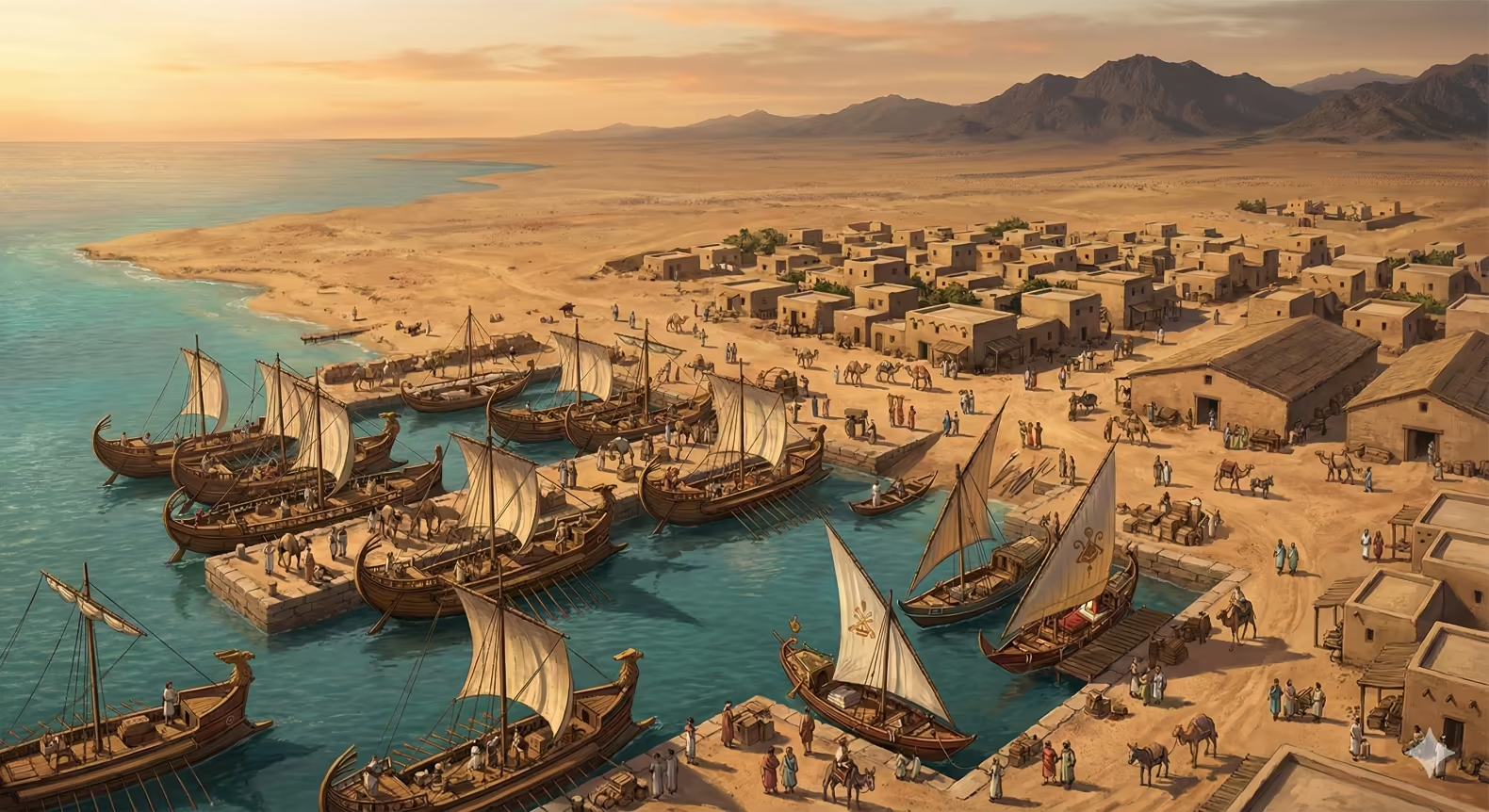
Global Trade Boom in Roman El Quseir.
MarsaAlam.com: AI gen using Google Gemini
The port of Myos Hormos (located eight kilometres north of El Quseir’s modern centre) experienced an unprecedented commercial boom under Roman rule, serving as a vital artery of the trade network connecting the Empire to the East. The Greek historian Strabo, who visited Egypt in person, was astonished by the volume of traffic, noting that around 120 ships sailed from Myos Hormos to India each year—a staggering number compared to the lone few who braved the voyage during the earlier Ptolemaic era.
“I was with Gallus at the time he was prefect of Egypt, and accompanied him as far as Syene and the frontiers of Ethiopia, and I found that about one hundred and twenty ships sail from Myos Hormos to India, although, in the time of the Ptolemies, scarcely any one would venture on this voyage and the commerce with the Indies”
Myos Hormos was no longer just a local port; it had become a global crossroads. Luxury goods from aromatic spices to shimmering silks flowed in from India, while Roman products were exported eastwards. Consequently, the port soon became a vibrant cultural mosaic, as evidenced by recent archaeological finds of inscriptions in languages such as Tamil, South Arabian, and Nabataic, attesting to the presence of a diverse, semi-permanent community of international merchants and sailors who called this bustling desert harbour their temporary home.
For further reading – see Nappo, Dario, “The Abandonment of Myos Hormos,” in Paolo Cimadomo et al, “Before / After. Transformation, Change, and Abandonment in the Roman and Late Antique Mediterranean,” Archaeopress Publishing Ltd, 2020, pp.19-20, accessed via unina.academia.eu
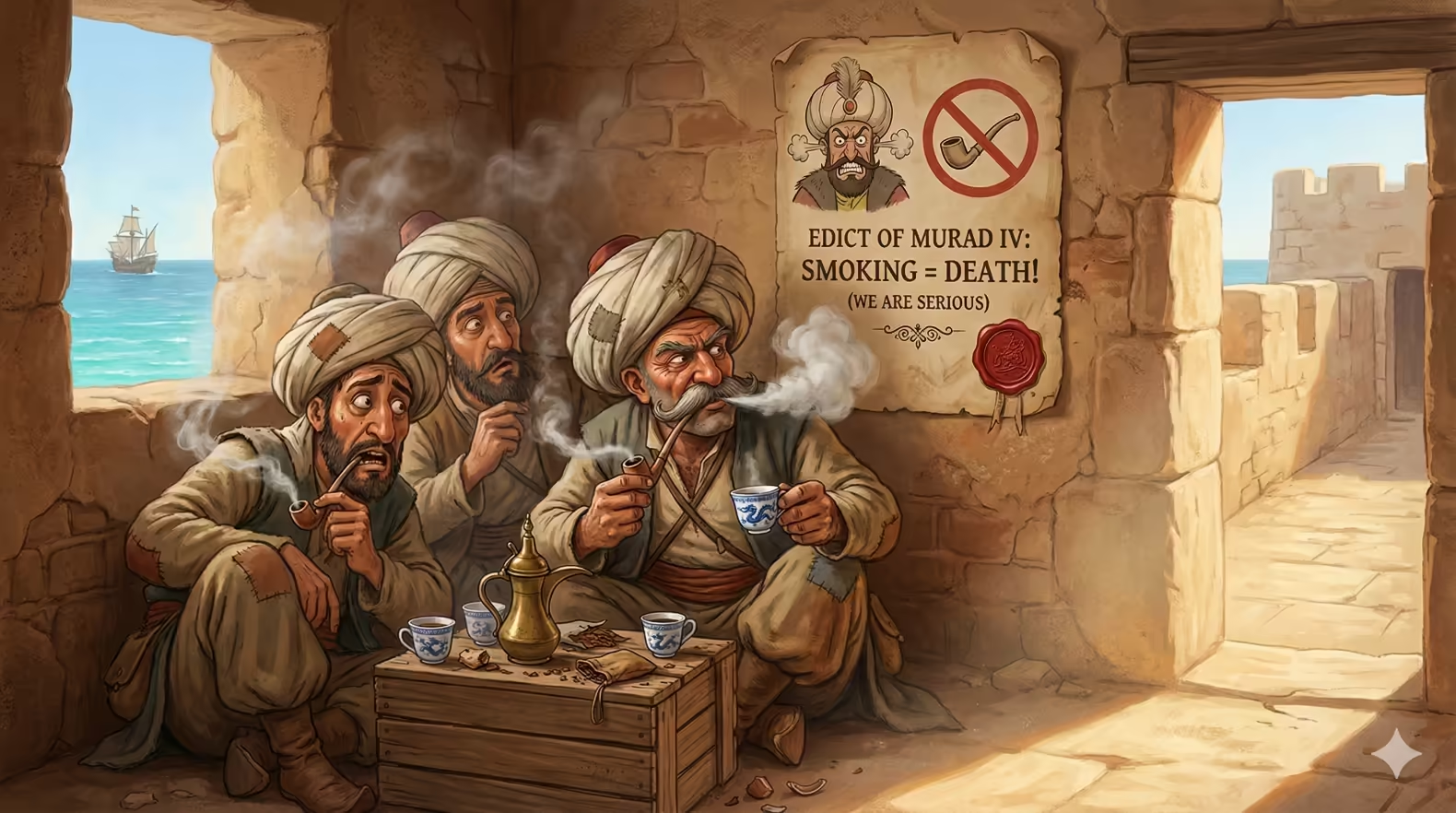
A Sixteenth Century Smoking Habit
MarsaAlam.com: AI gen using Google Gemini
The discovery of clay pipe fragments at El Quseir Fort during its restoration reveals that soldiers of the original Ottoman garrison at El Quseir were already indulging in tobacco smoking, then an exotic New World import, possibly as early as the late sixteenth century. This would have been long before the practice became common elsewhere in the Ottoman Empire. The evidence also suggests that the habit likely persisted well into the seventeenth century, defiantly continuing even after Sultan Murad IV banned smoking in 1633 under penalty of death.
Excavations in the fort’s earliest occupation layers unearthed not only delicate Ming Dynasty blue-and-white porcelain cups imported from China for coffee drinking but also some of the earliest clay tobacco pipe-bowls found in the region. The garrison, which was located on a key trade route connecting Egypt to the Indian Ocean, might have adopted the habit of tobacco smoking through contact with Portuguese sailors and traders, who were active in the Indian Ocean following Vasco De Gama’s rounding of the Cape in 1498.
For further reading – see Le Quesne, Charles. ‘Quseir: An Ottoman and Napoleonic Fortress on the Red Sea Coast of Egypt,’ The American University in Cairo, Cairo, 2007, pp. 175-177.
Napoleon’s Brief Mark
MarsaAlam.com: AI gen using Google Gemini
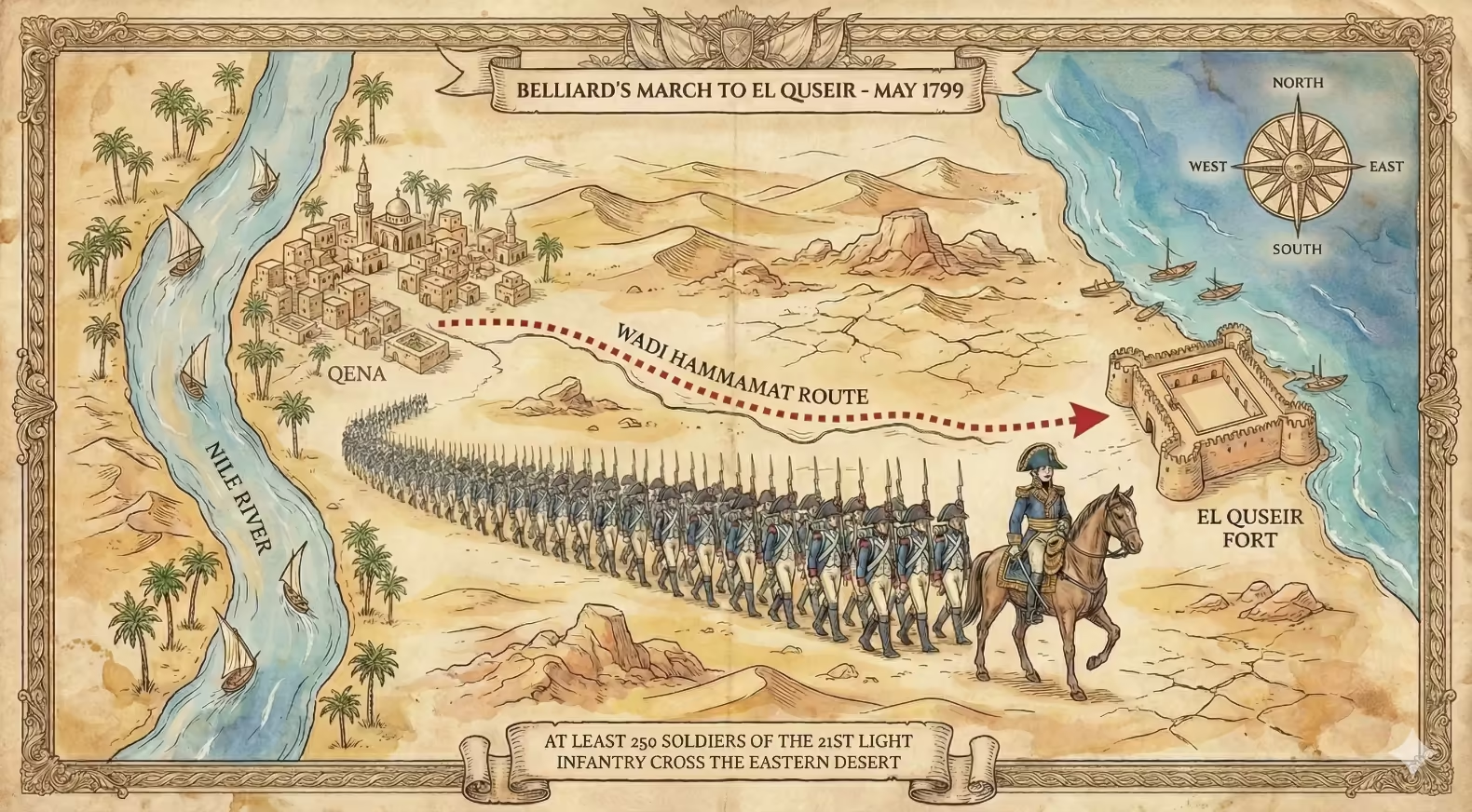
Nearly a year after Napoleon’s dramatic invasion of Egypt and his victory over the Mamluks at the Battle of the Pyramids, the war reached the Red Sea coast. On 28 May 1799, General Augustin Daniel Belliard, the newly appointed French governor of Upper Egypt, led a sizeable column of troops east from the Nile, crossing the scorching expanse of the Eastern Desert via the ancient Wadi Hammamat route through the mountains. El Quseir and its fort were seized without a shot fired, and a garrison of about 250 soldiers from the 21ème demi-brigade d’infanterie légère was left behind under the command of General Donzelot.
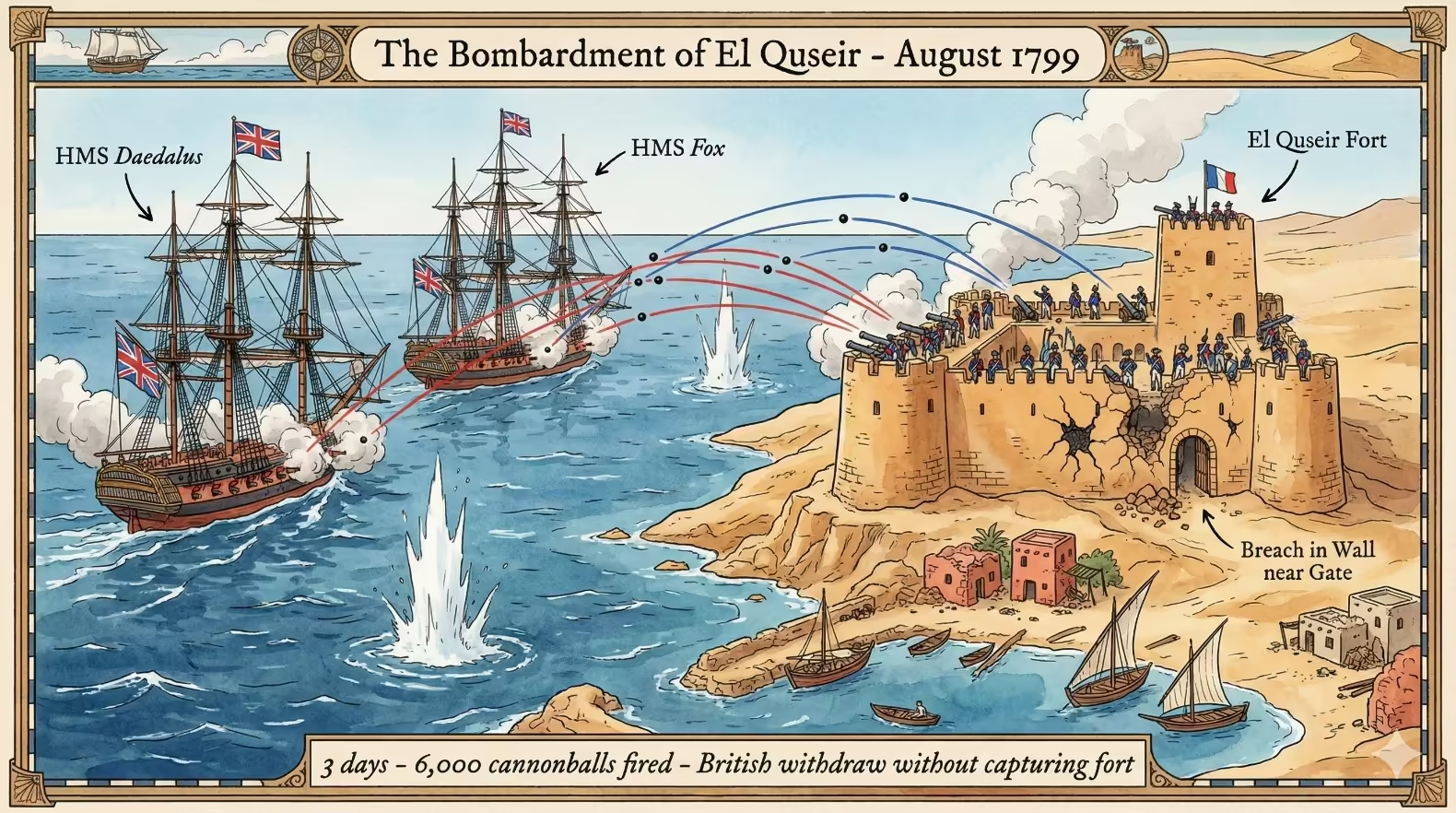
The French quickly transformed the fort into a formidable defensive stronghold. They widened the ramparts, installed additional cannon and built a tall internal observation platform. These improvements were soon severely tested in August 1799, when two British 32-gun frigates, HMS Daedalus and HMS Fox, unleashed a relentless three-day bombardment, firing an estimated six thousand cannonballs. Although the British eventually withdrew, the attack tore major breaches in the walls, especially near the main gate, which Donzelot’s men painstakingly repaired over the following two years.
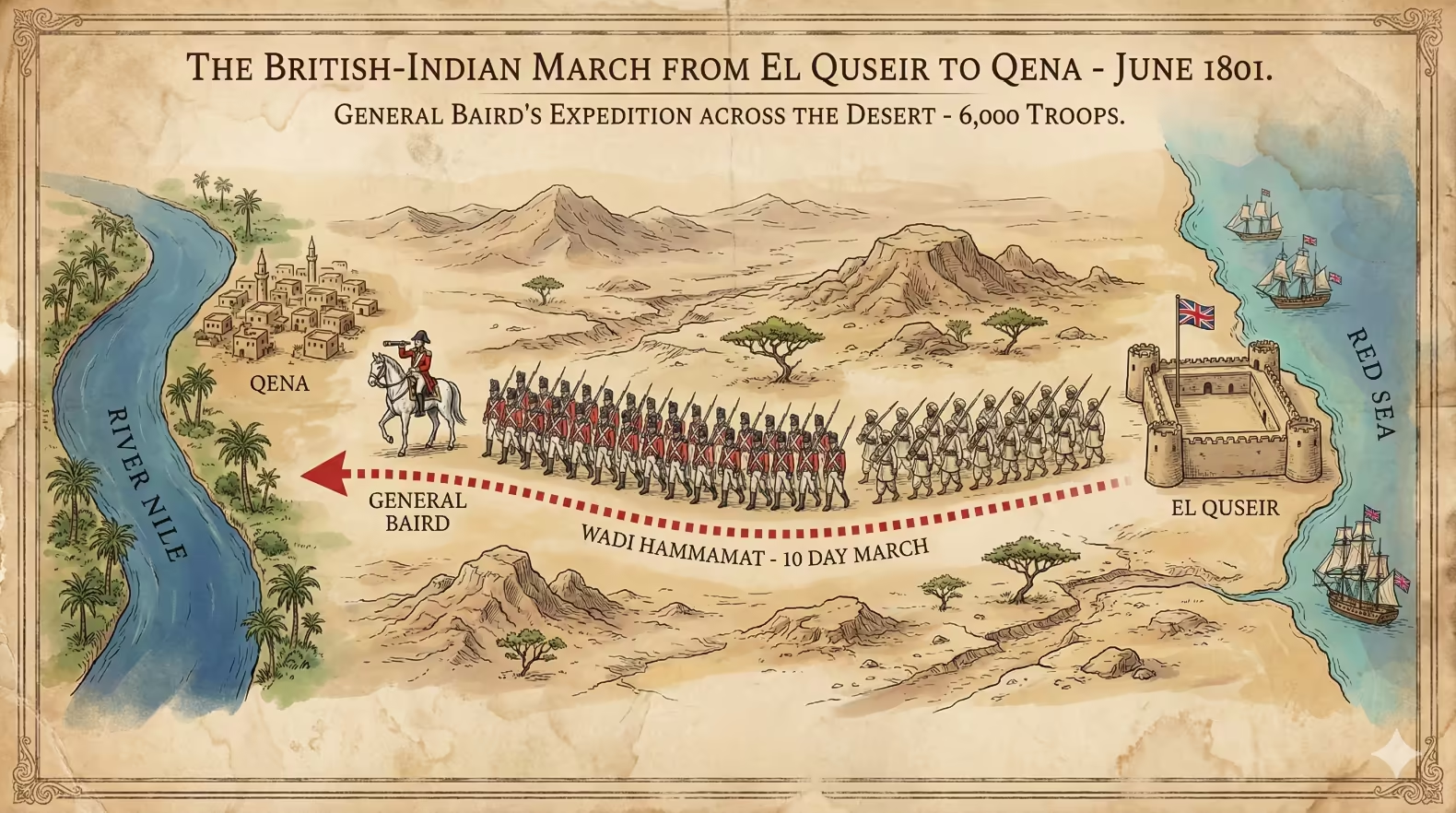
The French occupation finally ended in June 1801, when around six thousand British and Indian troops under General Baird landed at El Quseir. Their gruelling ten-day march across the desert to Qena helped precipitate the collapse and final surrender of French forces in Egypt that September.
The “Ghastly Odour of Soap and Rotten Eggs.”
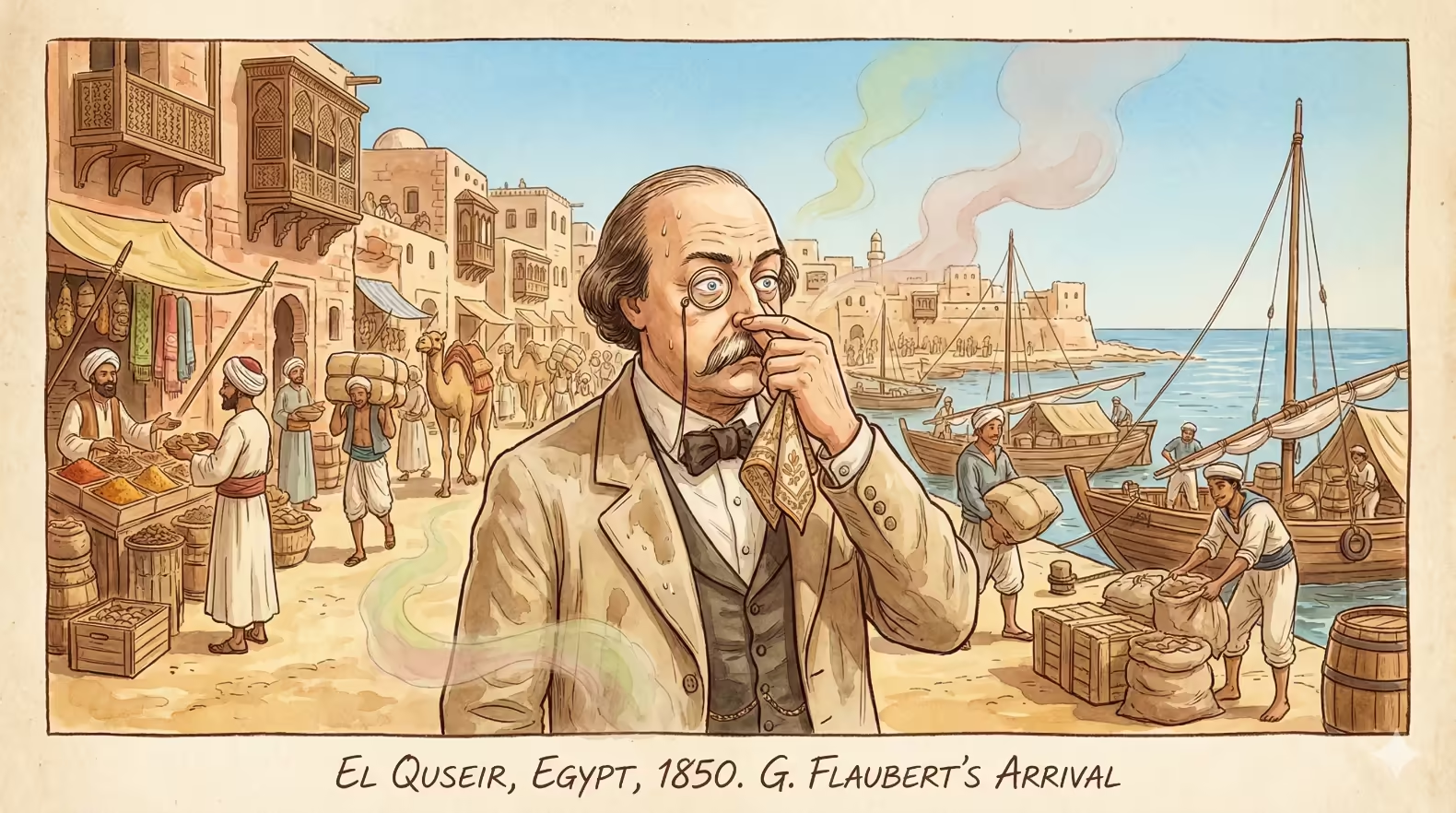
In May 1850, the legendary French novelist Gustave Flaubert passed through El Quseir during his tour of Egypt. He memorably complained that the entire city was suffused with the “ghastly odour of soap and rotten eggs.” Such accounts from European travellers, though often filtered through a condescending colonial lens, paint a picture of a bustling, multicultural port city, a true crossroads of the world where people and goods from across Africa, Asia and Europe converged.
For further reading – see Gustave Flaubert cited in Glazier, Darren, “We make the diamond shine: Archaeological Communities in Quseir, Egypt,” PhD Thesis, The University of Southampton, p. 108 and p. 116, accessed via eprints.soton.ac.uk.
Fort Becomes Tennis Court
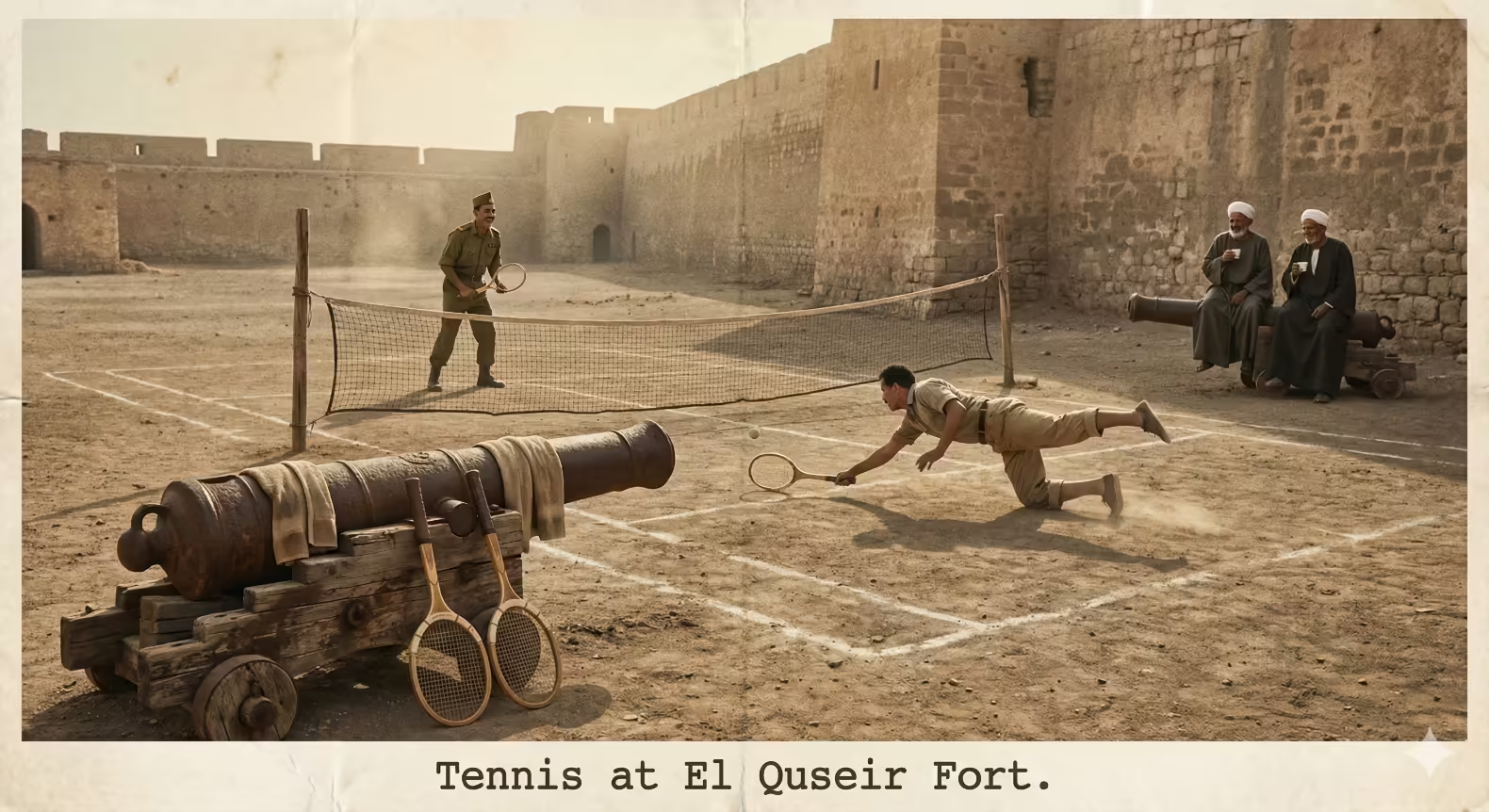
By the mid-twentieth century, El Quseir Fort’s long military history had drifted into a quiet, almost surreal twilight end. The fort’s walls bore the scars of time and neglect and its strategic value had long since gone. While it was still technically administered by the army until 1975, its daily life took on a more casual air.
According to local townspeople, the fort’s vast open courtyard, once echoing to the bark of military drills and the bustle of trade caravans, was partially repurposed as a tennis court. This surprising transformation from a strategic military stronghold to a recreational space highlights the profound changes that swept through Egypt in the twentieth century, leaving the once formidable fortress as a silent relic of a bygone age
For further reading – see Le Quesne, Charles. ‘Quseir: An Ottoman and Napoleonic Fortress on the Red Sea Coast of Egypt,’ The American University in Cairo, Cairo, 2007, p. 144 and p. 165.
Rooftop Living in Medieval Quseir Al Qadim
MarsaAlam.com: AI gen using Google Gemini
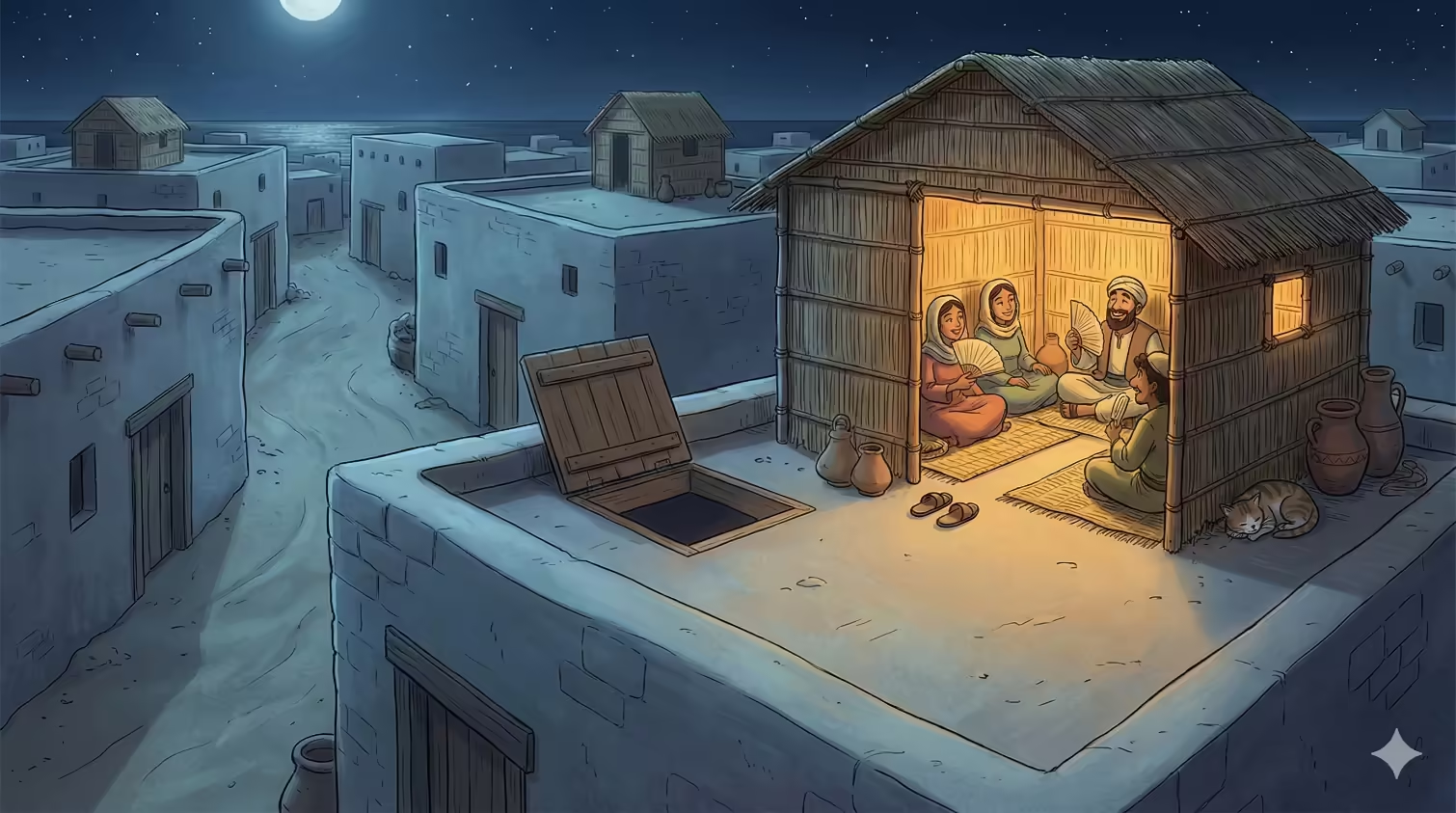
To escape the sweltering heat of the Egyptian summer, the residents of medieval Quseir Al Qadim likely slept under the stars on their flat roofs. Archaeologists believe that a staircase would have often led to the roof in many homes and that simple shelters made of reeds and matting, known as akhṣaṣ (singular: khuṣṣ) were built on the rooftops to provide private, breezy sleeping spaces This clever adaptation to the desert climate, also practised in the great city of Fustat (medieval Cairo), illustrates how people have long used simple, local materials to make life more comfortable in one of the world’s most arid environments, and it remains a common practice in some areas of rural Egypt.
For further reading – see Burke, Catherine Strange, “The Sheikh’s House at Quseir al_Qadim: Documenting a Thirteenth-Century Red Sea Port,” Oriental Instutitute PUblications, Volume 144, The Oriental Institute of the University of Chicago, 2021, p. 37.
A Pharaonic Curse?
MarsaAlam.com: AI gen using Google Gemini
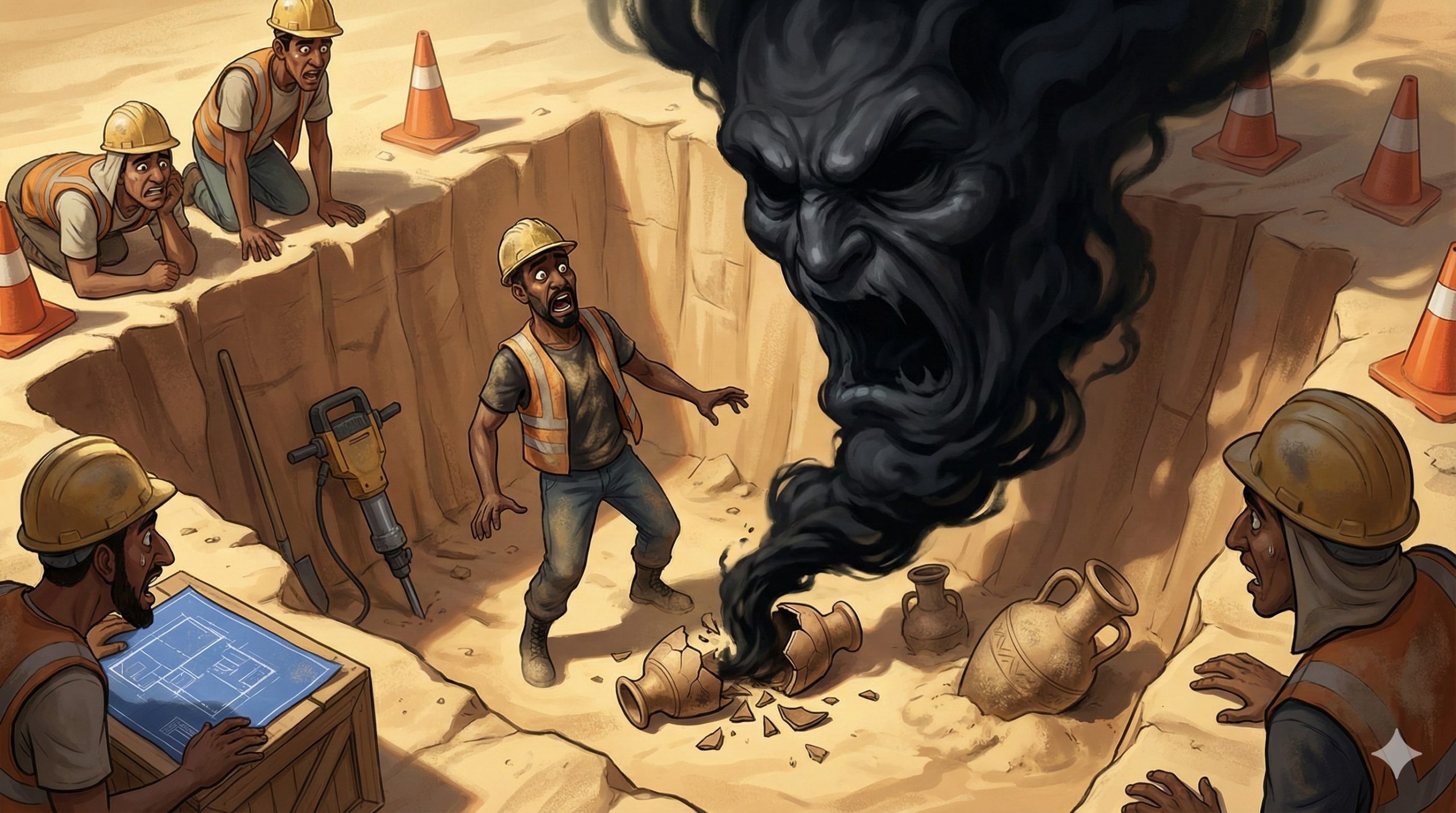
The modern history of Quseir al-Qadim (the site of Medieval El Quseir located eight kilometres north of the old town) entered a transformative new chapter with the start of construction on the luxury Mövenpick hotel in 1993, situated directly opposite the archaeological site. This was not without incident according to local, though unverifiable, oral history, with at least one person, interviewed by historian Darren Glazier, claiming that during the hotel’s construction there had been some accidents and “some people died…. It was like a curse, a Pharaonic curse.” It is worth noting, however, that the worker did not imply in any way that this was the fault of the hotel itself, and he went on to explain that:
“[During the building work] they found a hole and saw something underground. They called people to come and look at it, and soon everyone began to dig in this one place….. They found these things… amphora (two-handled ceramic jars), like a watermelon. The man who went down didn’t know what they were, so he took one from the ground and put it down clumsily, breaking it.”
“Something like smoke came out from it, black smoke, very black. After that he took the second one out and then the third, breaking all three…. smoke came out of all three. Soon after this the man was travelling somewhere, I don’t know where but he was in his car. He had an accident and died – directly after breaking the pottery.”
The arrival of the hotel heralded the beginning of a new era of tourism, offering new employment opportunities for some, but for other locals, it may also have meant the loss of a cherished and historically significant place, while others had anyway long been avoiding the entire ancient Quseir Al Qadim area.
“People had an intuition about the place,” explained another interviewee to Darren Glazier, “They did not feel right to sit there…They feel something very strong, something that makes you scared of the place.”
It should be noted that whatever the initial impact of the construction, supernatural or otherwise, the Movenpick soon became a cornerstone of the local community, and has recently made very substantial positive contributions to the area, supporting several heritage initiatives in El Quseir through funding and community partnerships as part of its sustainability and social responsibility programs.
Today, the resort’s influence is deeply positive. It supports local orphanages and public schools, collaborating with NGOs such as the Egypt Clothing Bank and the Resala organization, by donating linens and clothing for distribution. Beyond social aid, the resort also hosts educational field trips for local schools to promote environmental awareness and sustainability, and it prioritizes sourcing food and products from local suppliers in El Quseir city and Hurghada, supporting regional farmers and artisans. It has also acted as a guardian of the coast, pioneering important marine conservation efforts to protect the fragile Red Sea ecosystem, including regular reef monitoring surveys and cleanups.
For further reading – see Glazier, Darren, “We make the diamond shine: Archaeological Communities in Quseir, Egypt,” PhD Thesis, The University of Southampton, p. 108 and pp. 148-149, accessed via eprints.soton.ac.uk.
Shark Fishing Technology
MarsaAlam.com: AI gen using Google Gemini
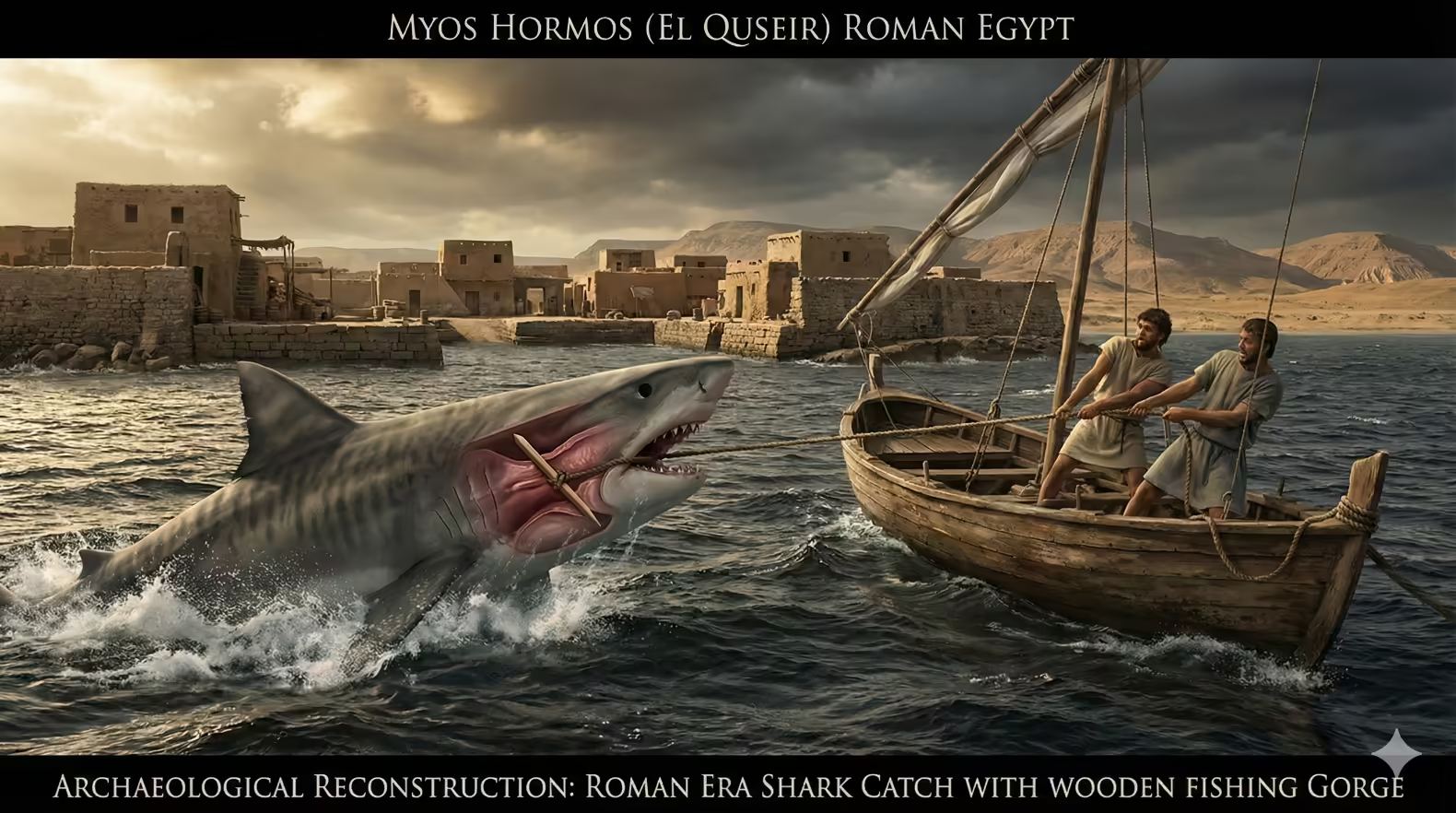
The fishermen of Roman Myos Hormos employed a deceptively simple tool that reveals unexpected cultural connections: the fishing gorge. This ingenious device consisted of a slender straight piece of wood about 4 to 8 cm long, sharpened at one or both ends, which would be baited and attached to a line.
When a large fish or shark swallowed the bait, the resulting sharp tug on the line caused the gorge to pivot and wedge firmly in its throat. This technique has not been found in the Mediterranean but is well-known from archaeological sites in the Persian Gulf. Its use at Myos Hormos suggests a transfer of technology and knowledge from further east, perhaps brought by traders or fishermen from Arabia, highlighting that the port was not just a receiver of goods but also a place of cultural and technical exchange, a dynamic hub where ideas were traded as often as spices.
For further reading – see Thomas, Ross, Fishing Equipment from Myos Hormos and Fishing Techniques on the Red Sea in the Roman period, in Tonnes Bekker-Nielsen and Dario Bernal Casasola, Ancient Nets and Fishing Gear. Proceedings of the International Workshop on “Nets and Fishing Gear in Classical Antiquity: A first Approach,” Cadiz, November 15-17, 2007, pp. 151-152, accessed via academia.eu
King Fuad’s Italian Retreat: A Royal Visit to El Quseir
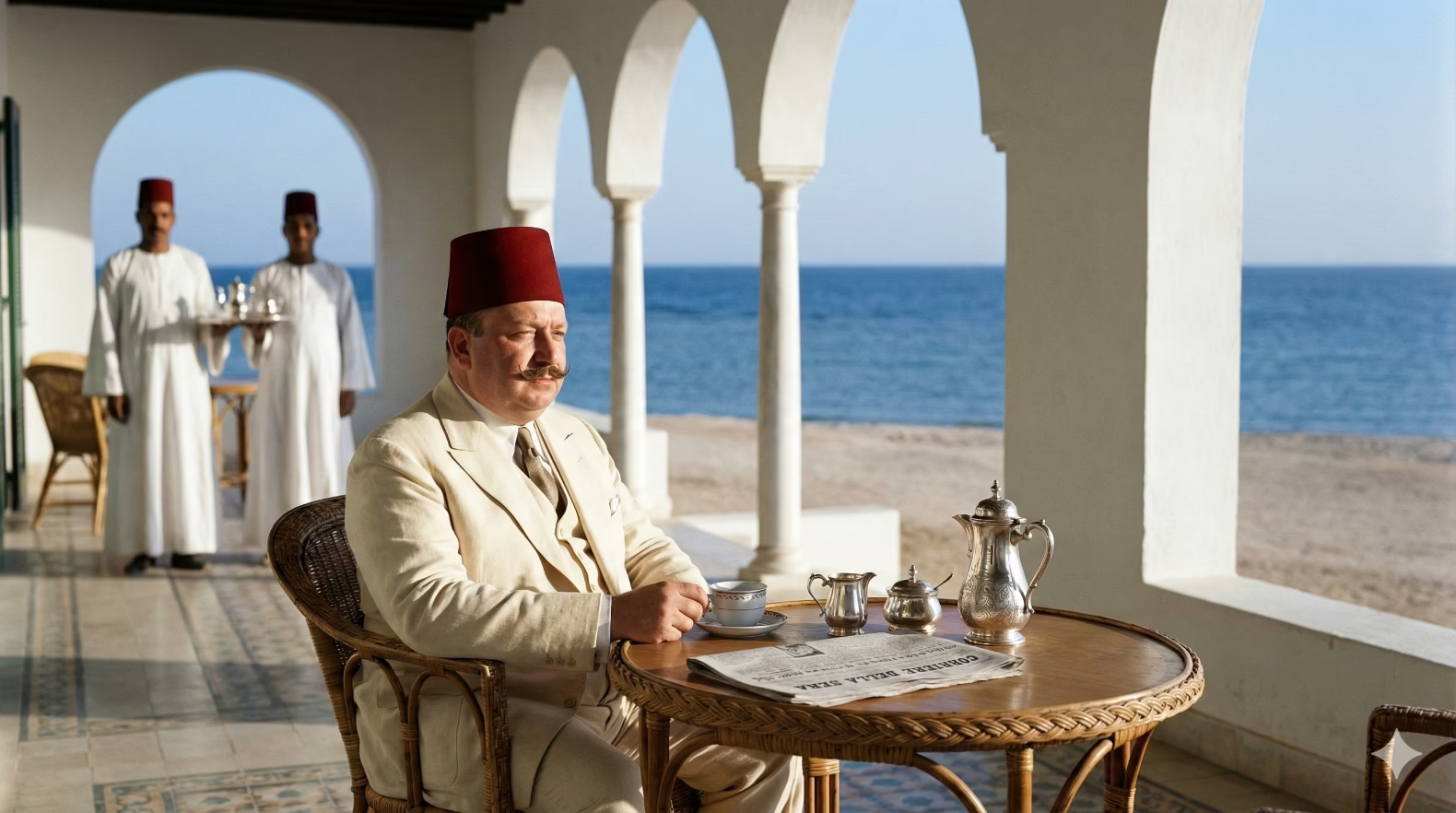
MarsaAlam.com AI gen using Google Gemini.
Did you know that El Quseir once hosted the first King of modern Egypt in an Italian-built villa that blended European luxury with a design perfectly adapted to the desert climate?
On December 28, 1926, King Fuad I arrived in this remote Red Sea port to formally inaugurate the phosphate mines at Gebel Duwy, located in the mountains about twenty kilometres west of the town. When he arrived at the “Little Italy” neighbourhood constructed just to the north of the town around the newly established Italian phosphate processing plant, he didn’t find a dusty outpost, but a modern state within a state.
He discovered a walled company town complete with schools, a hospital, electricity, and even its own radio station, all built by the Società Egiziana. Despite its Egyptian name, this was fundamentally an Italian enterprise founded in 1912 by the Banco di Roma to exploit the region’s phosphate concessions. For King Fuad, this environment was surprisingly familiar. Having spent his youth in exile in Naples and trained at the military academy in Turin, he spoke Italian fluently, better than he spoke Arabic, and would have felt entirely at home among the company’s directors.
He stayed at the luxurious Company Rest House, the most prestigious residence in the settlement. Located close to the coastline, this architectural masterpiece featured a grand veranda with seven distinct arches—the central one adorned with the company’s “crossed hammers” emblem. Inside, upon entering the massive second-floor hall, the King would have looked up to see a spectacular wooden shukhsheikha (lantern skylight), masterfully adapted to catch the breeze and cool the desert air.
While local lore often calls this the “King Farouk Rest House,” attributing it to his son who visited in 1949, it was Fuad’s 1926 tour that first stamped the site with royal prestige. For those few days, the isolated Italian Phosphate Company Rest House effectively served as a temporary royal court.
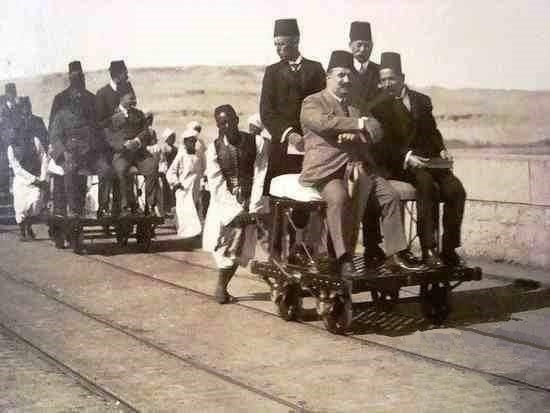
Original Public Domain via Wikimedia Commons.
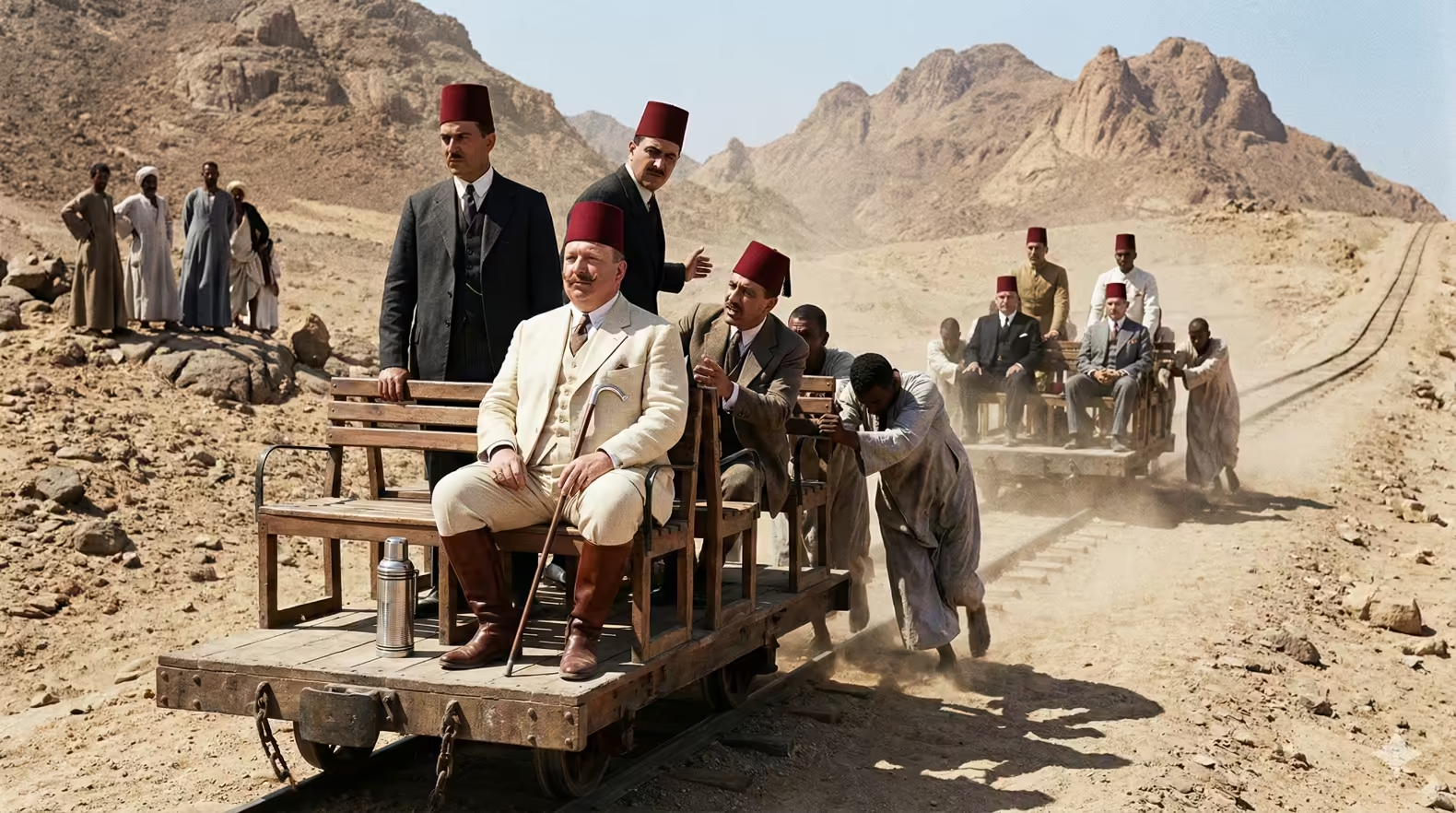
MarsaAlam.com AI gen using Google Gemini.
During the stay, a contemporary photograph shows the king and other officials sitting on wagons which are seemingly being hand pushed along the company’s narrow-gauge mountain railway line either towards or away from the mines, which even in the milder December heat must have been an arduous task.
Sometime afterwards, a commemorative plaque at the mine entrance at Gebel Duwy was mysteriously chiselled away, possibly because ordinary Egyptian miners, working in challenging conditions for low wages under foreign management might have had little affection for a British-backed monarch who lived in luxury. Yet, the elegant Rest House still stands today as a silent, sturdy witness to the day the usually remote King Fuad came to visit this isolated and legendary Red Sea port.
For further reading – see Wael B. R. Hashem, Royal Rest Houses in Upper Egypt (Qena – Quseir) Study and Publication, 2021, published online at aaciaegypt.com and Cabassi, Antonella, Kosseir, a phosphate-shipping town. La cité des mines de phosphates à Kosseir, Open Edition books, accessed at books.openedition.org
El Quseir Fort’s Secret Ingredient: A Dismantled Ancient Temple
When the Ottomans built the fortress in the sixteenth century, they took a practical approach to sourcing building materials. Embedded within the fort’s walls are numerous finely worked limestone and sandstone blocks that clearly came from a much older, monumental building. Some of these blocks still bear faint traces of hieroglyphic inscriptions, including one depicting the knees of a seated figure holding a sceptre.
This strongly suggests the builders dismantled a nearby Ptolemaic or Roman-era temple for its stone. The temple’s original location, however, remains a mystery, though it was likely either at Quseir al-Qadim or near the site of the modern town.
For further reading – see Le Quesne, Charles. ‘Quseir: An Ottoman and Napoleonic Fortress on the Red Sea Coast of Egypt,’ The American University in Cairo, Cairo, 2007, pp. 166-168.
A Nineteenth Century High-Tech Communications Hub
In the mid-nineteenth century, in a bid to connect London to Karachi, the Red Sea and India Telegraph Company established a relay station at El Quseir. This ambitious project involved laying a submarine cable across the Red Sea, linking Suez, Quseir, Suakin (Sudan), and Aden (Yemen). Five British engineers were permanently stationed in the town, living in distinctive bungalows with verandas and picket fences – an incongruous slice of Victorian England on the Red Sea coast.
Their supplies and luxuries were delivered twice a month by Anglo-Indian steamers. The station’s strategic importance was such that a British war steamer was sent to protect it following the massacre of Christian and European residents in Jeddah in 1858. Ultimately, the project was eventually abandoned after the telegraph cable was irreparably damaged by the abrasive Red Sea coral, but the bungalows remain a curious reminder of El Quseir’s brief, but significant, role in the grand project of imperial communication.
For further reading – see Glazier, Darren, “We make the diamond shine: Archaeological Communities in Quseir, Egypt,” PhD Thesis, The University of Southampton, accessed via eprints.soton.ac.uk.
One of the Fort’s Napoleonic-Era Cannons is British
One of the Napoleonic-Era cannons currently on display at El Quseir Fort has a remarkable story: it is actually a British “six-pounder” that was swallowed by the surf during a 1799 naval attack. We know this thanks to the captain of the HMS Daedalus, one of the British ships that bombarded the fort. He recorded in his ship’s log that a six-pounder was lost in”heavy surf” just after 5:30 p.m. on Friday, August 15, 1799.
For decades, this relic stood guard outside El Quseir’s Town Hall, but was later removed to El Quseir Fort after restoration work was finished there in the late 1990s. Experts have identified it as a late eighteenth-century British six-pounder of the British Blomfield design, featuring a 1.56-metre-long barrel and a 110 mm bore.
The “Blomfield” design was actually a huge leap forward in safety. Before Thomas Blomfield redesigned British cannons in the 1780s, they had a concerning habit of exploding and killing their own crews. Blomfield added more metal around the back of the gun (the breech) to handle the pressure.
For further reading – see Le Quesne, Charles. ‘Quseir: An Ottoman and Napoleonic Fortress on the Red Sea Coast of Egypt,’ The American University in Cairo, Cairo, 2007, p. 264.
Medieval Residents likely used Roman Ruins to Dispose of Trash.
Islamic-era settlers in thirteenth-century Quseir al Qadim likely repurposed ancient Roman stone-lined pits, originally used for planting lush trees or shrubs, as convenient trash bins to discard their own rubbish. This is a theory originally proposed by Donald Whitcomb, who in the 1980s led the University of Chicago archaeological team unearthing an important Medieval merchant’s home, known as the Sheikh’s House, located near the southern edge of Quseir al Qadim.
For further reading – see Whitcomb cited in Burke, Catherine Strange, “The Sheikh’s House at Quseir al_Qadim: Documenting a Thirteenth-Century Red Sea Port,” Oriental Instutitute PUblications, Volume 144, The Oriental Institute of the University of Chicago, 2021, p. 26.
Ostrich Eggs at the Graveside
In an Islamic cemetery on the beach at Quseir al Qadim, archaeologists stumbled upon a puzzling treasure: ostrich eggshells placed at a funerary shrine. Among the debris were shards of these massive eggs inked with Arabic script – objects researchers refer to as “ostrichicons.” Two of these “ostrichicons” point to a specific window of time between 1465 and 1495, and the text inscribed on them confirms that they were being used for a funeral.
While unusual, this was a recognized custom in the region. These large, beautiful ivory-coloured eggs often graced mosques and tombs as decorations. Their presence here hints at a deep symbolic or ritualistic importance, showing that for the fifteenth-century residents of El Quseir, an ostrich egg was far more than just a shell; it was a sacred vessel for a final message.
For further reading – see Burke, Catherine Strange, “The Sheikh’s House at Quseir al_Qadim: Documenting a Thirteenth-Century Red Sea Port,” Oriental Instutitute PUblications, Volume 144, The Oriental Institute of the University of Chicago, 2021, p. 17.
World War II Internment of Italian Residents and Workers
The Second World War brought sudden and dramatic changes to El Quseir. In 1942, British authorities rounded up and detained every Italian man, including the phosphate company’s workers, for two years, first at Qena on the Nile and later in a detention camp at Geneifa near the Suez Canal. As for the Italian women and children, they were permitted to remain in El Quseir, housed at the company rest house.
The phosphate factory itself was seized and run by the British before being returned to Italian management shortly before the end of the war, following lengthy diplomatic negotiations; highlighting how global conflicts directly impacted even the most isolated of mining and industrial communities.
For further reading – see Cabassi, Antonella, Kosseir, a phosphate-shipping town. La cité des mines de phosphates à Kosseir, Open Edition books, accessed at books.openedition.org
An Ancient Maritime Graffito
High in the masonry of the westernmost of El Quseir Fort’s four towers, one sandstone block hides a secret in plain sight. Unlike the surrounding stones, it has been carefully etched with a series of lines which, when viewed upside down, reveal the unmistakable silhouette of a ship. The simple carving depicts a vessel with a projecting prow and the shaft of a steering oar at the stern, details that hint at a seafaring world from an era long before the fort’s first stone was laid.
The presence of this image is unlikely to be accidental. Much of the fort was built using stone reused from a nearby Greco-Roman temple, dismantled centuries earlier. It is therefore highly probable that this marked block was also taken from that earlier structure. If so, the faint outline of the ship represents a fragment of far older maritime history, like a hidden time capsule within the walls of the fort linking the Ottoman stronghold to El Quseir’s ancient relationship with the sea.
For further reading – see Le Quesne, Charles. ‘Quseir: An Ottoman and Napoleonic Fortress on the Red Sea Coast of Egypt,’ The American University in Cairo, Cairo, 2007, p. 144 and p. 168.
A Thirst For Juice
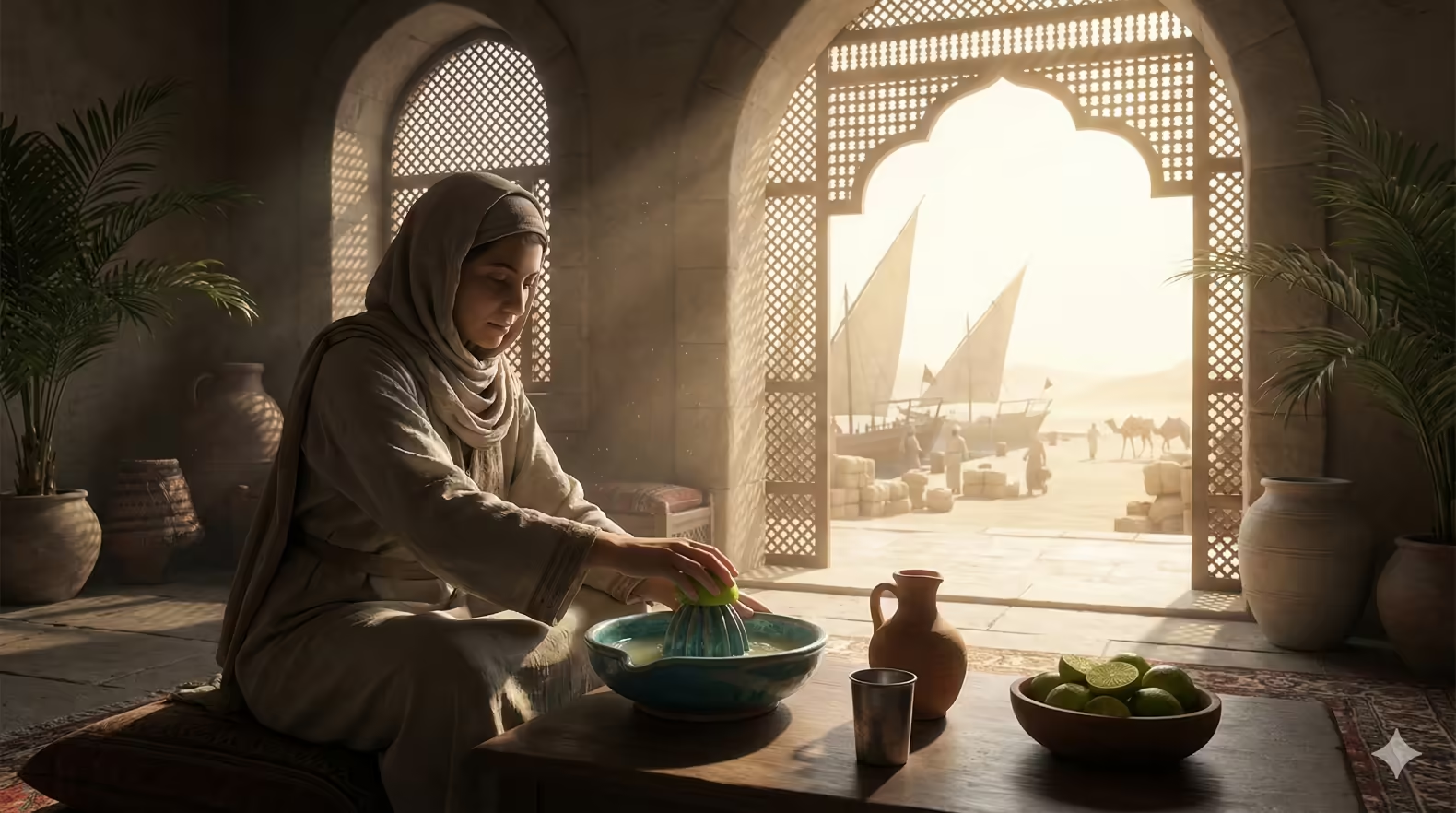
MarsaAlam.com: AI gen using Google Gemini
The scorching heat of a thirteenth century desert port must have made for some very thirsty residents. A rare shipping note from the 1200s discovered at the Sheikh’s House at Quseir Al Qadim in the early 1980s, reveals the delivery of a specialised “juice presser.” Archaeologists also found the shriveled remains of over twenty limes scattered around the house. Most of these had been perfectly halved, sliced neatly across the middle just as we might do today.
These finds provide an intriguing direct link between an ancient tool and the fruit it processed. We can easily imagine the residents using the press to squeeze out the refreshing juice from the citrus fruits to flavour meals or create beverages that offered welcome relief from the desert heat.
Archaeologists at the site found that the “Sheikh’s House” belonged to a wealthy merchant family. The fact they were importing specialized kitchen gadgets shows how sophisticated global trade was even 800 years ago. The limes also likely traveled over a hundred miles by camel from the Nile Valley or possibly even hundreds of miles by sea before ending up in that desert juice press.
For further reading – see Wilma Wetterstrom, “Plant Remains 1982,” in Burke, Catherine Strange, “The Sheikh’s House at Quseir al_Qadim: Documenting a Thirteenth-Century Red Sea Port,” Oriental Instutitute PUblications, Volume 144, The Oriental Institute of the University of Chicago, 2021, p. 116 and Burke, Catherine Strange, “The Sheikh’s House at Quseir al_Qadim: Documenting a Thirteenth-Century Red Sea Port,” Oriental Instutitute PUblications, Volume 144, The Oriental Institute of the University of Chicago, 2021, p. 150.
Book An Excursion
If you are looking to take an excursion to explore the sites of El Quseir, try Steven’s Taxis —run by local expert Steven —and enjoy top-rated service that has earned the business a glowing 4.9 out of 5 score on Tripadvisor (based on 1,501 enthusiastic reviews, as of 23 January 2026). One of his drivers can pick you up from your hotel just after lunch and bring you back after sunset, giving you the whole afternoon to explore.
The round-trip fare is just 60 euros (as of January 2026) for hotels located anywhere between and including Port Ghalib and El Quseir. That works out to at just 20 euros per person when shared between three passengers. If you’re staying south of Port Ghalib or travelling in a group larger than three, just ask for a custom quote.
You can easily save that money and more on the shopping prices in El Quseir which are usually much cheaper than inside the resorts. For more information email steven@marsaalam.com or contact him via WhatsApp on +201284332337.